
We went to Peninsula Hot Springs for our anniversary. This time we decided to stay overnight in Rye. Our plan was to go on a hike on the next day. After some deliberation, we decided to do the Greens Bush walk.
We started from Bushrangers Bay picnic area because it was closer to the ocean which we wanted to visit too.
Greens Bush walk is part of popular Two Bays Walking track. There were a lot of cars parked at the trailhead.
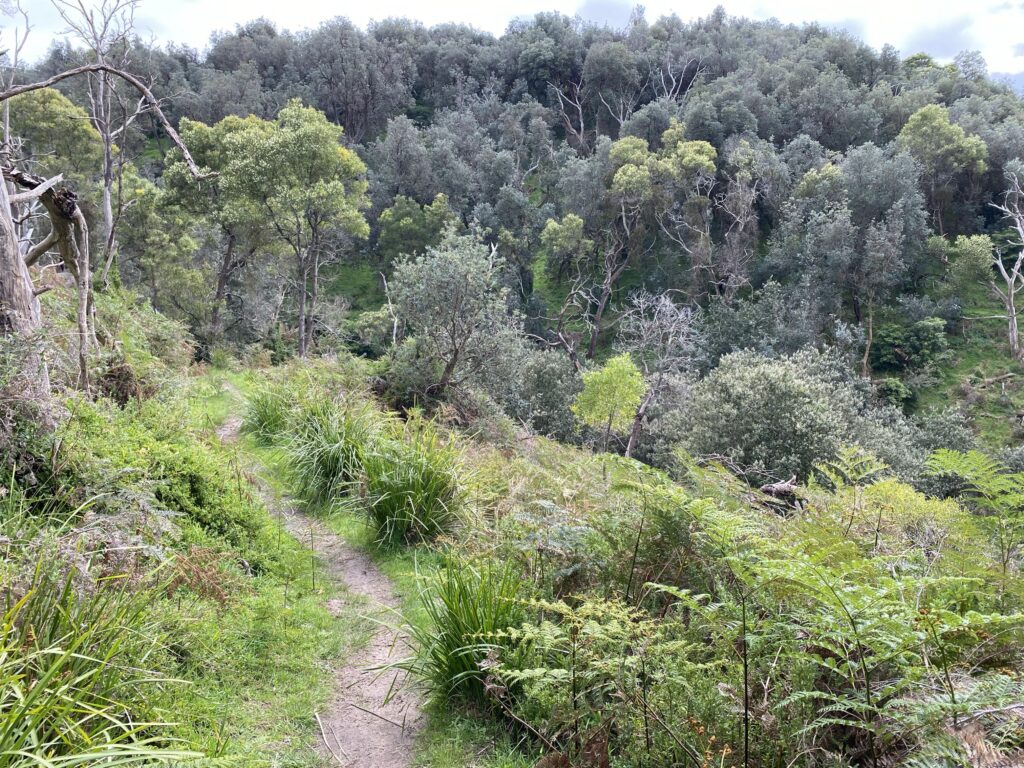
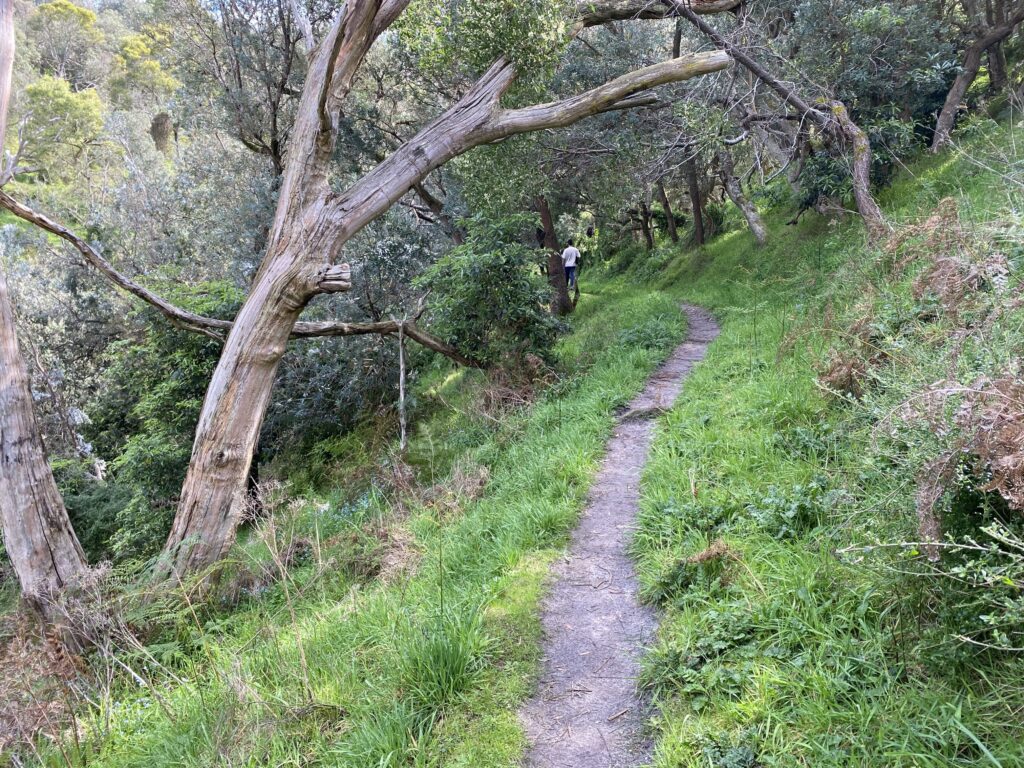
The trail was narrow and only wide enough for us to walk single file. It was a soft dirt trail.
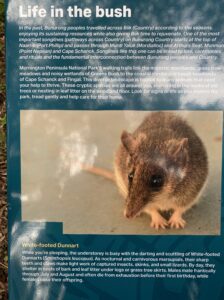
We came across the first sign. It reads:
Life in the bush
In the past, Bunurong peoples travelled across Biik (Country) according to the seasons, enjoying its sustaining resources while also giving Biik time to rejuvenate. One of the most important songlines (pathways across Country) on Bunurong Country starts at the top of Naarrm (Port Phillip) and passes through Murdi Yaluk (Mordialloc) and Arthurs Seat, Munmur (Point Nepean) and Cape Schanck. Songlines like this one can be linked to lore, ceremonies and rituals and the fundamental interconnection between Bunurong peoples and Country.
Mornington Peninsula National Park’s walking trails link the majestic woodlands, grass tree meadows and noisy wetlands of Greens Bush to the coastal shrubs and basalt headlands of Cape Schanck and Fingal. This diverse landscape is habitat to many animals that need your help to thrive. These cryptic species are all around you, sheltering in the nooks of old trees or nesting in leaf litter on the woodland floor. Look for signs of life as you explore the park, tread gently and help care for their home.
White-footed Dunnart
While you’re sleeping, the understorey is busy with the darting and scuttling of White-footed Dunnarts (Sminthopsis leucopus). As nocturnal and carnivorous marsupials, their sharp teeth and claws make light work of captured insects, skinks, and small lizards. By day, they shelter in nests of bark and leaf litter under logs or grass tree skirts. Males mate frantically through July and August and often die from exhaustion before their first birthday, while females raise their offspring.
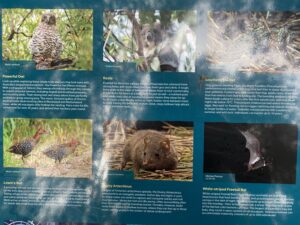
Powerful Owl
Look up while exploring these shady trails and you may lock eyes with Australia’s largest nocturnal bird – the Powerful Owl (Ninox strenua). With a wingspan of 140cm, they swoop effortlessly through the canopy to snatch arboreal animals, including ringtail and brushtail possums, and roosting birds. Their strong feet and sharp talons have perfectly evolved to grasp moving prey. The moist, forested gullies of Greens Bush provide ideal roosting sites in Blackwood and Muttonwood trees, while old eucalypts offer hollows for nesting. Pairs mate for life, sometimes for over 25 years, and defend their territory year-round.
Lewin’s Rail
A pressing ‘tek-tek-tek-tek-tek’ echoing through the undergrowth may be the only clue you’re within cooee of a Lewin’s Rail (Lewinia pectoralis). Taking refuge in the dense vegetation and reed beds surrounding fresh and saline wetlands, local sightings are as rare as the birds themselves. Most active at dawn and dusk, this elusive bird forages in shallow water for seeds and small invertebrates, like worms, snails and insects.
Koala
Evolved for life in the canopy, Koalas (Phascolarctos cinereus) have strong limbs and sharp claws that help them grip and climb. A tough, bony plate at the base of their spine allows them to rest comfortably in tree forks for hours at a time. And it’s just as well – a nutrient-poor and mildly toxic diet of eucalyptus leaves means they sleep for up to 20 hours a day. Mostly active at night, koalas move between trees to feed. During the breeding season, deep, raspy bellows help attract mates and deter rivals.
Dusky Antechinus
Largest of Victoria’s antechinus species, the Dusky (Antechinus swainsonii) is an energetic predator. Active day and night, it uses its sharp claws and teeth to capture and consume skinks and soil invertebrates. Males live fast and die young, often succumbing after their first frantic spring breeding season. Females, however, build nests from leaves in shallow burrows, where they can live up to three years, raising young in the shelter of dense undergrowth.
Southern Toadlet
Tiny, ground-dwelling frogs, Southern Toadlets (Pseudophryne semimarmorata) shelter under logs and leaf litter in damp depressions near wetlands. Preferring to walk rather than hop, adults rarely stray more than five metres from their breeding site. The breeding window is narrow. Males begin calling for mates after the first autumn rain, and stop when nights dip below 10°C. They prepare shallow burrows where females lay eggs, then wait for flooding rain to trigger hatching and tadpole dispersal to larger bodies of water. Tadpoles metamorphose into toadlets by summer, and with luck, individuals can live for up to 10 years.
White-striped Freetail Bat
White-striped Freetail Bats (Austronomus australis) are fast-flying insectivores that hunt beetles, moths, and grasshoppers above the tree canopy in the dark of night, reaching speeds up to 43kph. Listen carefully into the evening – their echolocation call, a sharp ‘ting-ting-ting’, is one of the few bat calls humans can hear. The largest of Australia’s free-tail bats, they roost in open cavities of old eucalypts. Spacious hollows can accommodate maternity colonies of up to 300 individuals!
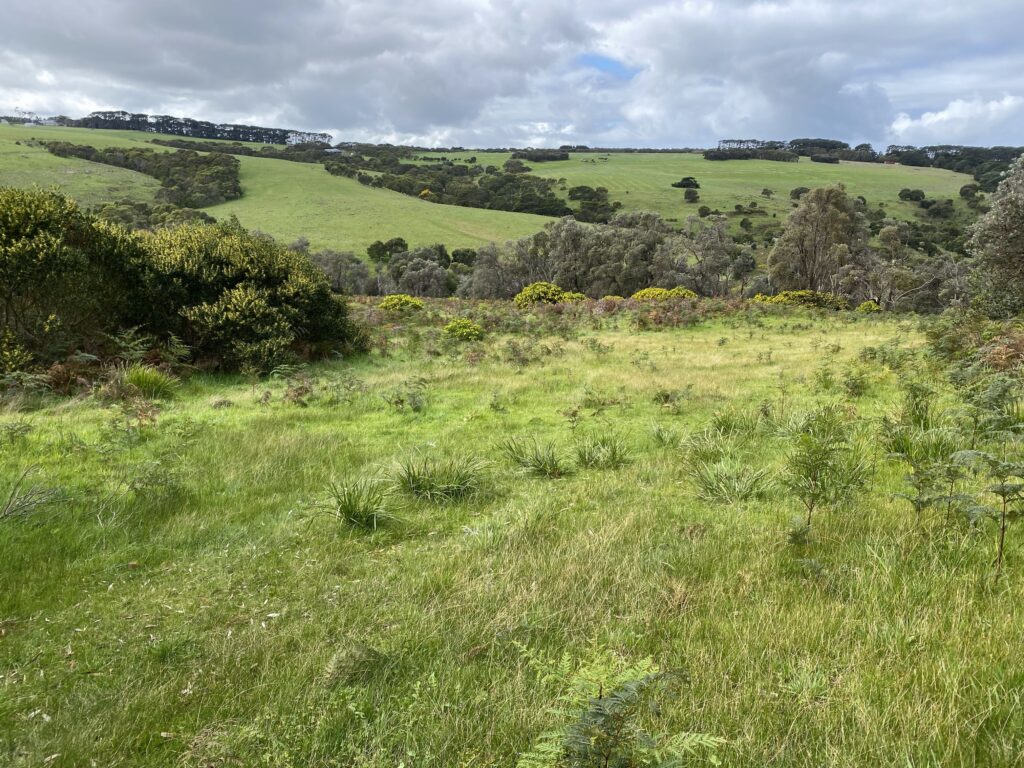
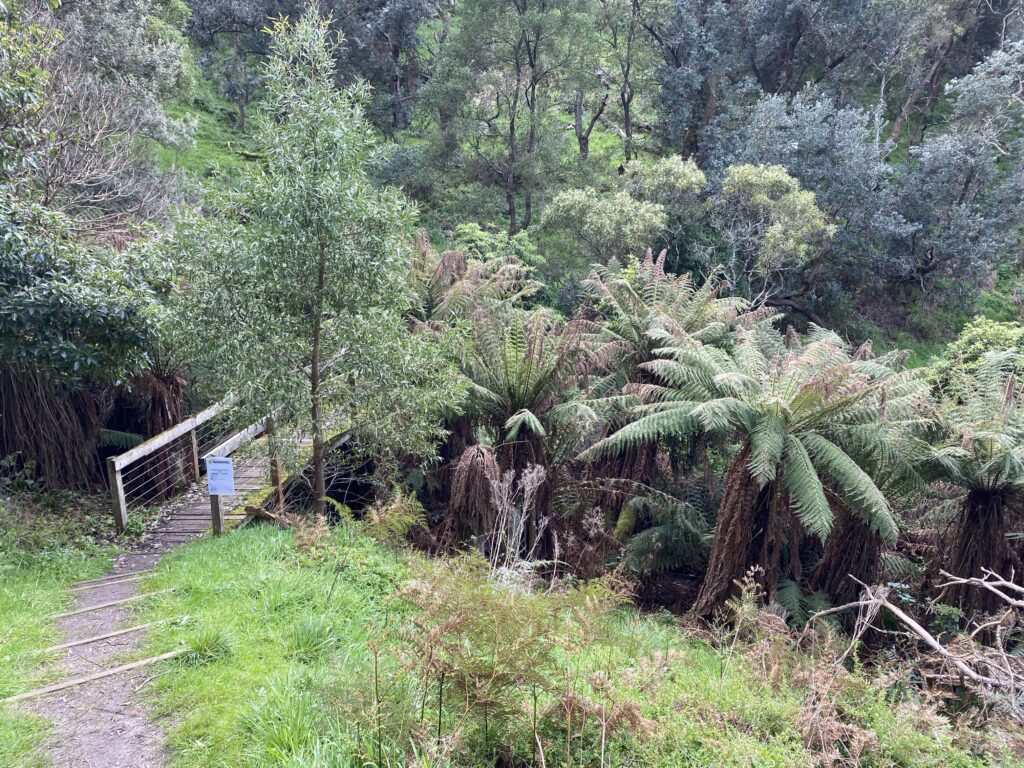
We reached Lightwood Camp and saw another sign with a map:
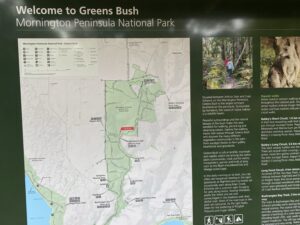
Sign reads:
Situated between Arthurs Seat and Cape Schanck on the Mornington Peninsula, Greens Bush is the largest remnant bushland on the peninsula. Surrounded by farmland, this island of native habitat is a wildlife haven.
Peaceful surroundings and the natural beauty of the bush make this area excellent for walking, picnicking and observing nature. Explore the walking tracks that weave through Greens Bush and discover the many different vegetation communities in the park -from eucalypt forests to fern gullies, heathlands and grasslands.
Greens Bush is rich in birdlife, mammals and reptiles which live among the native plant communities. Look out for wrens, honeyeaters, parrots and birds of prey such as the Black-shouldered Kite and Wedge-tailed Eagle.
In the early morning or at dusk, you can often see kangaroos feeding in the open grasslands at Highfield and shy koalas are occasionally seen along Main Creek. Echidnas are a common sight foraging for ants along tracks. Swamp Wallabies prefer the forest and are well camouflaged in the shadows with their darker coat. Most of the mammals in the park are nocturnal. As the light fades, listen for the twittering of Ringtail Possums and Sugar Gliders.
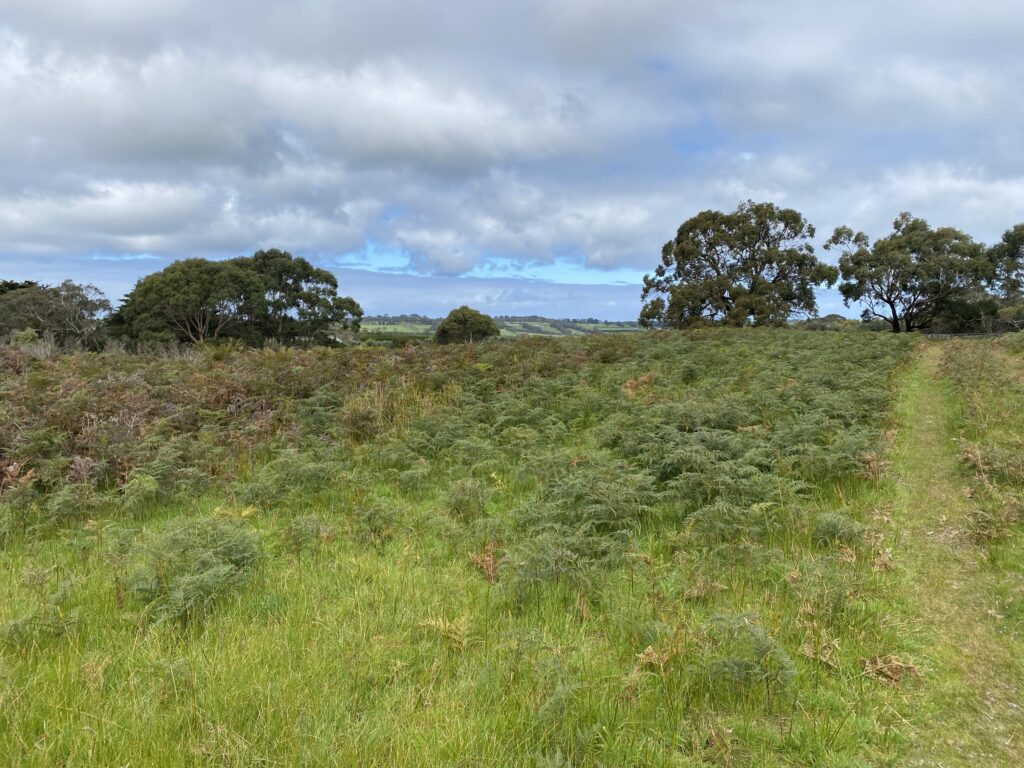
We turned back once we reached North-South Break.
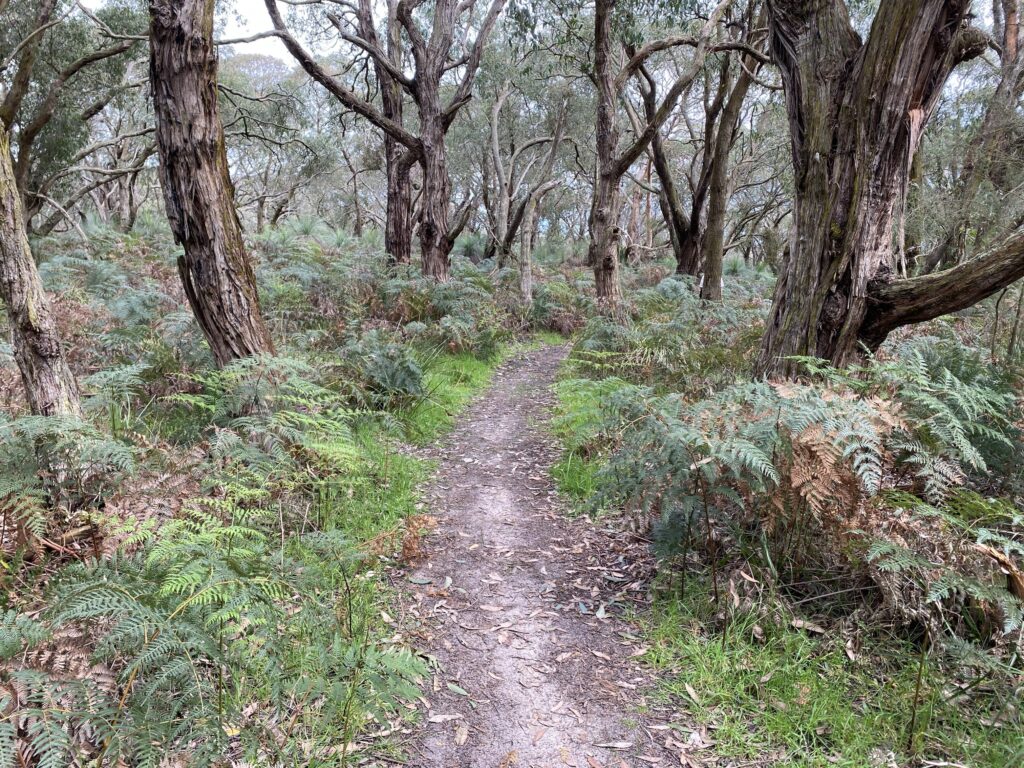
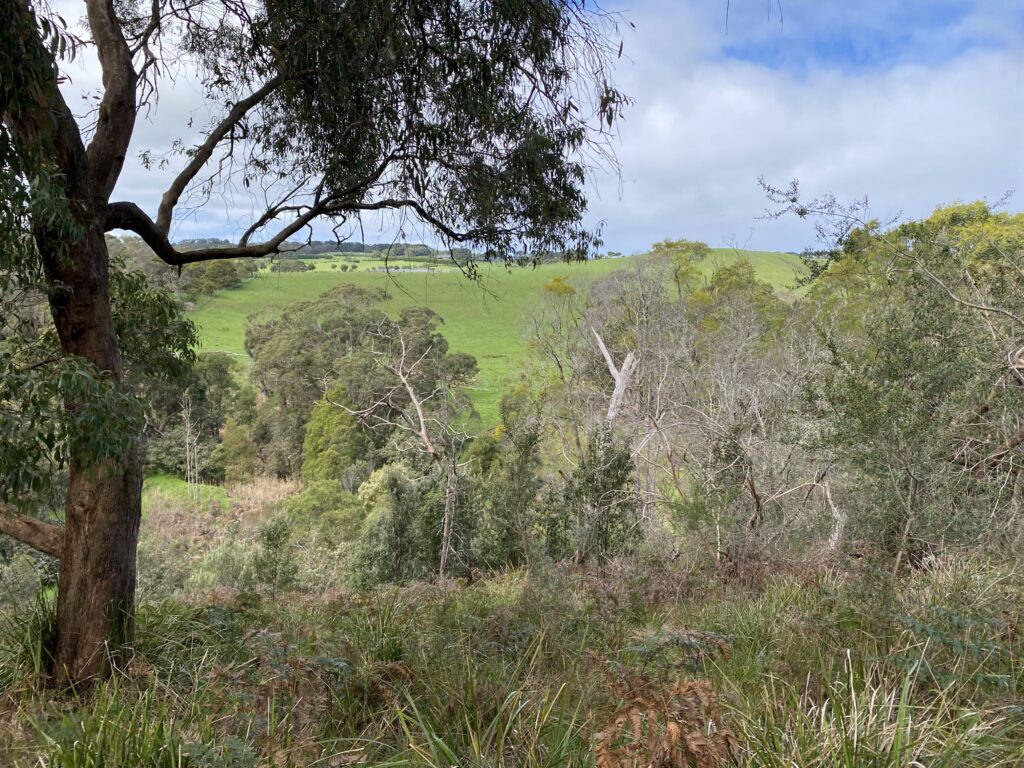
The weather was nice and sunny. It wasn’t hot in the beginning of September.
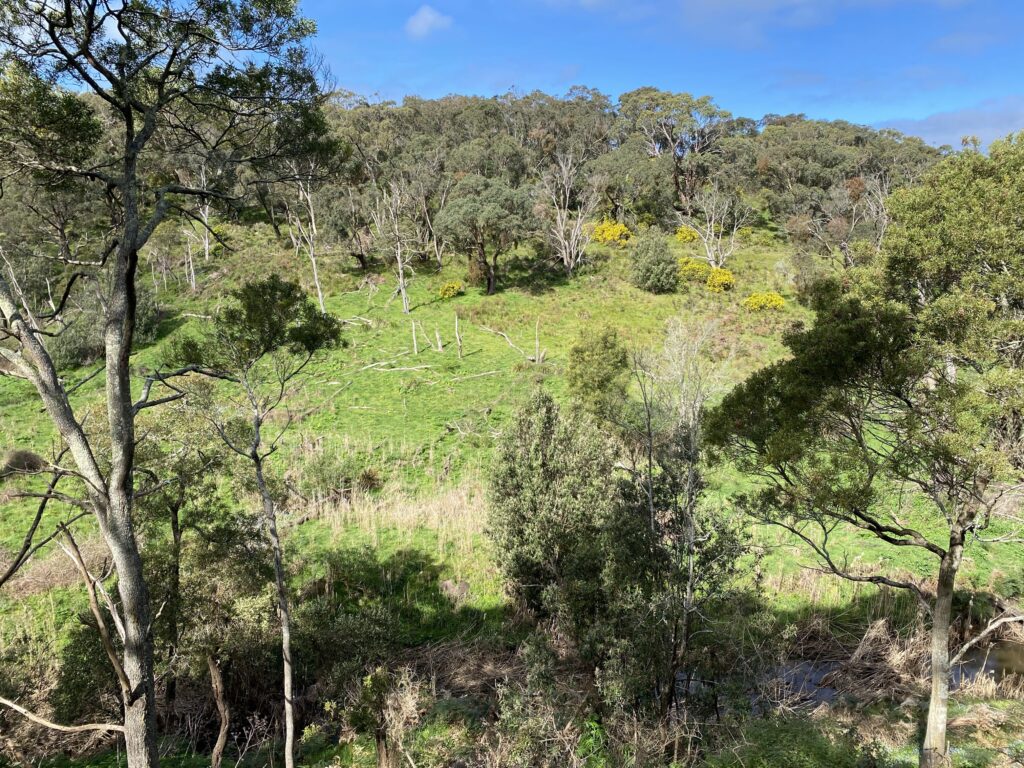
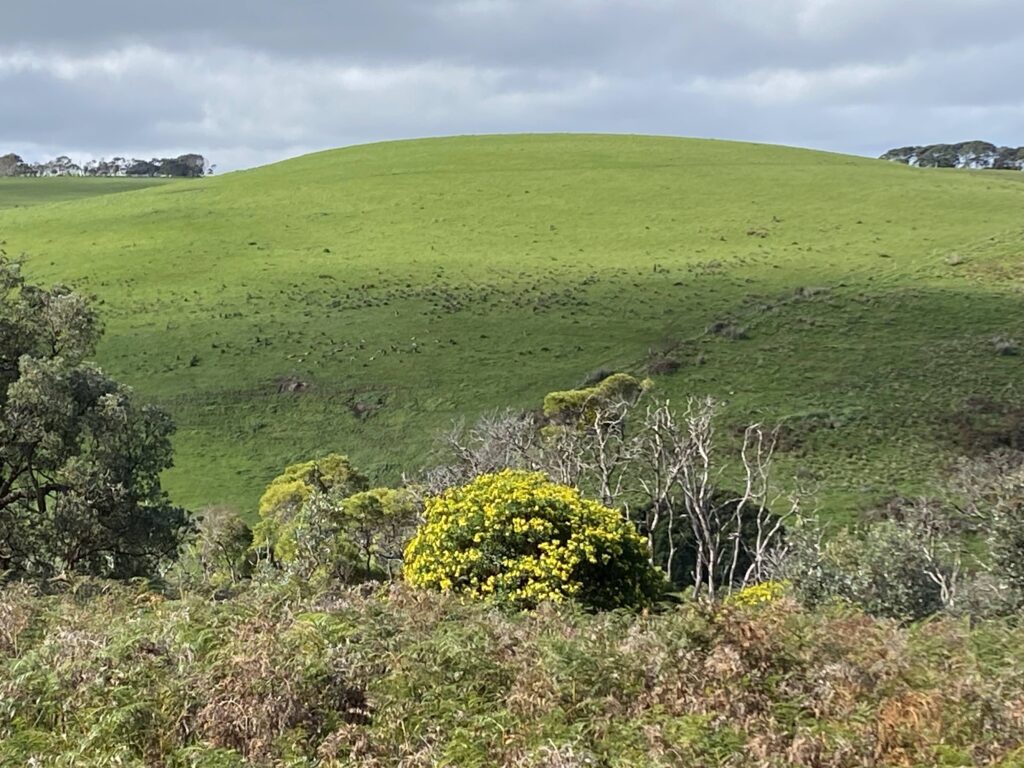
Some of the spots on that hill are actually kangaroos resting on the grass.
We walked about 12.5 km total. Overall, it’s a great peaceful walk.
We had a lunch at the Hawkes Farm. Unfortunately we were short on time and decided to skip the ocean. We’ll come back to it later!