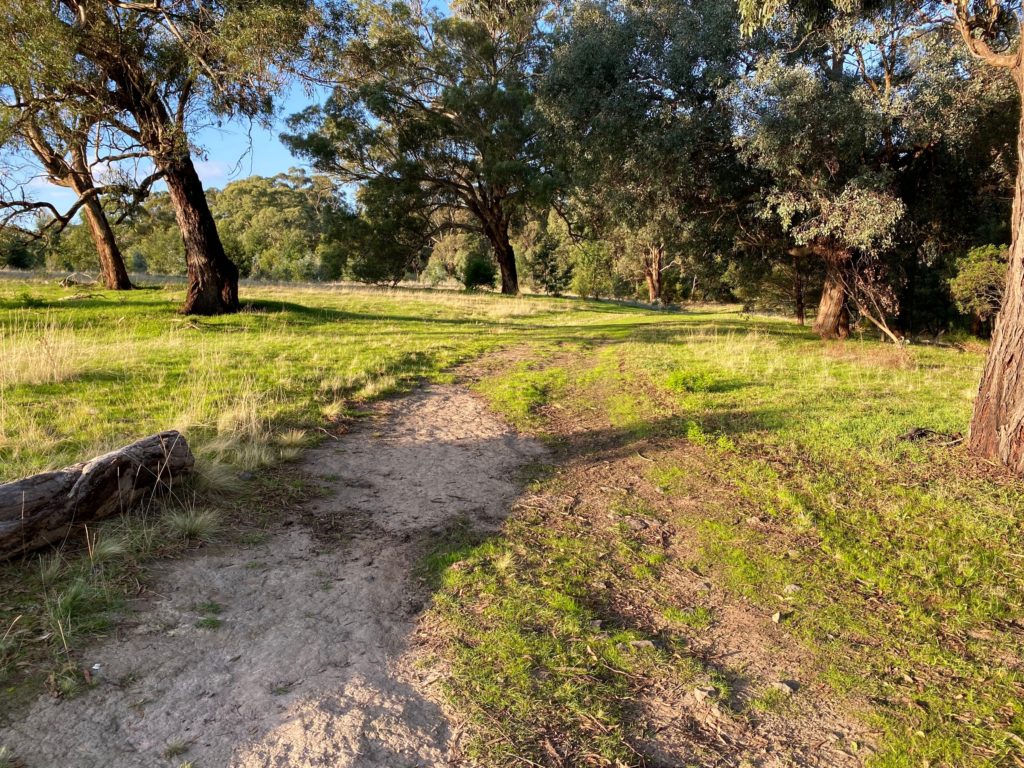
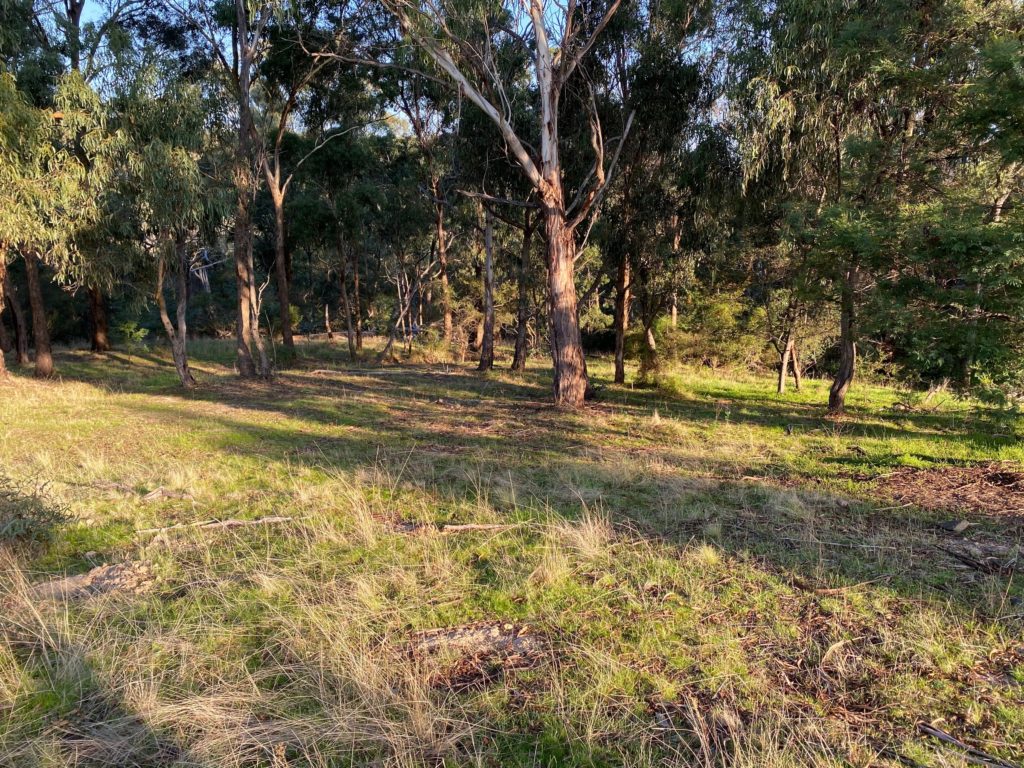
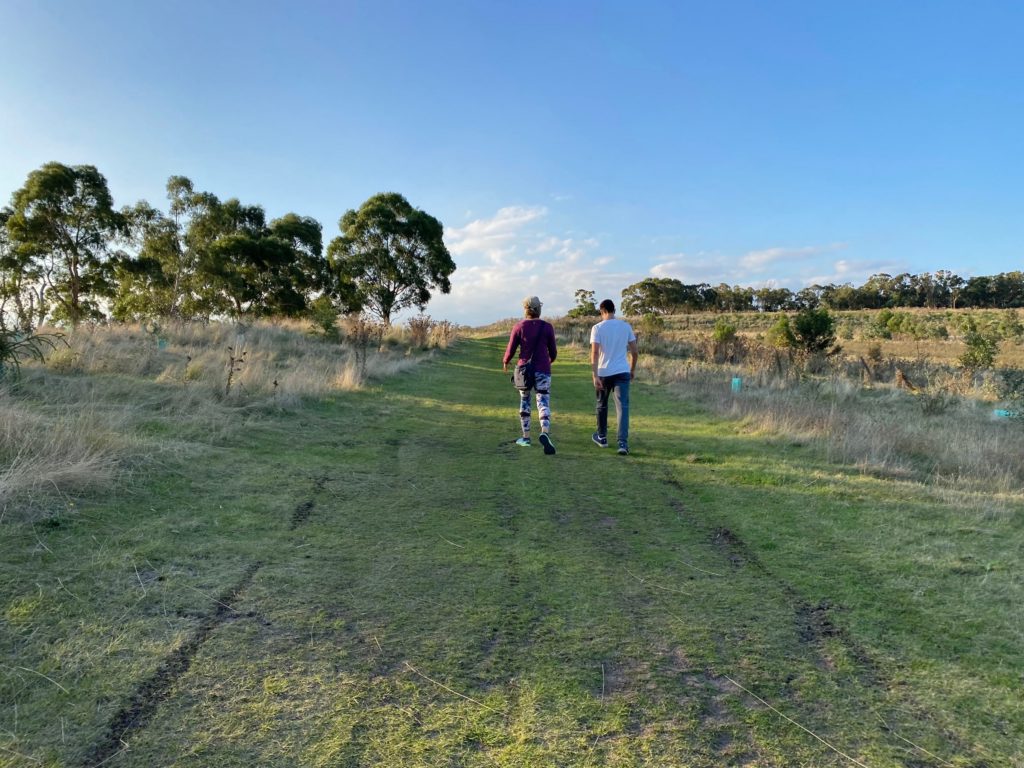
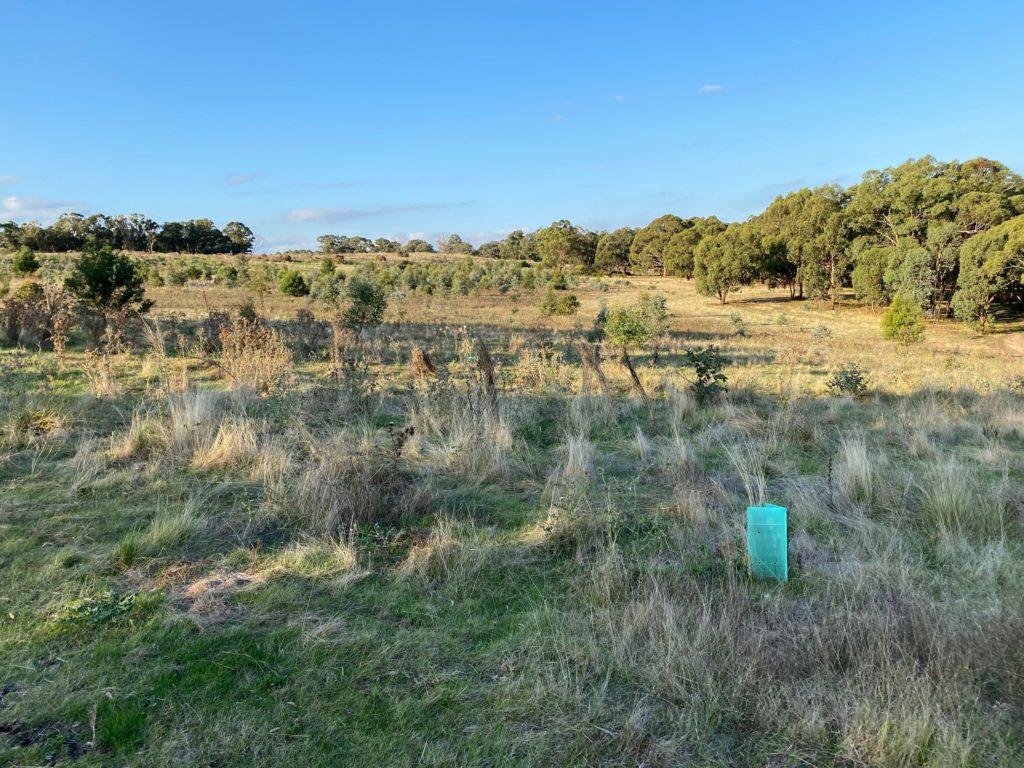
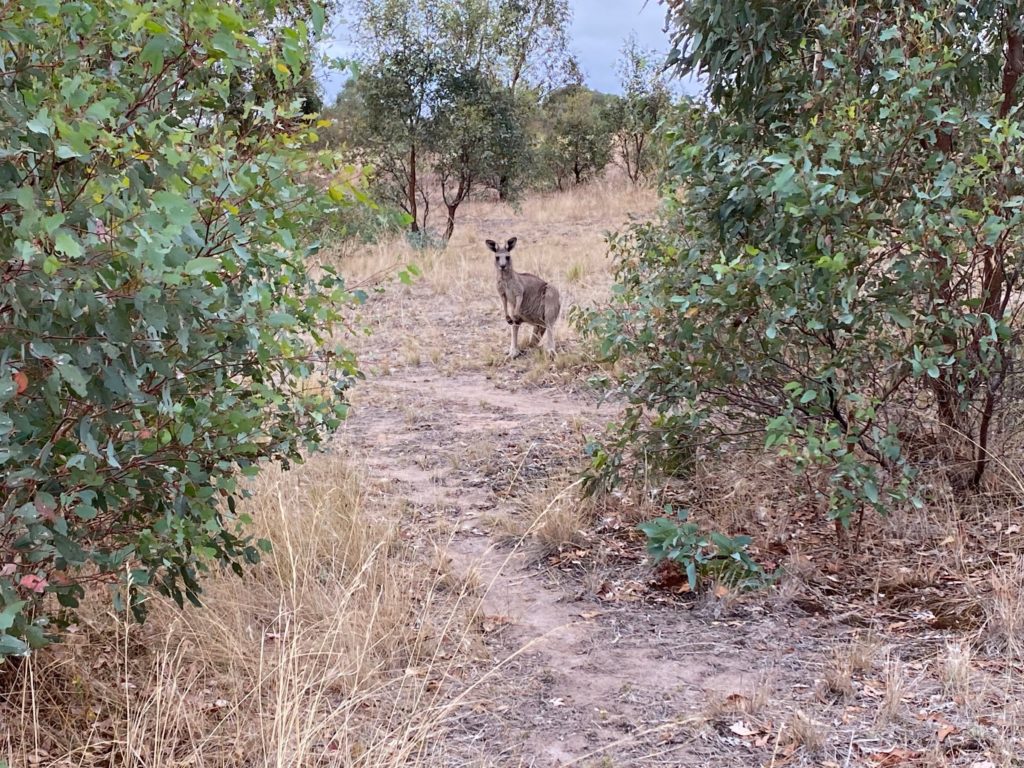
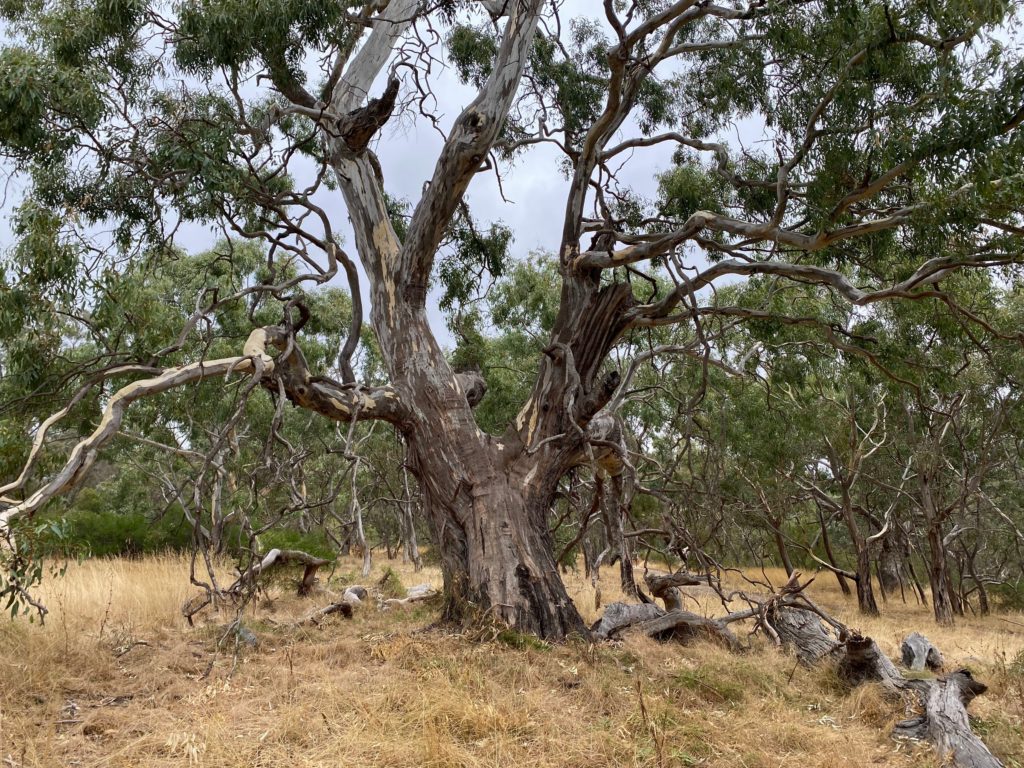
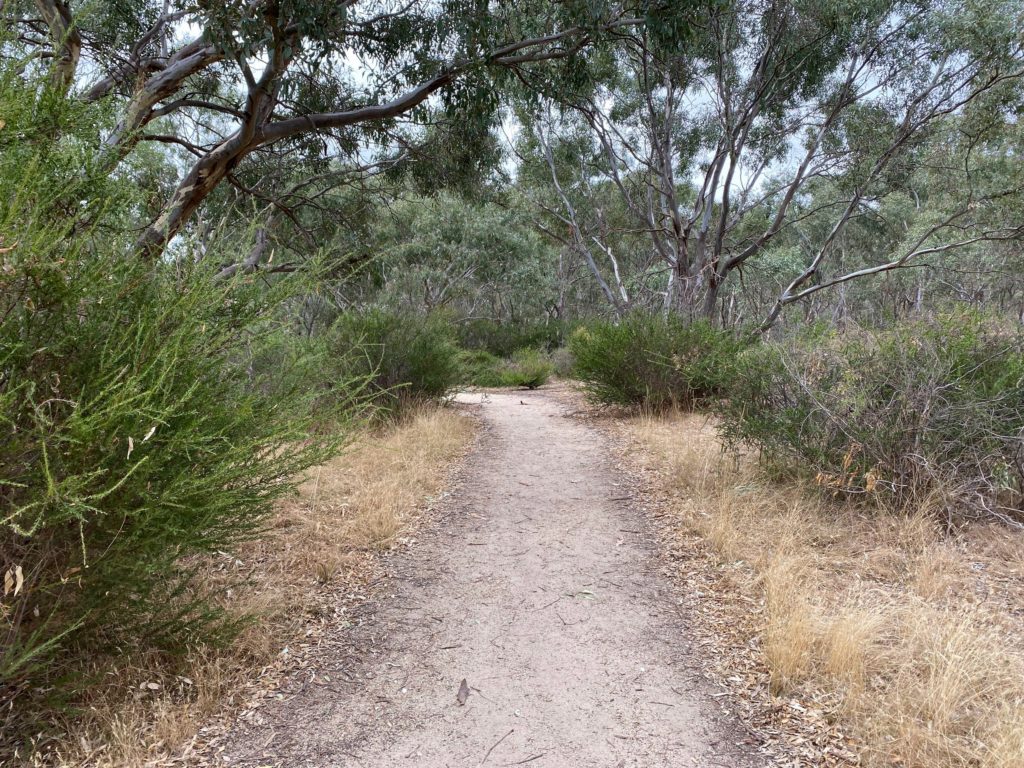
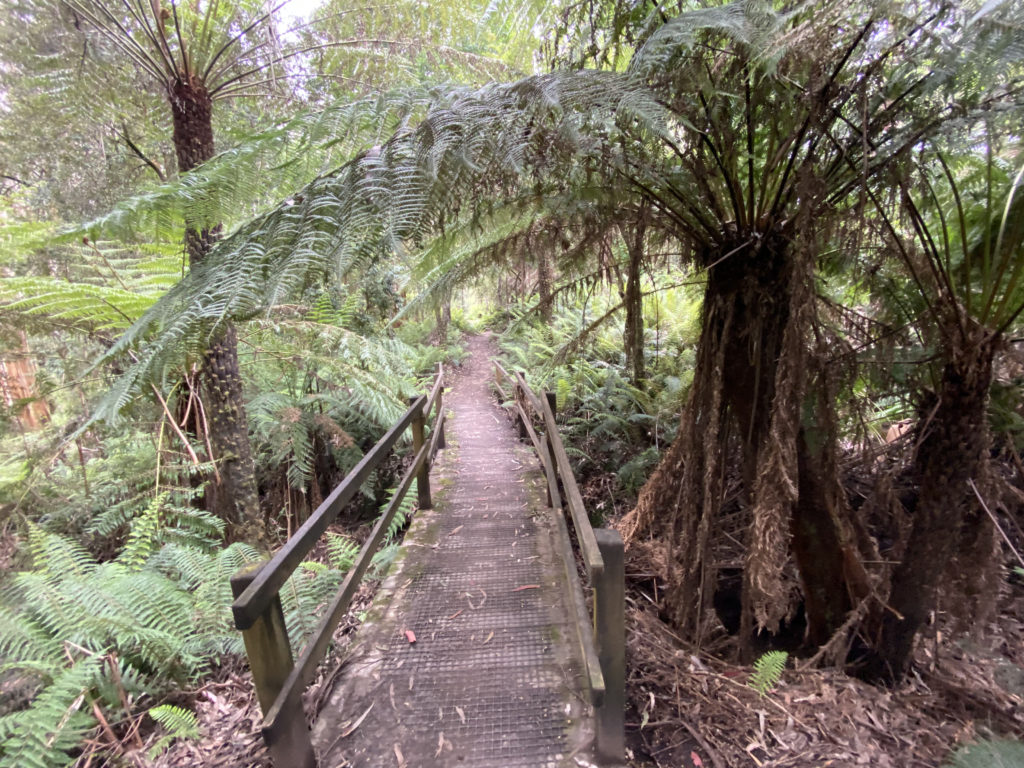
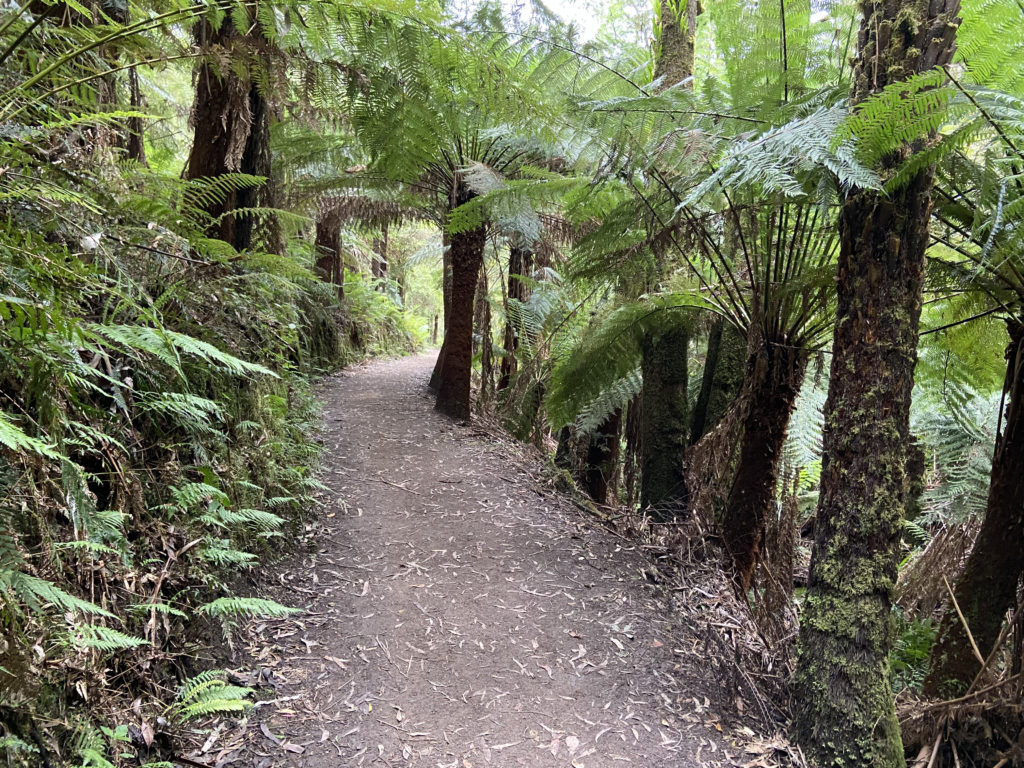
I recently visited Tower Hill Nature reserve to explore the unique geological formations, hopefully spot some wildlife and make claim to the fact I had bushwalked in a dormant volcano! Myself and some friends picked the Wagon Bay Loop which didn’t disappoint. The entire reserve sits in a volcanic crater, making it a fascinating area, regardless of what hiking route you choose to complete!
The Wagon Bay Loop is a 1.5-kilometre trail that takes you on a journey around the tranquil waters of Wagon Bay pond. The trail is graded as easy difficulty and takes approximately half an hour to complete. The loop is well signposted, and there are informative signs along the way that provide details about the flora and fauna that call the reserve home.
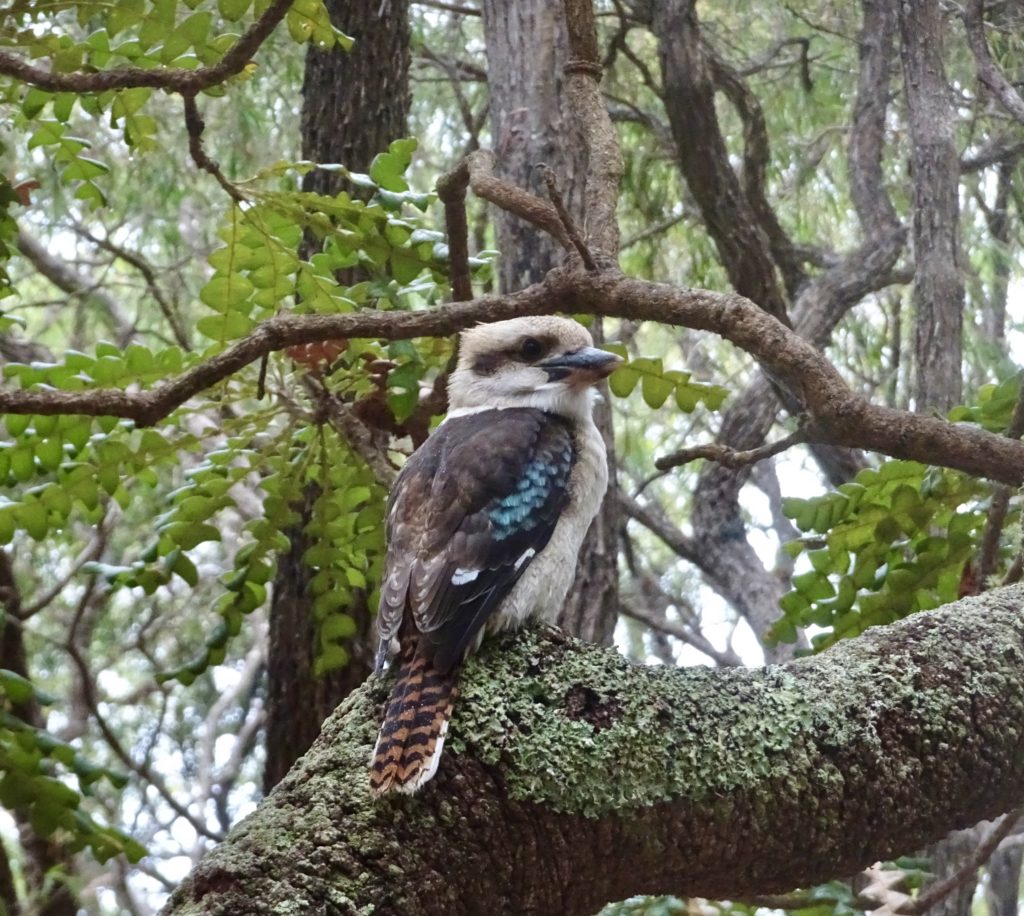
Kookaburra
As soon as I stepped onto the trail, I was greeted by beautiful views on the surrounding wetlands. It had recently rained which made the landscape lush and the air sweet; perfect bushwalking conditions. Black Swans, ducks and spoonbills were visible on the pond throughout, hiding in reeds and skimming across the water.
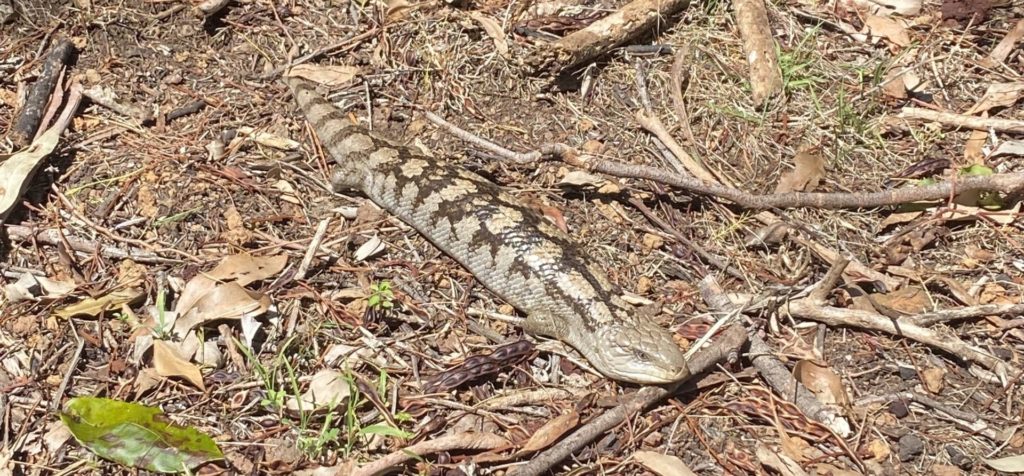
As I continued along the trail, I was amazed by the variety of vegetation and the diversity of wildlife that surrounded me. As always when bushwalking, I kept a lookout for the local snake population. Tower Hill Wildlife Reserve is home to several species of snakes, one of which I was lucky enough to spot (at a safe distance) curled up on the grass verge. Spotting a beautiful copperhead snake was a first for me, it slithered away before I was able to snap a photo! I did however, get a photo of a cute blue-tongued skink which was basking in the sun on the path in front of me!
Blue-tongued Skink
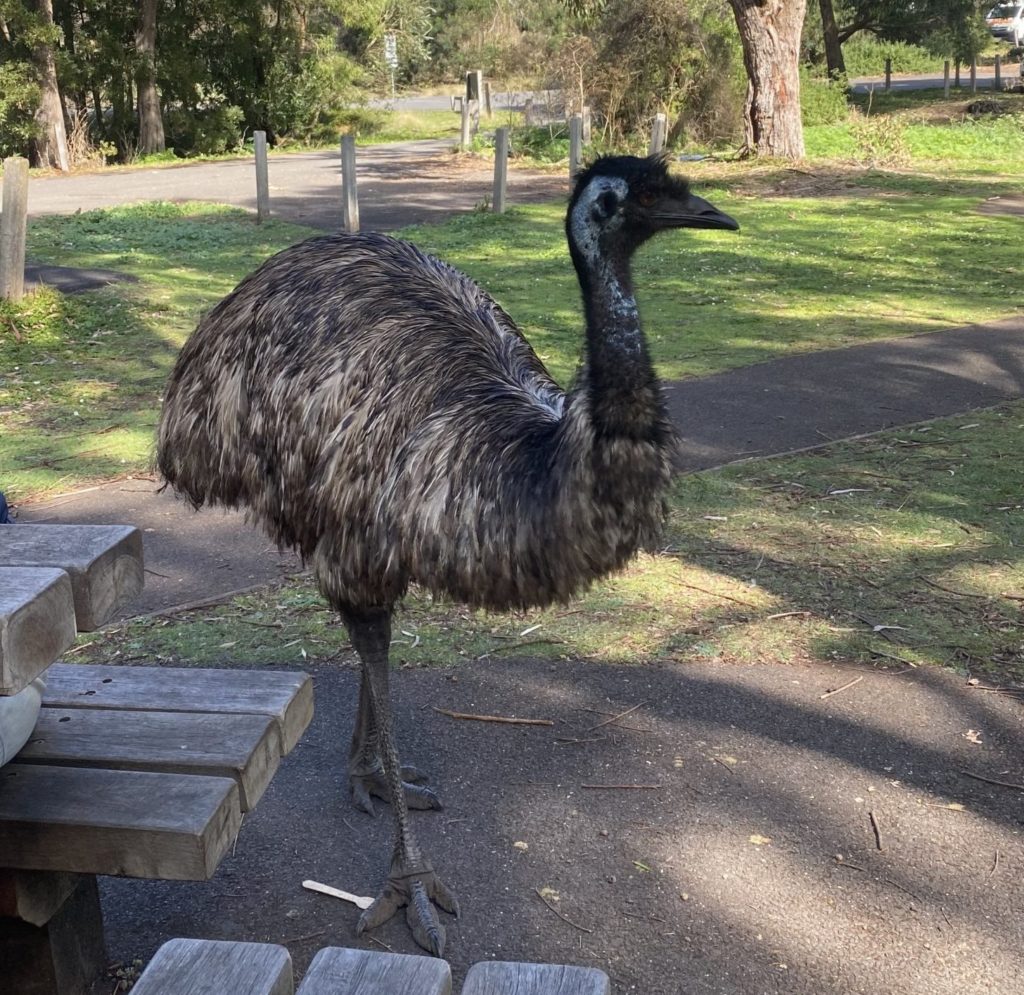
I completed the loop in just over half an hour, then headed to the picnic area by the Visitors Centre for a picnic lunch. On our way to the picnic area, we caught a glimpse of feathers and a flash of blue… before I knew it we were face-to-face with a pair of emus!
Emu
The big, beautiful birds walked rather prehistorically around the picnic area, likely trying their luck at a snack! There are many signs in the area warning visitors against feeding the birds – I wouldn’t help but assume the birds were regulars at the picnic spot!
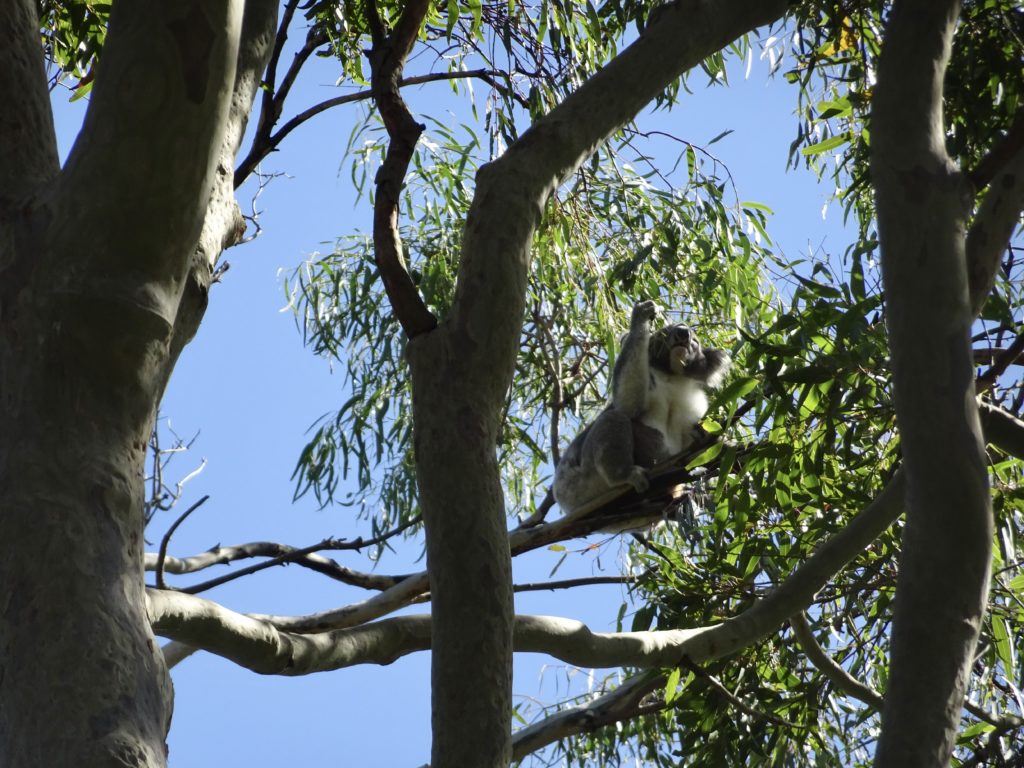
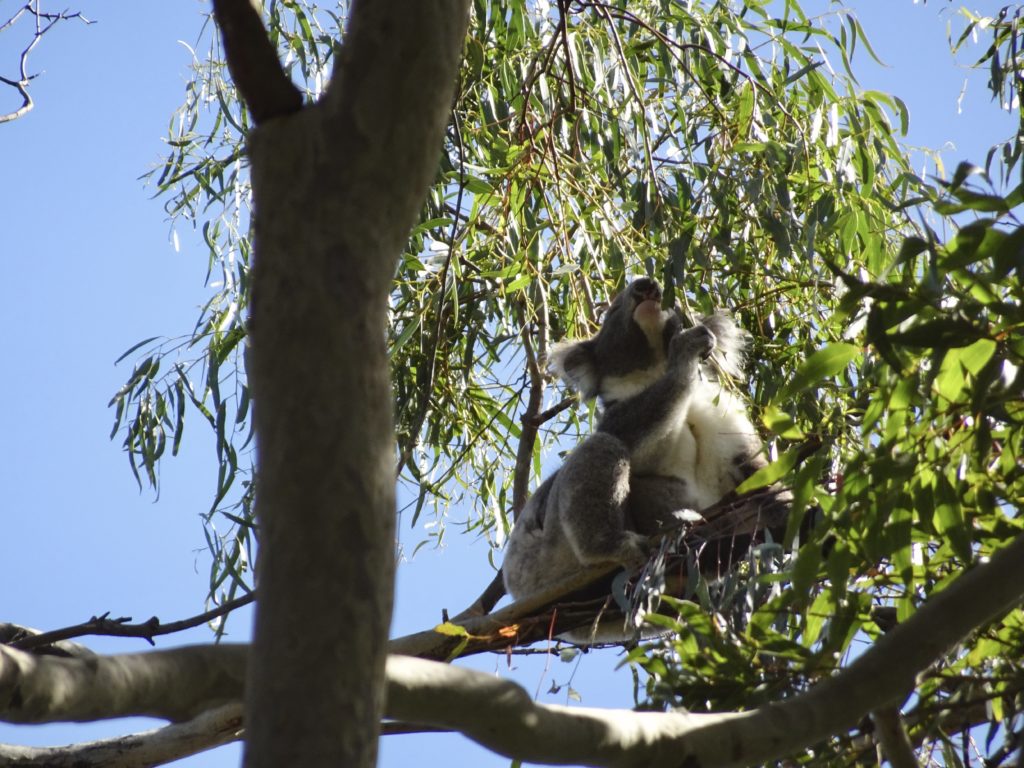
Even though we had finished the trail, we were still in store for another surprise… we were lucky enough to spot a koala high in a eucalyptus tree, munching on some leaves. It was an incredible experience to witness not only a wild koala (which never gets old) but one that was awake!
Koalas sleep for around 20 hours a day, so we were really stoked to have this experience.
The Tower Hill Nature Reserve completely surpassed my expectations, the bush walk we chose was on the easier side but still so rewarding with great views and wildlife encounters. A visit to the reserve is a must-do for anyone looking for something a little different and a lot interesting!
We decided to go to Point Nepean National Park, even though it is almost a 2-hour drive from our home. We were lucky with the weather – it was sunny and warm.
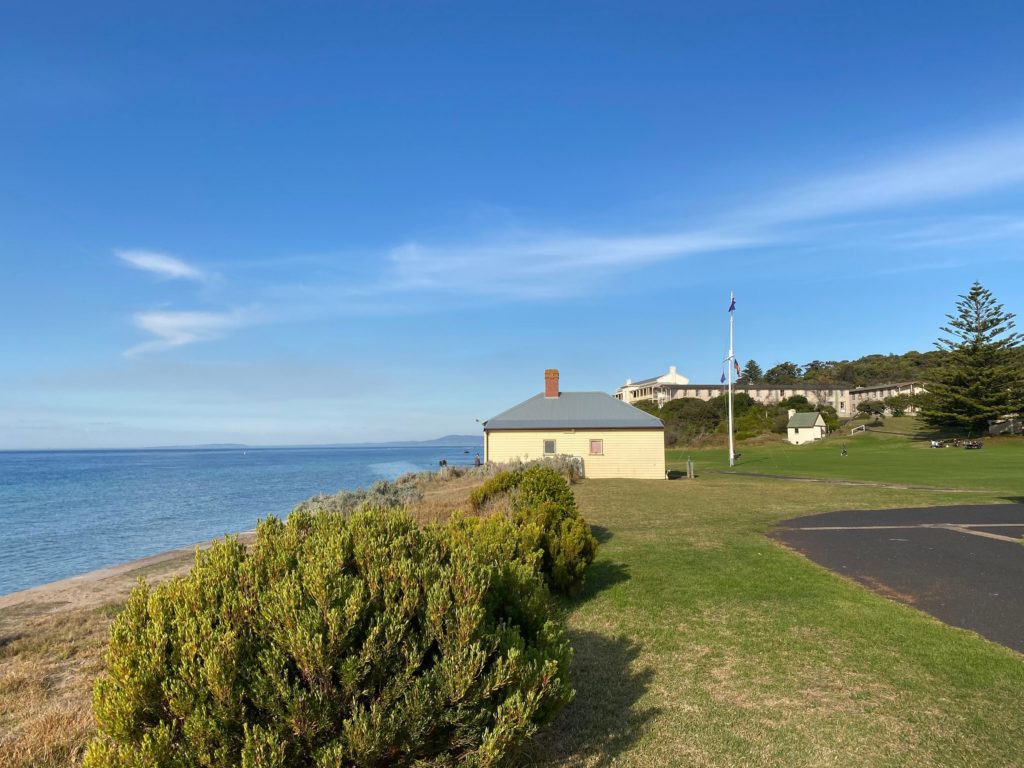
By the time we arrived, it was already lunchtime. So, we started by having lunch next to the Gunner’s Cottage. The cottage itself was closed. There was a toilet nearby, but no drinking water, even though we saw a sign saying that it’s available here.
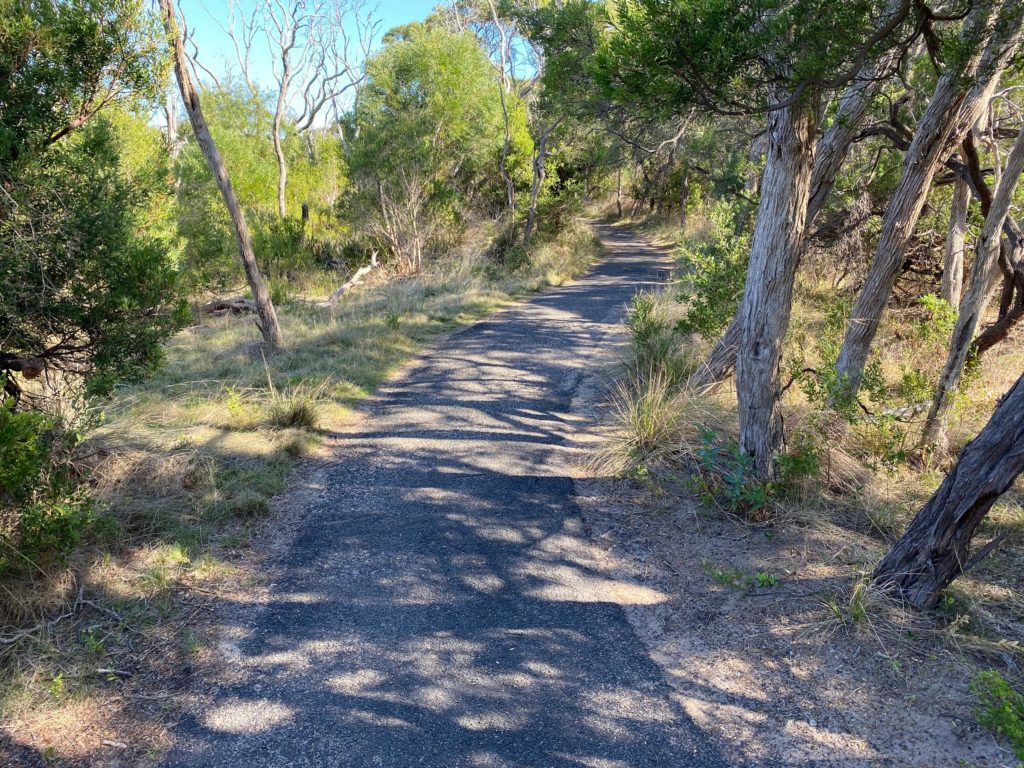
We started on the Walter Pisterman Track.
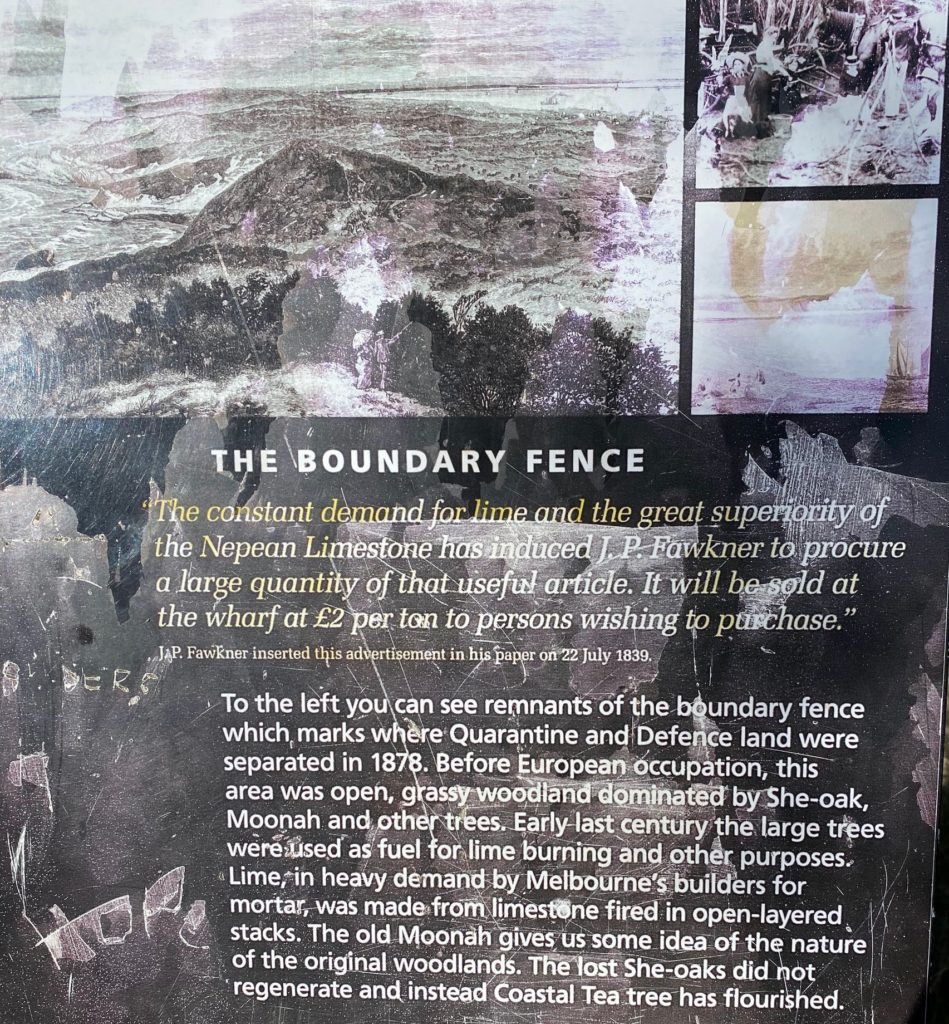
The sign reads:
The Boundary Fence The constant demand for lime and the great superiority of the Nepean Limestone has induced J. P. Fawkner to procure a large quantity of that useful article. It will be sold at the wharf at £2 per ton to persons wishing to purchase.” JAP. Fawkner inserted this advertisement in his paper on 22 July 1839.
To the left you can see remnants of the boundary fence which marks where Quarantine and Defence land were separated in 1878. Before European occupation, this area was open, grassy woodland dominated by She-oak, Moonah and other trees. Early last century the large trees were used as fuel for lime burning and other purposes. Lime, in heavy demand by Melbourne’s builders for mortar, was made from limestone fired in open-layered stacks. The old Moonah gives us some idea of the nature of the original woodlands. The lost She-oaks did not regenerate and instead Coastal Tea tree has flourished.
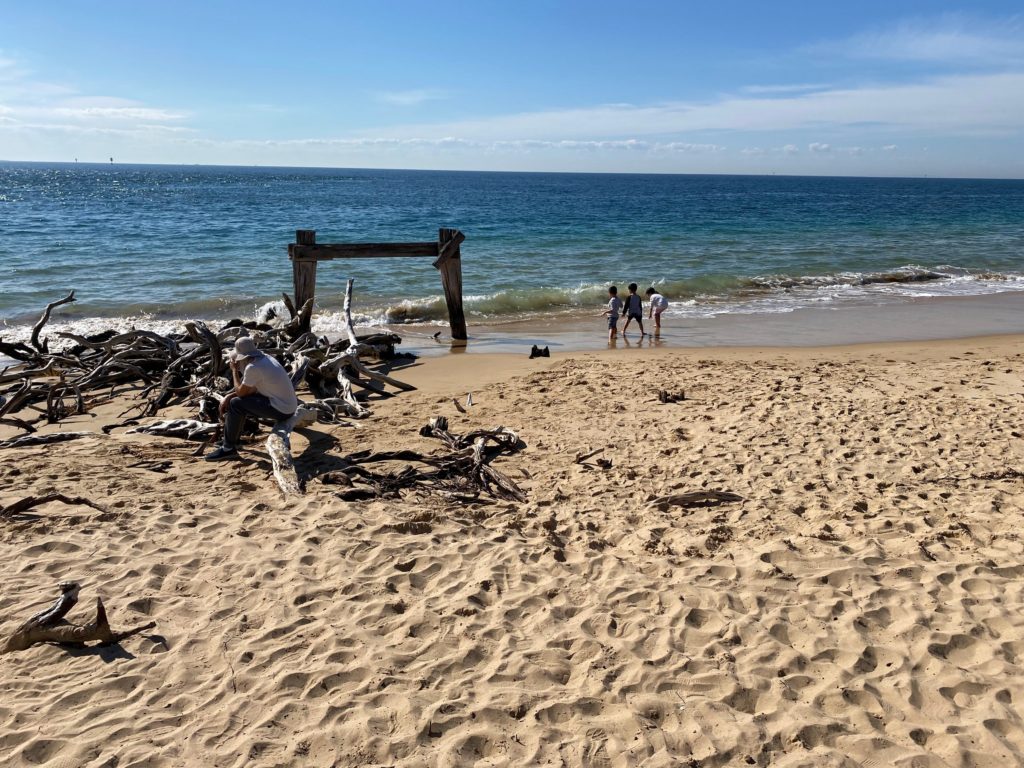
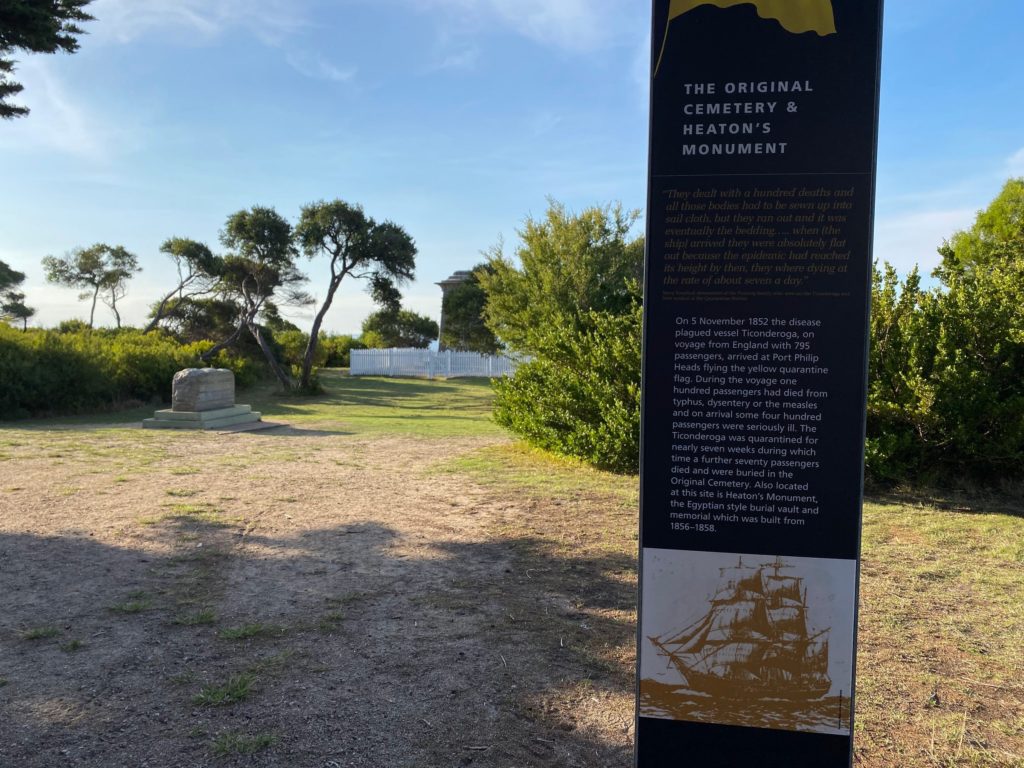
We walked past the cemetery and reached the remains of the Cattle Quarantine Jetty.
This is all that remains from the Cattle Quarantine Jetty
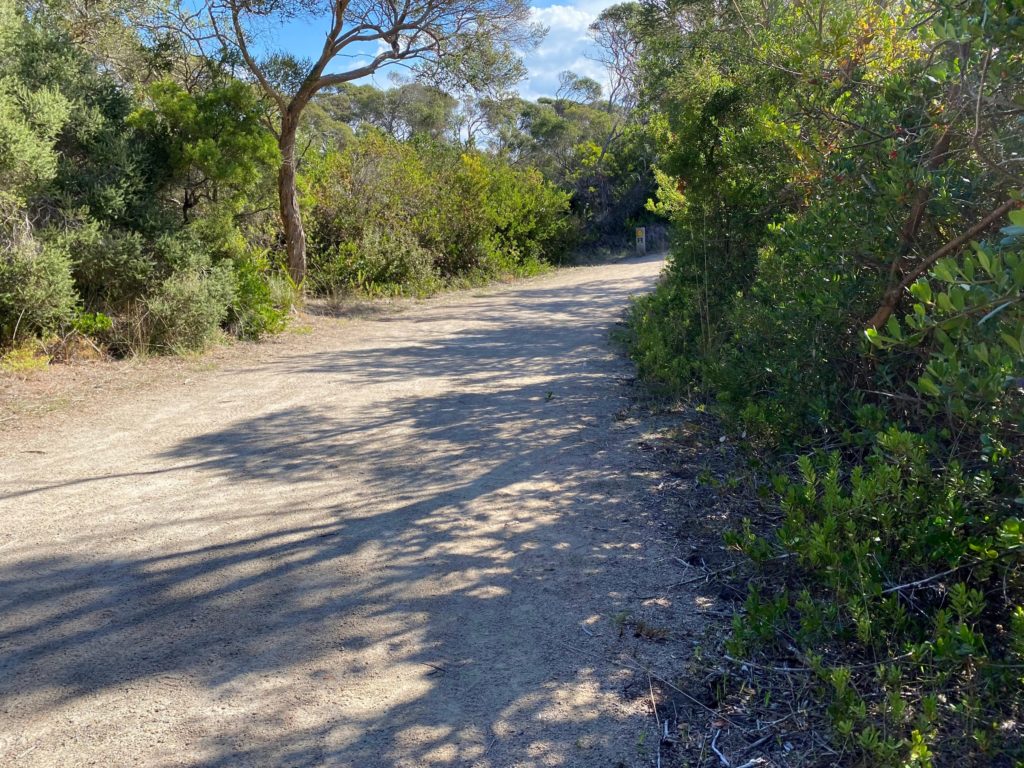
We walked on the Coles Track then.
Coles Track
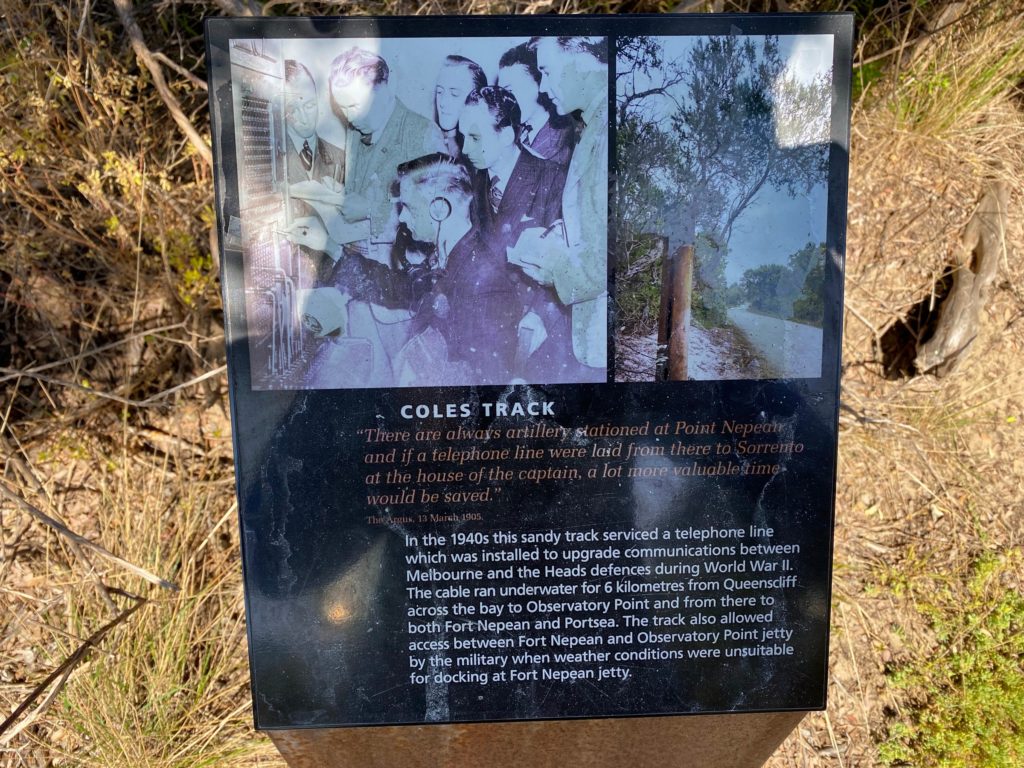
The sign reads:
COLES TRACK “There are always artillery stationed at Point Nepean and if a telephone line were laid from there to Sorrento at the house of the captain, a lot more valuable time would be saved.” The Argus, 13 March 1905.
In the 1940s this sandy track serviced a telephone line which was installed to upgrade communications between Melbourne and the Heads defences during World War II. The cable ran underwater for 6 kilometres from Queenscliff across the bay to Observatory Point and from there to both Fort Nepean and Portsea. The track also allowed access between Fort Nepean and Observatory Point jetty by the military when weather conditions were unsuitable for docking at Fort Nepean jetty.
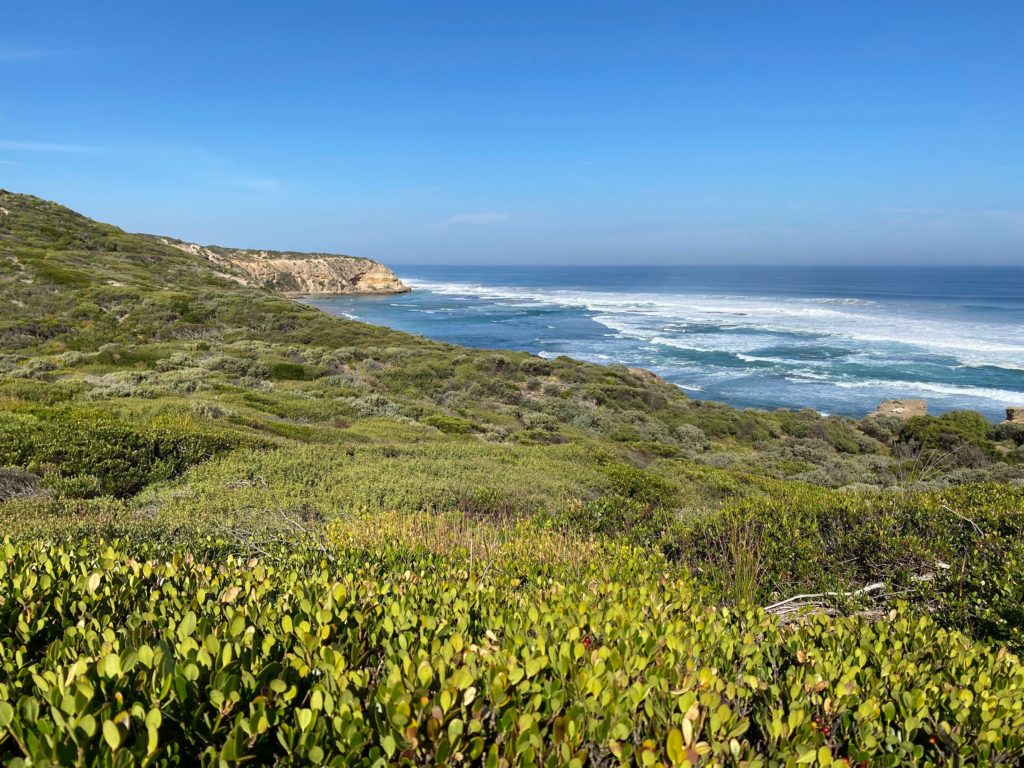
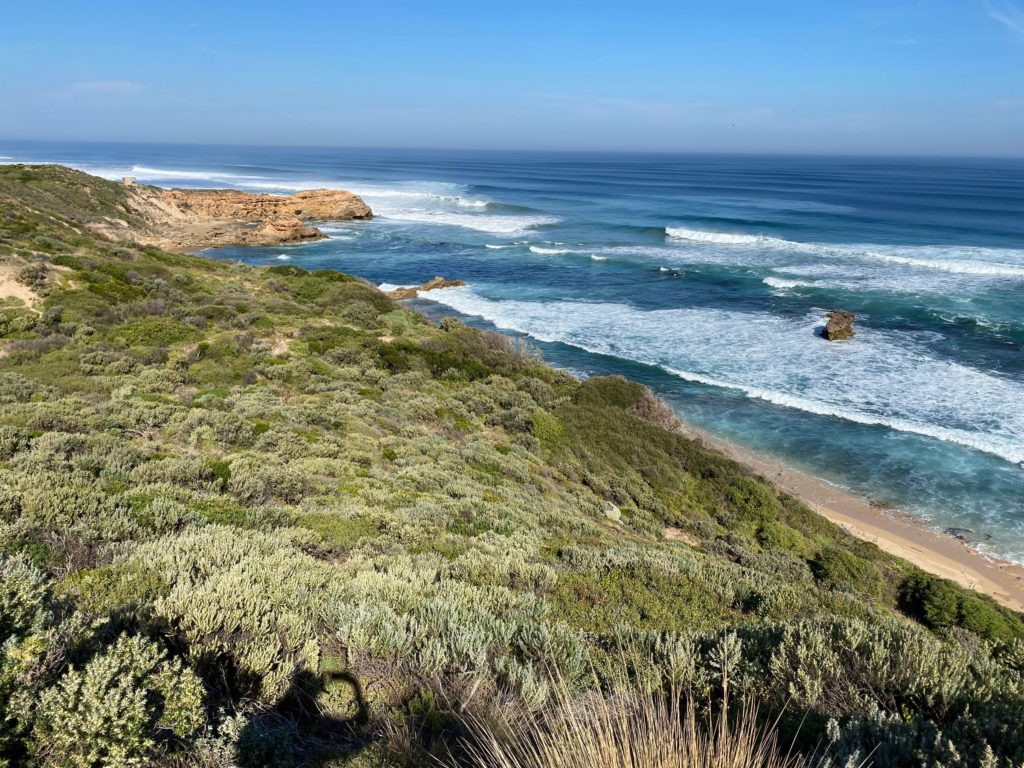
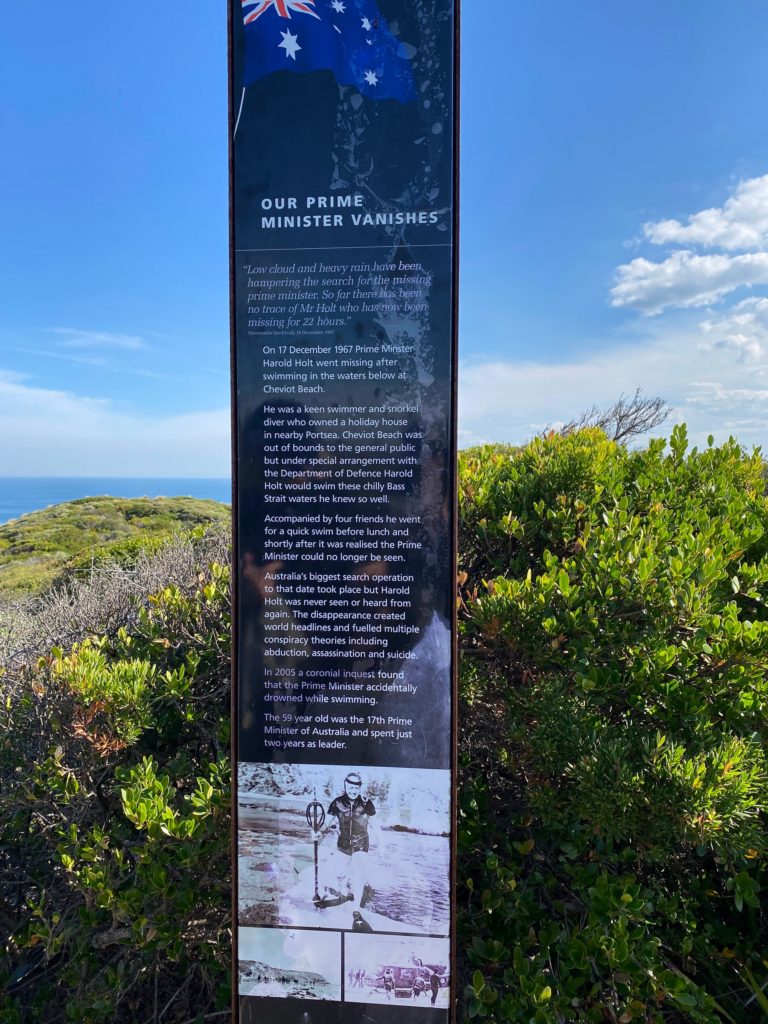
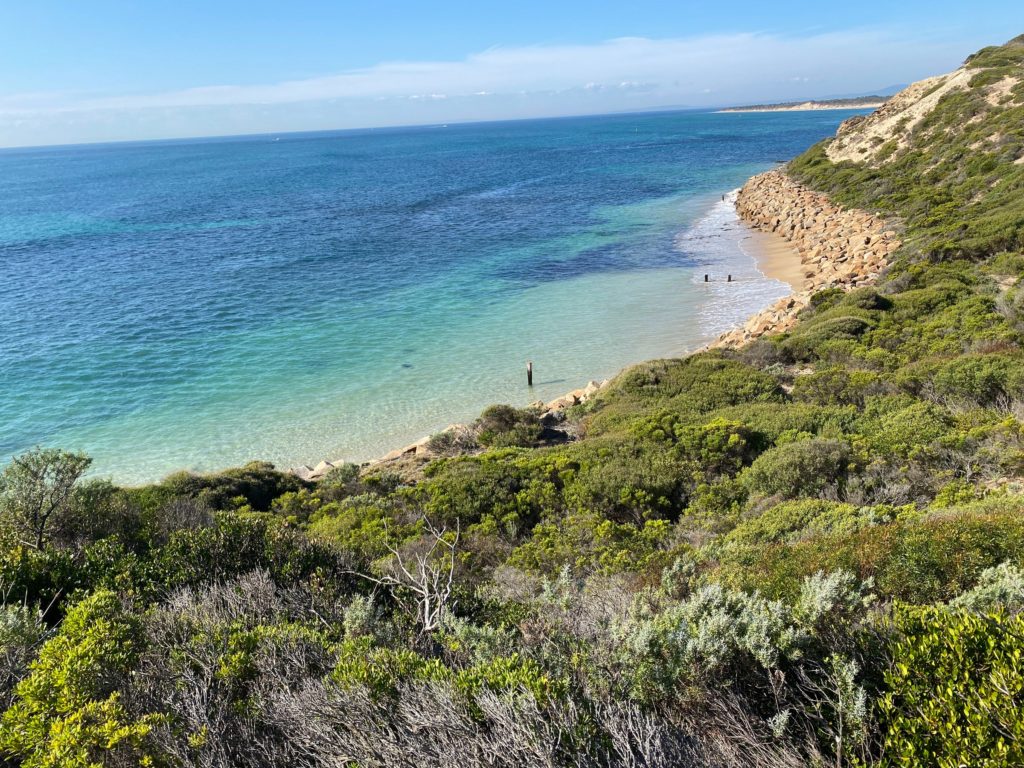
We visited a lookout overlooking the Cheviot Beach where Australian prime minister disappeared.
OUR PRIME MINISTER VANISHES “Low cloud and heavy rain have been hampering the search for the missing prime minister. So far there has been no trace of Mr Holt who has now been missing for 22 hours.”
On 17 December 1967 Prime Minster Harold Holt went missing after swimming in the waters below at Cheviot Beach.
He was a keen swimmer and snorkel diver who owned a holiday house in nearby Portsea. Cheviot Beach was out of bounds to the general public but under special arrangement with the Department of Defence Harold Holt would swim these chilly Bass Strait waters he knew so well.
Accompanied by four friends he went for a quick swim before lunch and shortly after it was realised the Prime Minister could no longer be seen.
Australia’s biggest search operation to that date took place but Harold Holt was never seen or heard from again. The disappearance created world headlines and fuelled multiple conspiracy theories including abduction, assassination and suicide.
In 2005 a coronial inquest found that the Prime Minister accidentally drowned while swimming.
The 59 year old was the 17th Prime Minister of Australia and spent just two years as leader.
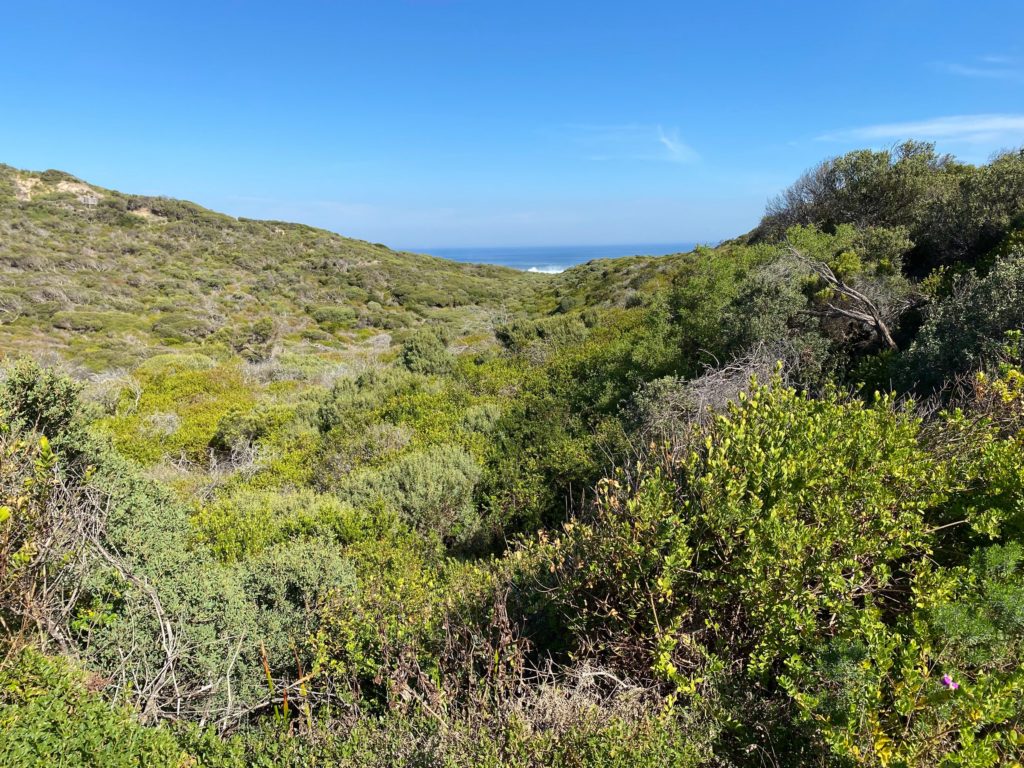
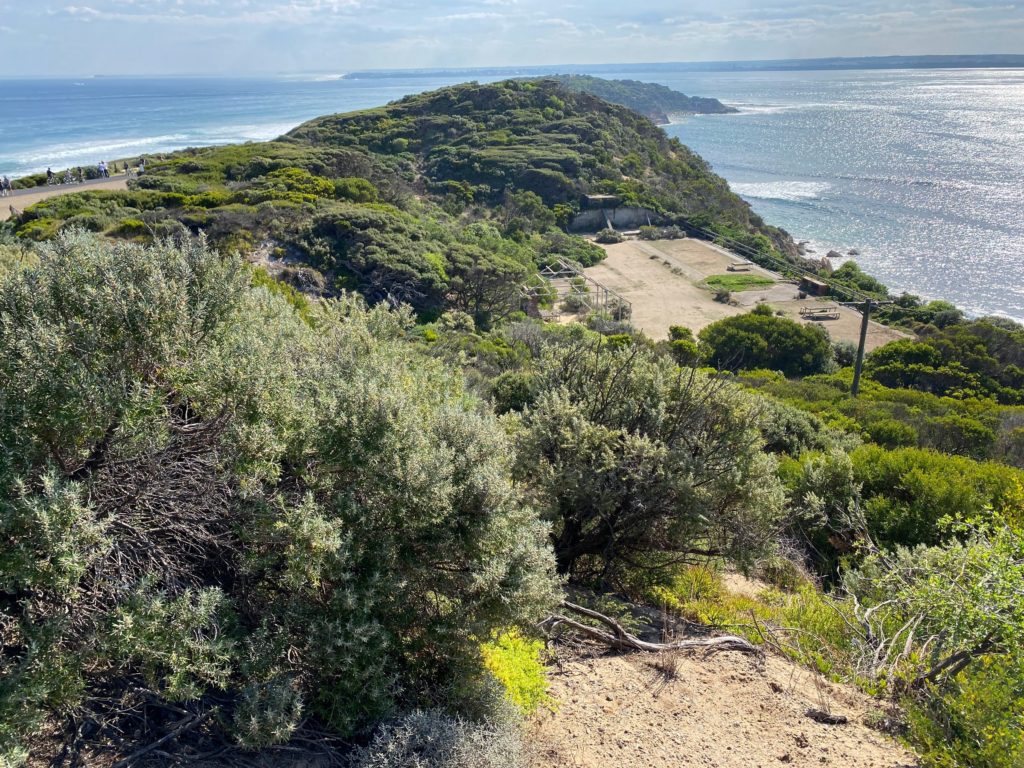
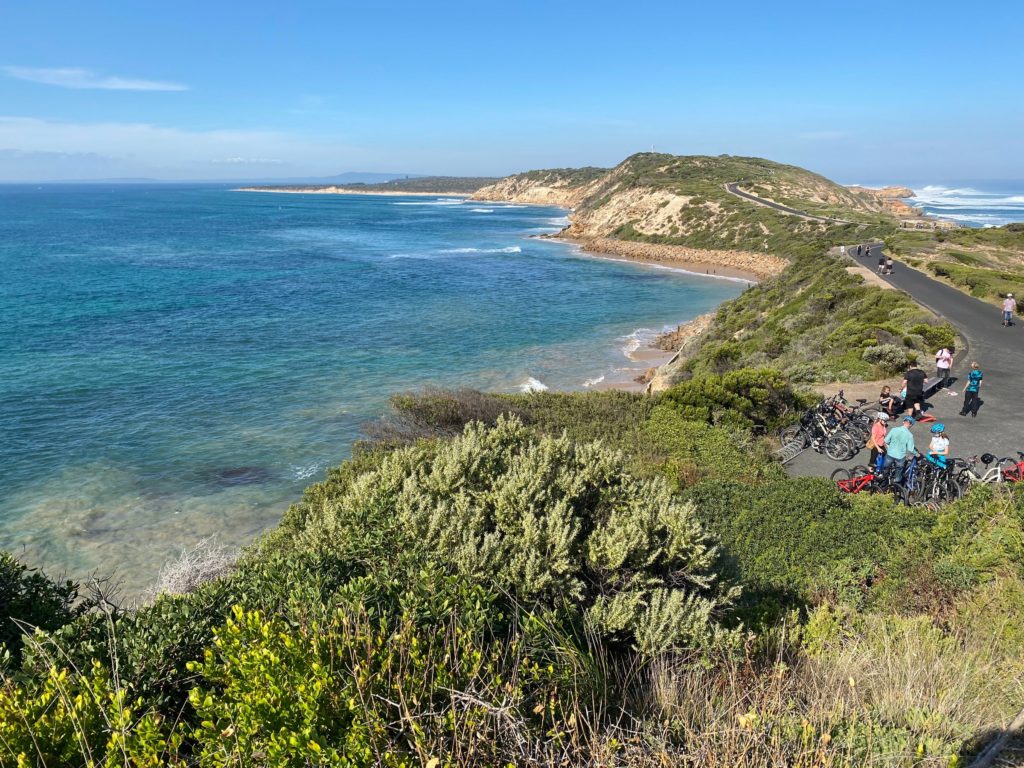
Great ocean and bay views from Fort Pearce.
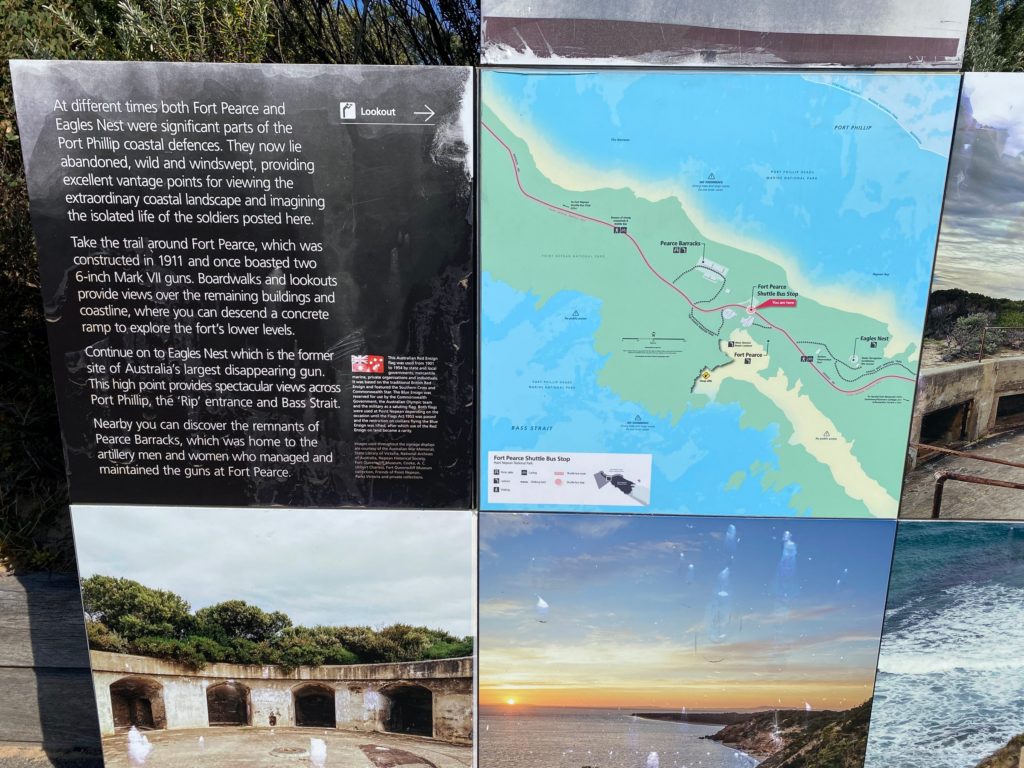
The sign reads:
At different times both Fort Pearce and Eagles Nest were significant parts of the Port Phillip coastal defences. They now lie abandoned, wild and windswept, providing excellent vantage points for viewing the extraordinary coastal landscape and imagining the isolated life of the soldiers posted here.
Take the trail around Fort Pearce, which was constructed in 1911 and once boasted two 6-inch Mark VII guns. Boardwalks and lookouts provide views over the remaining buildings and coastline, where you can descend a concrete ramp to explore the fort’s lower levels.
Continue on to Eagles Nest which is the former site of Australia’s largest disappearing gun. This high point provides spectacular views across Port Phillip, the ‘Rip’ entrance and Bass Strait.
Nearby you can discover the remnants of Pearce Barracks, which was home to the artillery men and women who managed and maintained the guns at Fort Pearce.
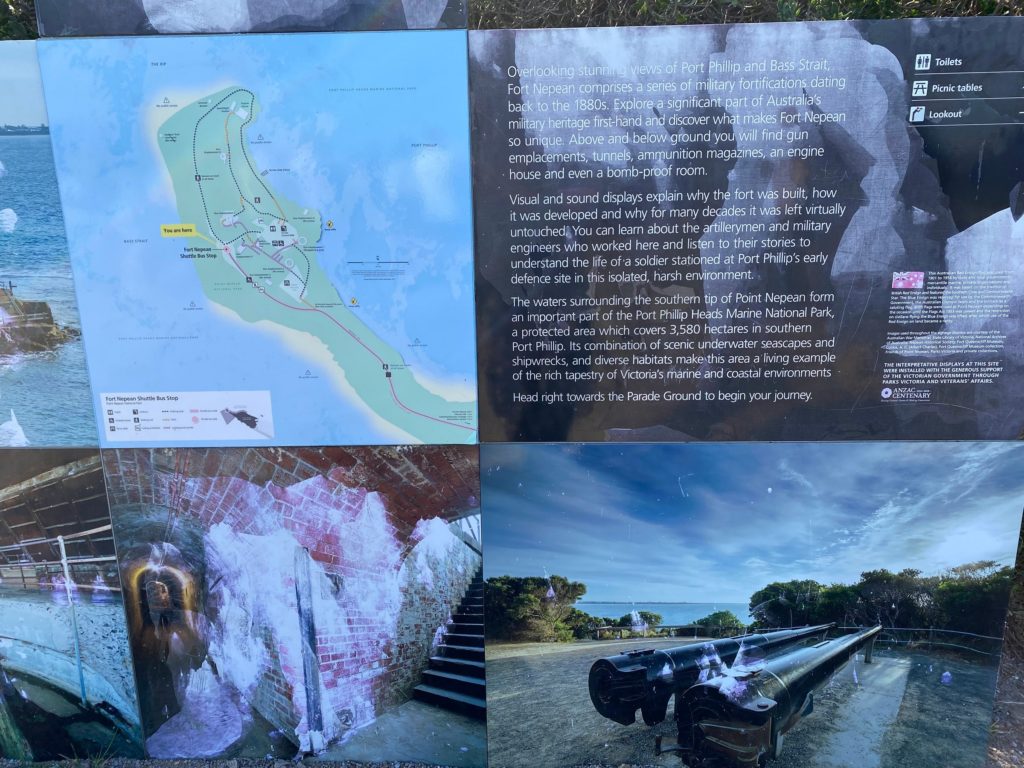
We reach Fort Nepean after walking for about 1 hour.
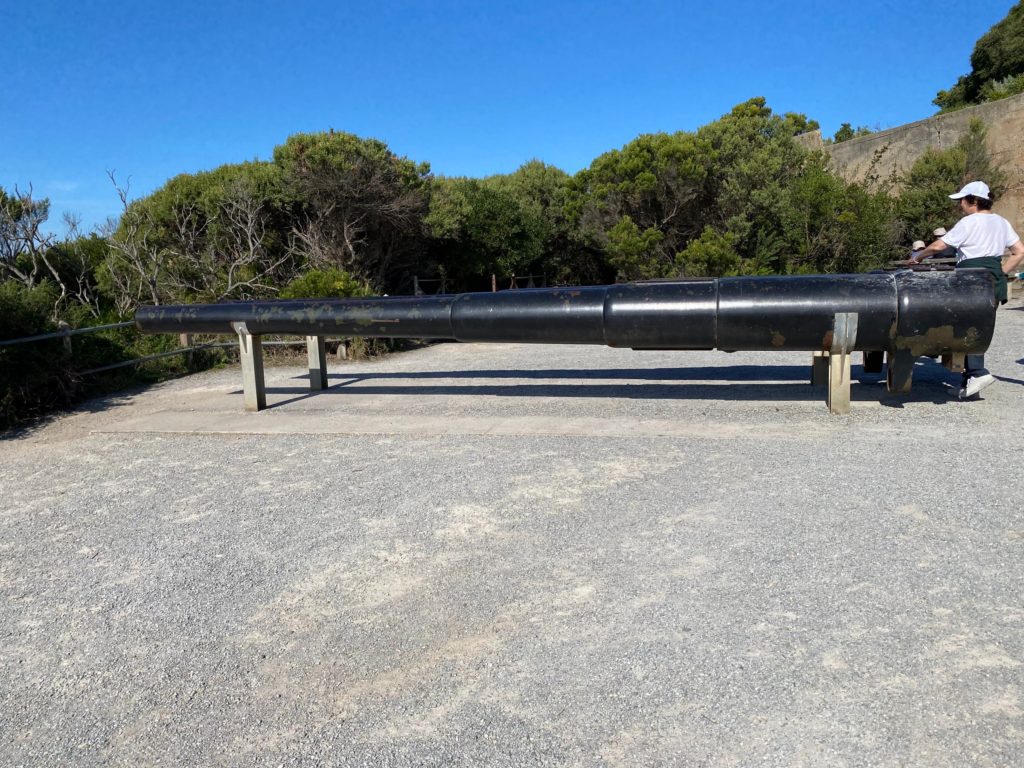
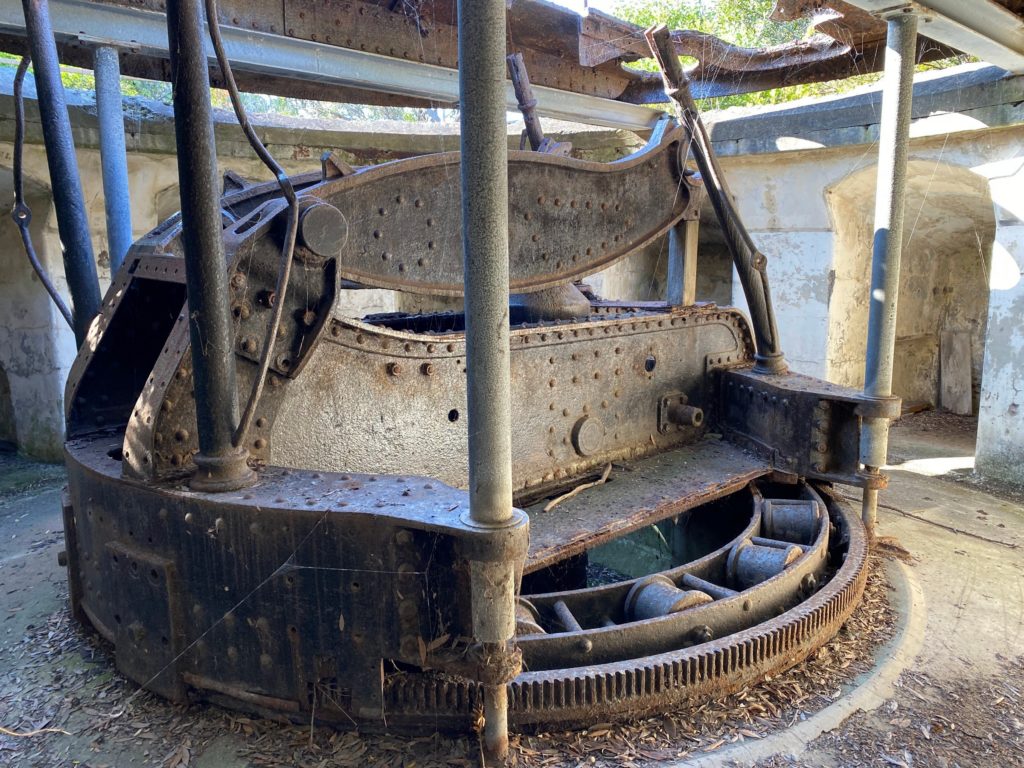
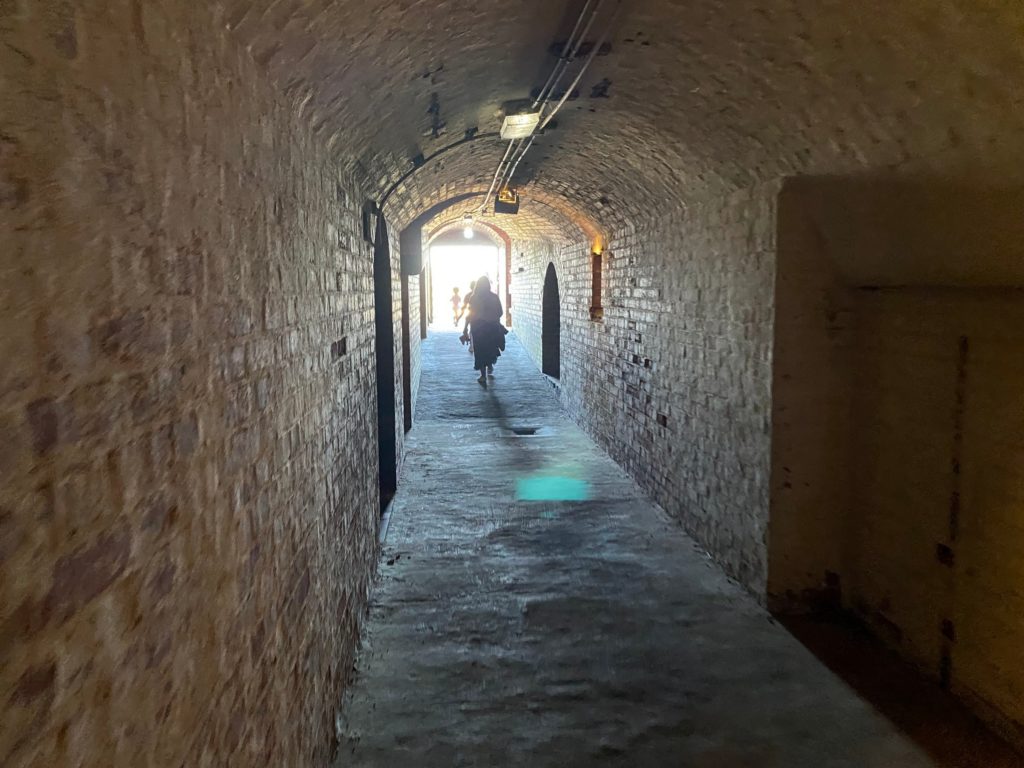
Overlooking stunning views of Port Phillip and Bass Strait, Fort Nepean comprises a series of military fortifications dating back to the 1880s. Explore a significant part of Australia’s military heritage first-hand and discover what makes Fort Nepean so unique. Above and below ground you will find gun emplacements, tunnels, ammunition magazines, an engine house and even a bomb-proof room.
Visual and sound displays explain why the fort was built, how it was developed and why for many decades it was left virtually untouched. You can learn about the artillerymen and military engineers who worked here and listen to their stories to understand the life of a soldier stationed at Port Phillip’s early defence site in this isolated, harsh environment.
The waters surrounding the southern tip of Point Nepean form an important part of the Port Phillip Heads Marine National Park, a protected area which covers 3,580 hectares in southern Port Phillip. Its combination of scenic underwater seascapes and shipwrecks, and diverse habitats make this area a living example of the rich tapestry of Victoria’s marine and coastal environments.
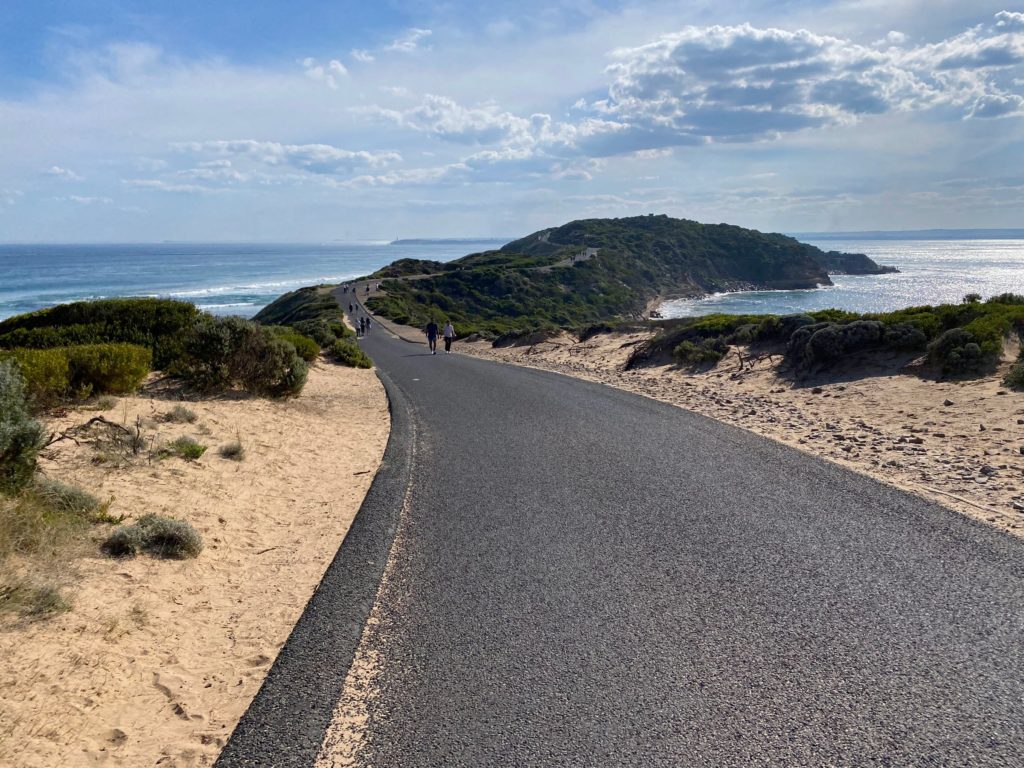
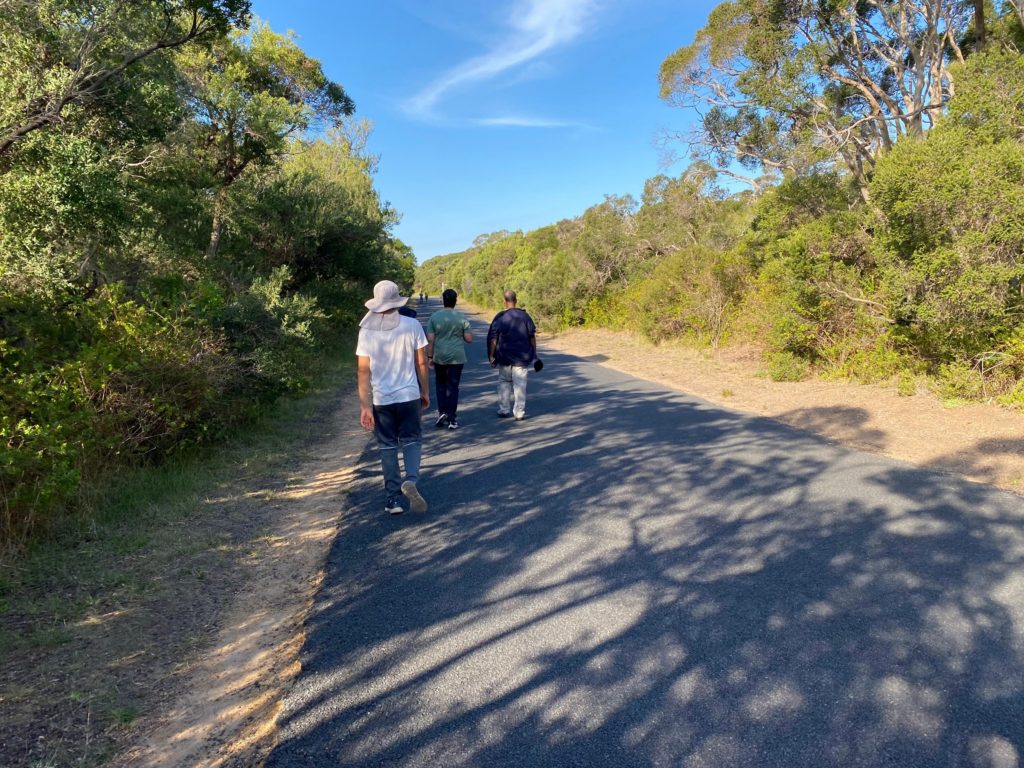
We decided to return on the road – it was closer and there were no cars except a shuttle bus.
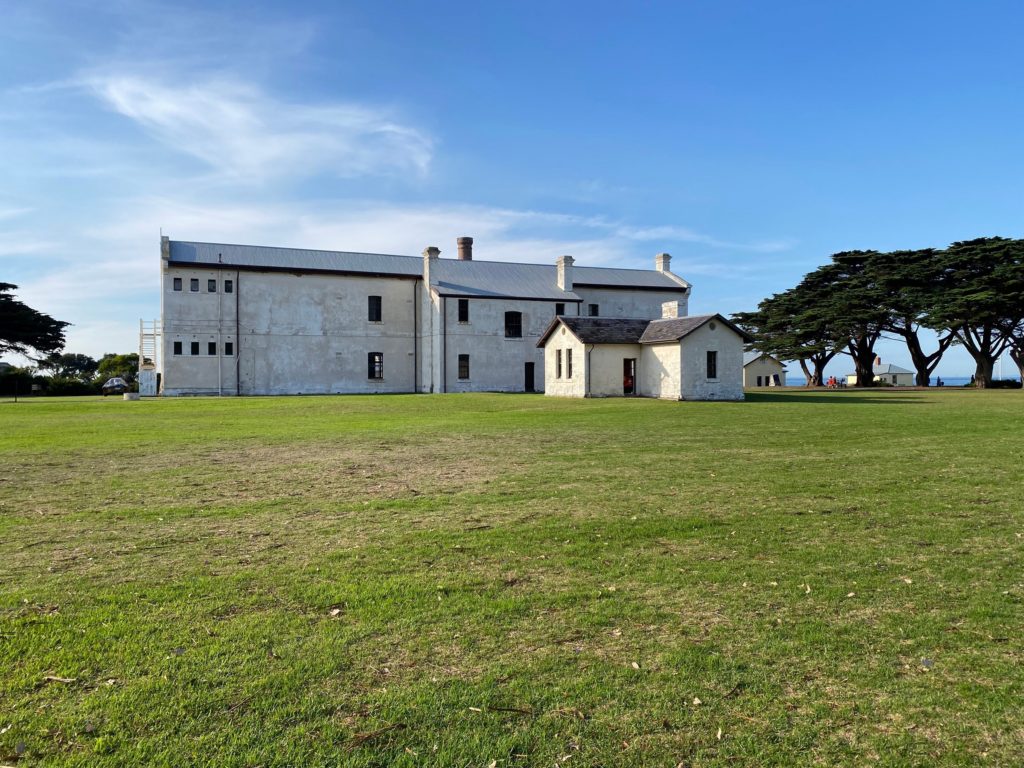
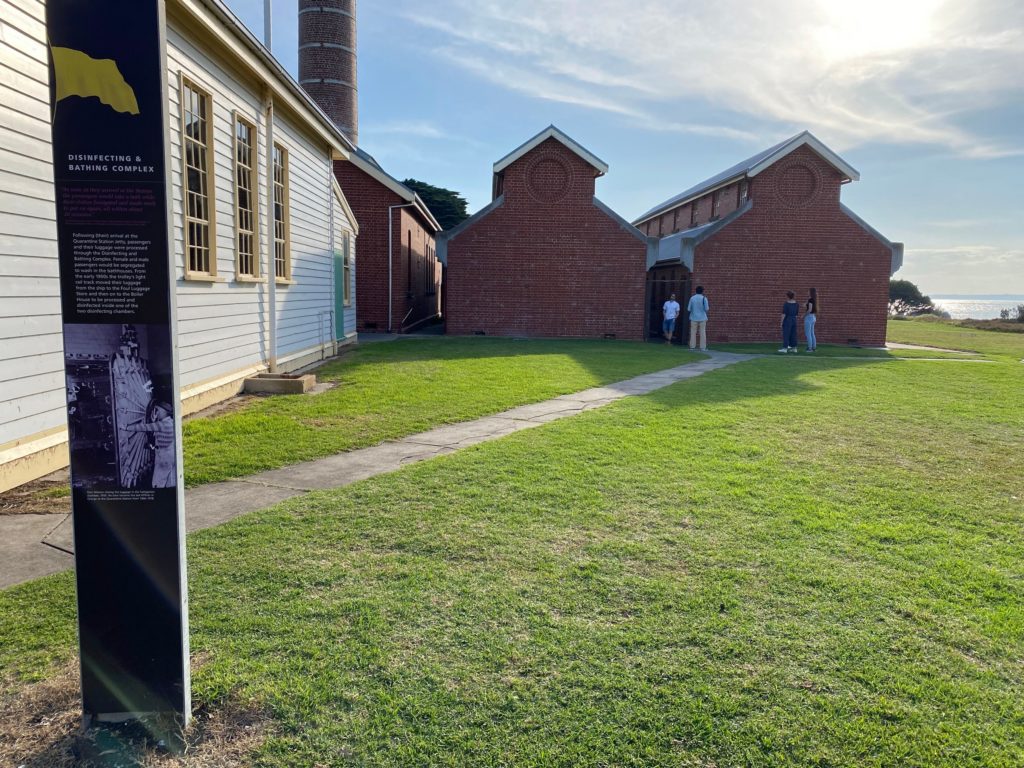
After returning to our car, we drove to the Quarantine Station and spent about an hour exploring the old buildings.
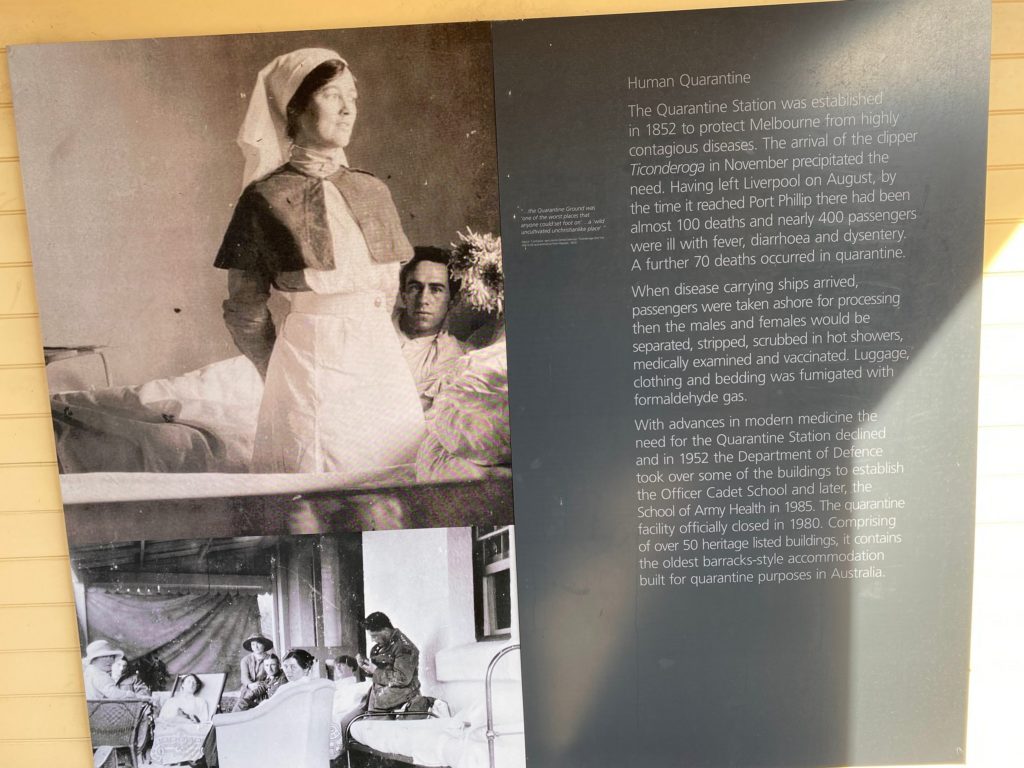
The sign reads:
Human Quarantine The Quarantine Station was established in 1852 to protect Melbourne from highly contagious diseases. The arrival of the clipper Ticonderoga in November precipitated the need. Having left Liverpool on August, by the time it reached Port Phillip there had been almost 100 deaths and nearly 400 passengers were ill with fever, diarrhoea and dysentery. A further 70 deaths occurred in quarantine.
When disease carrying ships arrived, passengers were taken ashore for processing then the males and females would be separated, stripped, scrubbed in hot showers, medically examined and vaccinated. Luggage, clothing and bedding was fumigated with formaldehyde gas.
With advances in modern medicine the need for the Quarantine Station declined and in 1952 the Department of Defence took over some of the buildings to establish the Officer Cadet School and later, the School of Army Health in 1985. The quarantine facility officially closed in 1980. Comprising of over 50 heritage listed buildings, it contains the oldest barracks-style accommodation built for quarantine purposes in Australia.
Overall, it was a great walk and a fascinating historical place.
It was cloudy and gloomy Easter Monday. It was raining from time to time but we decided to risk it and go to Mornington for a walk.
We started from the parking lot near the Dava Hotel.
The rain stopped. It was nice to walk and be sheltered from the wind by the thick bushes.
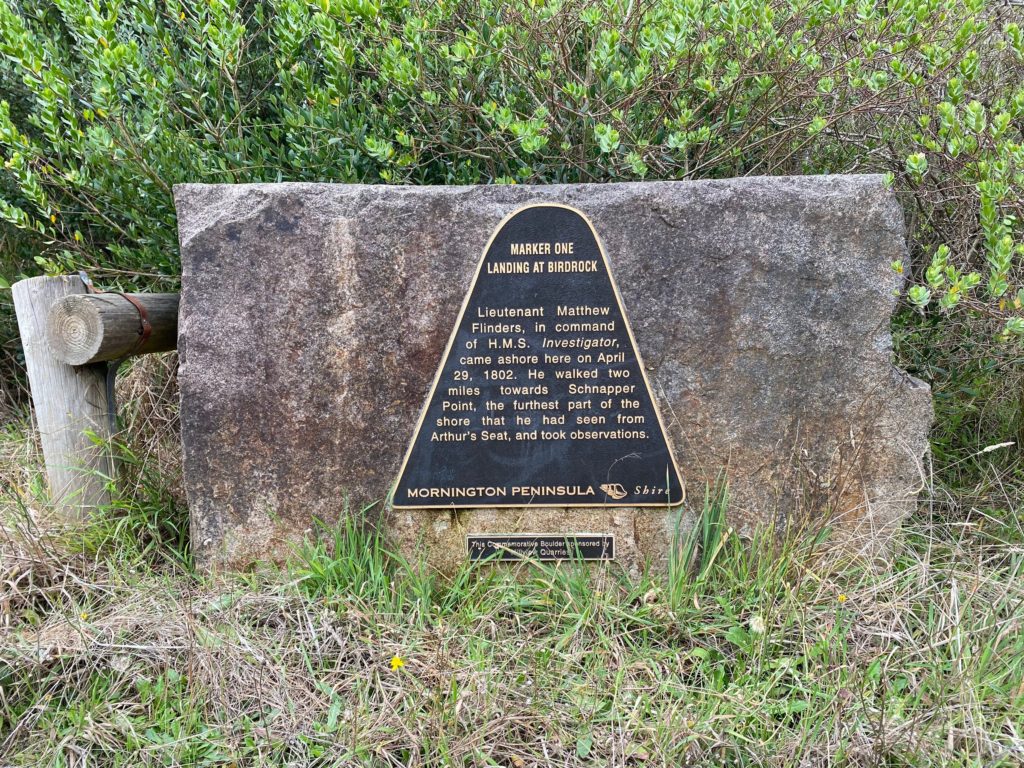
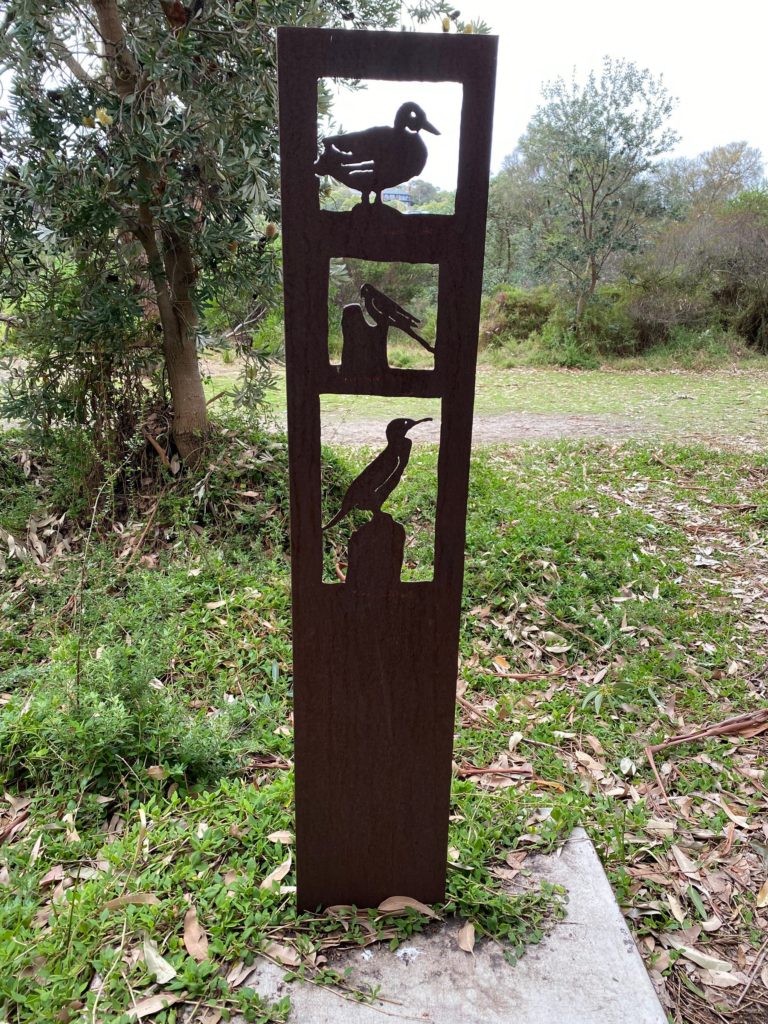
Commemorative Boulder
The plate reads:
MARKER ONE – LANDING AT BIRDROCK Lieutenant Matthew Flinders, in command of H.M.S. Investigator, came ashore here on April 29, 1802. He walked two miles towards Schnapper Point, the furthest part of the shore that he had seen from Arthur’s Seat, and took observations.
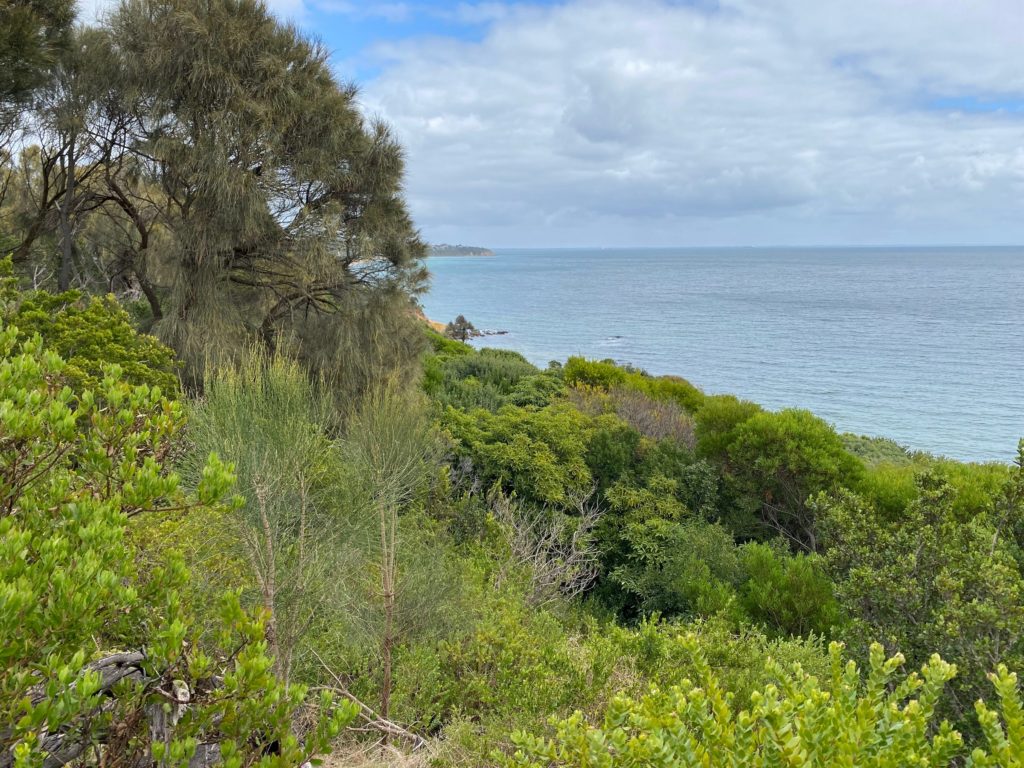
We enjoyed great clifftop views.
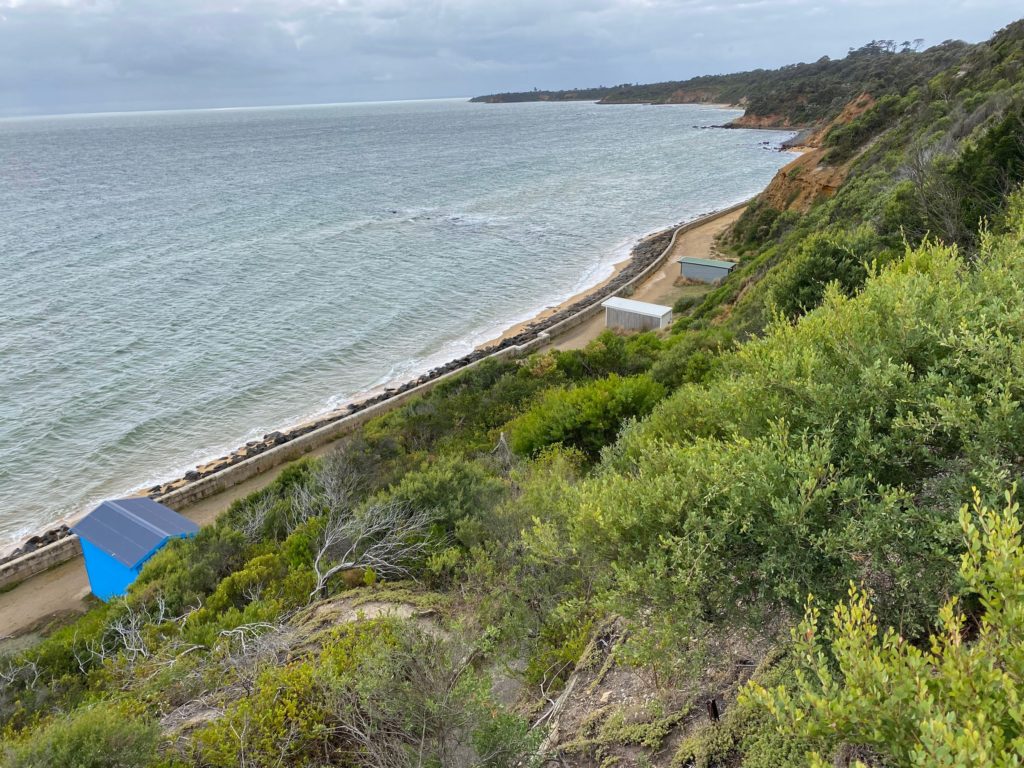
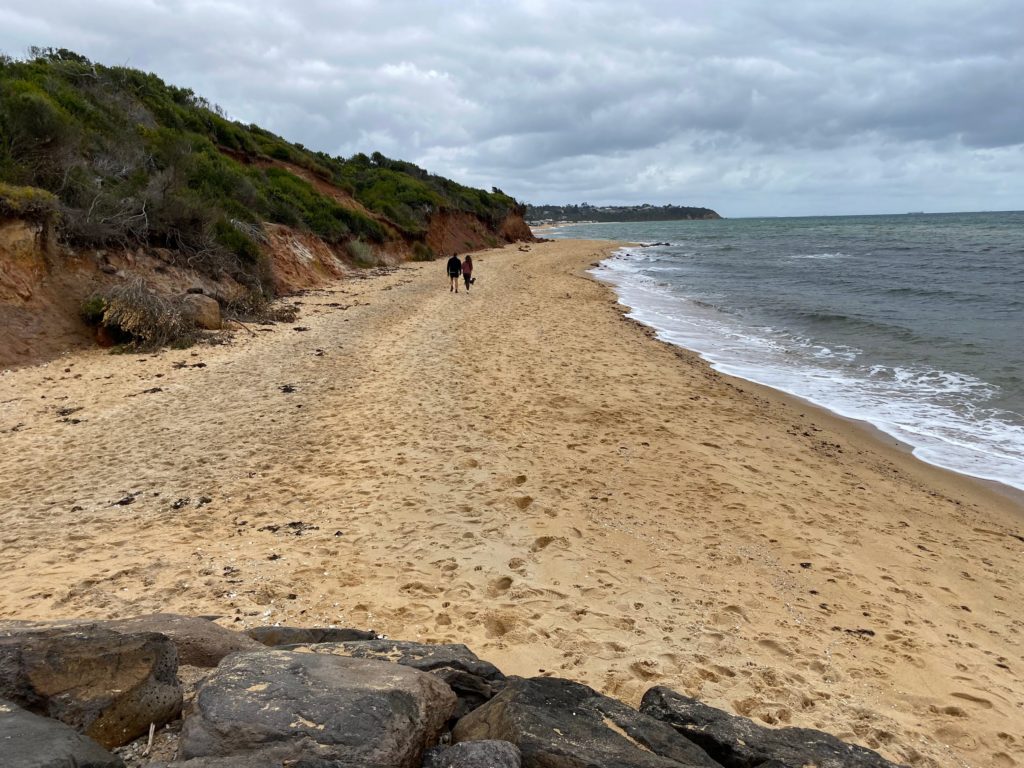
The trail ended after about 2 km. We walked on the Hawker Beach next.
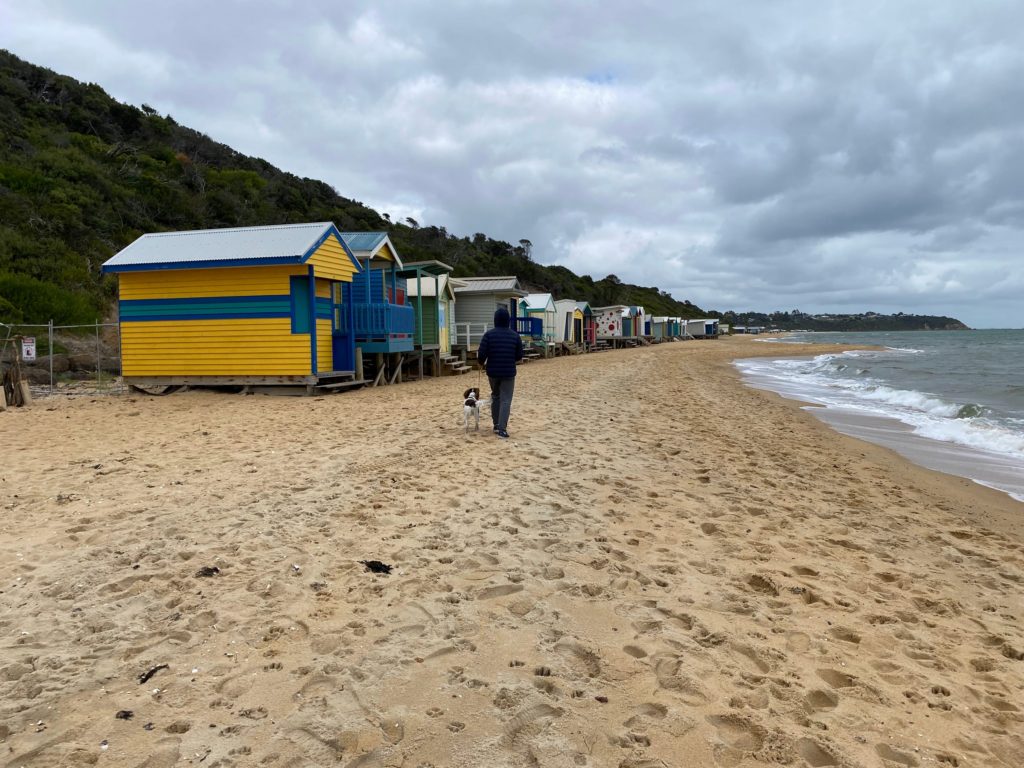
Beach boxes
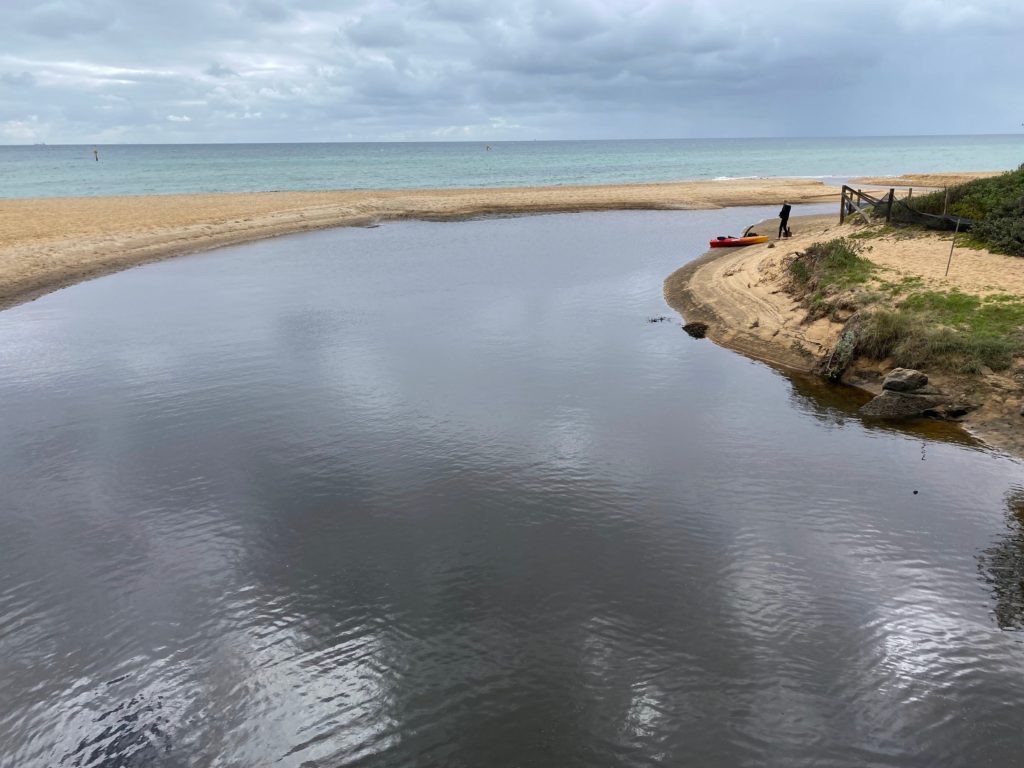
We reached Balcombe Creek and had a pleasant lunch at the Mount Martha Fine Foods.
We headed to Balcombe Estuary Boardwalk next.
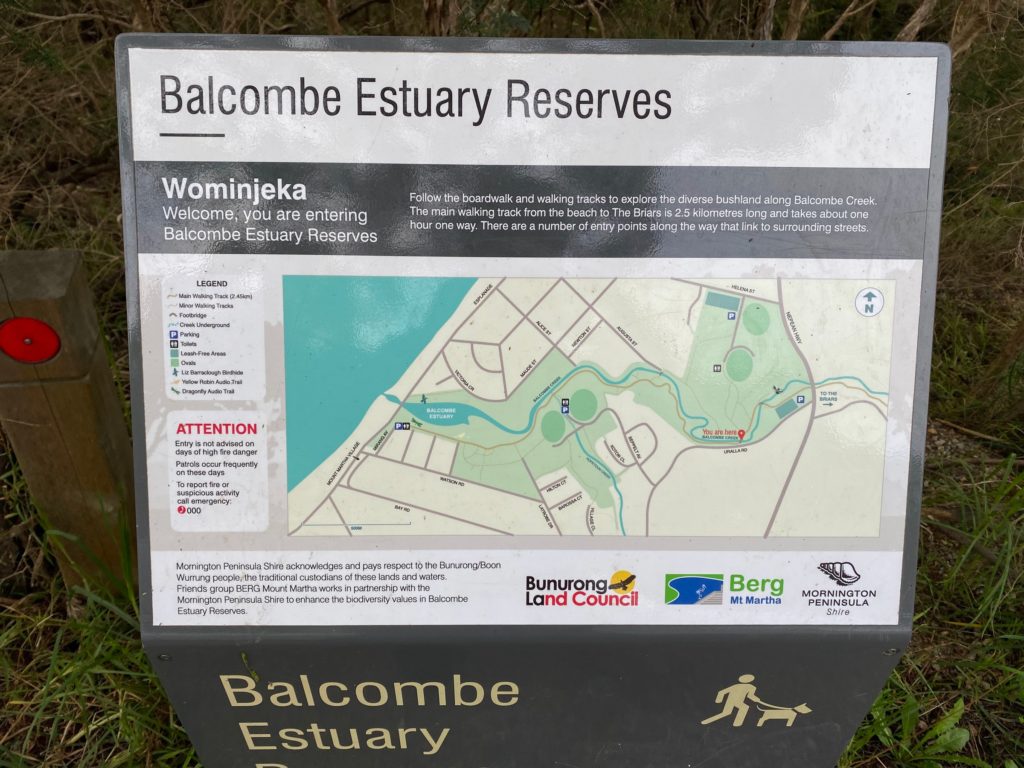
The sign reads:
Balcombe Estuary Reserves Wominjeka Welcome, you are entering Balcombe Estuary Reserves
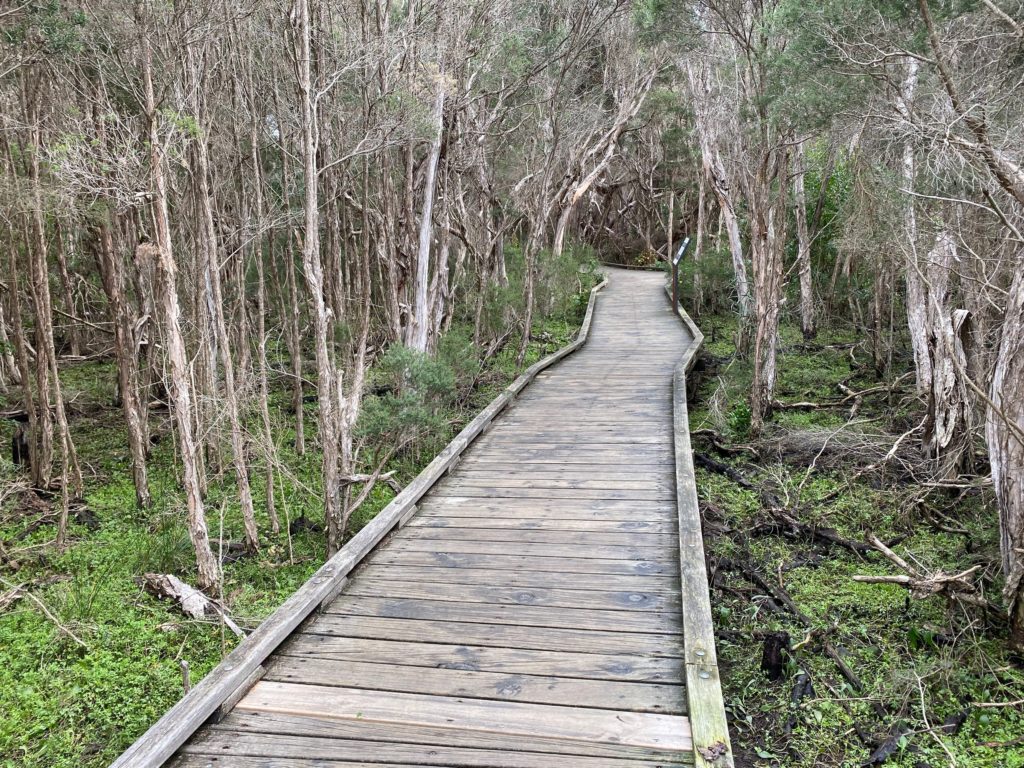
Follow the boardwalk and walking tracks to explore the diverse bushland along Balcombe Creek. The main walking track from the beach to The Briars is 2.5 kilometres long and takes about one hour one way. There are a number of entry points along the way that link to surrounding streets.
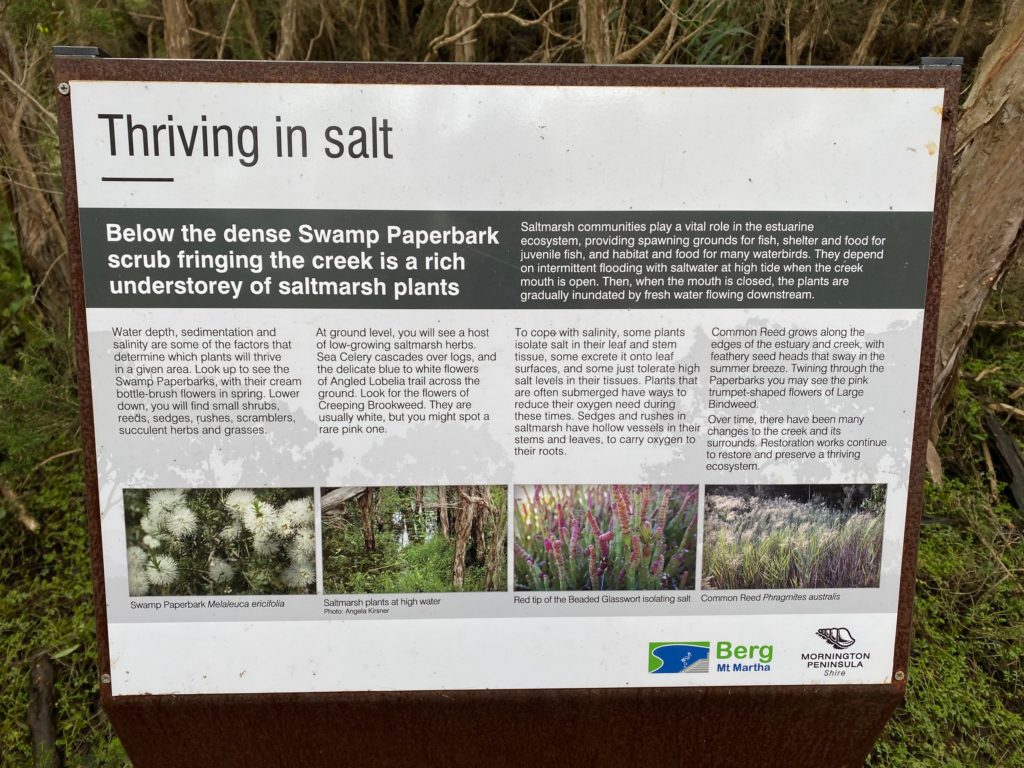
Infosign
The sign reads:
Thriving in salt Below the dense Swamp Paperbark scrub fringing the creek is a rich understorey of saltmarsh plants.
Saltmarsh communities play a vital role in the estuarine ecosystem, providing spawning grounds for fish, shelter and food for juvenile fish, and habitat and food for many waterbirds. They depend on intermittent flooding with saltwater at high tide when the creek mouth is open. Then, when the mouth is closed, the plants are gradually inundated by fresh water flowing downstream.
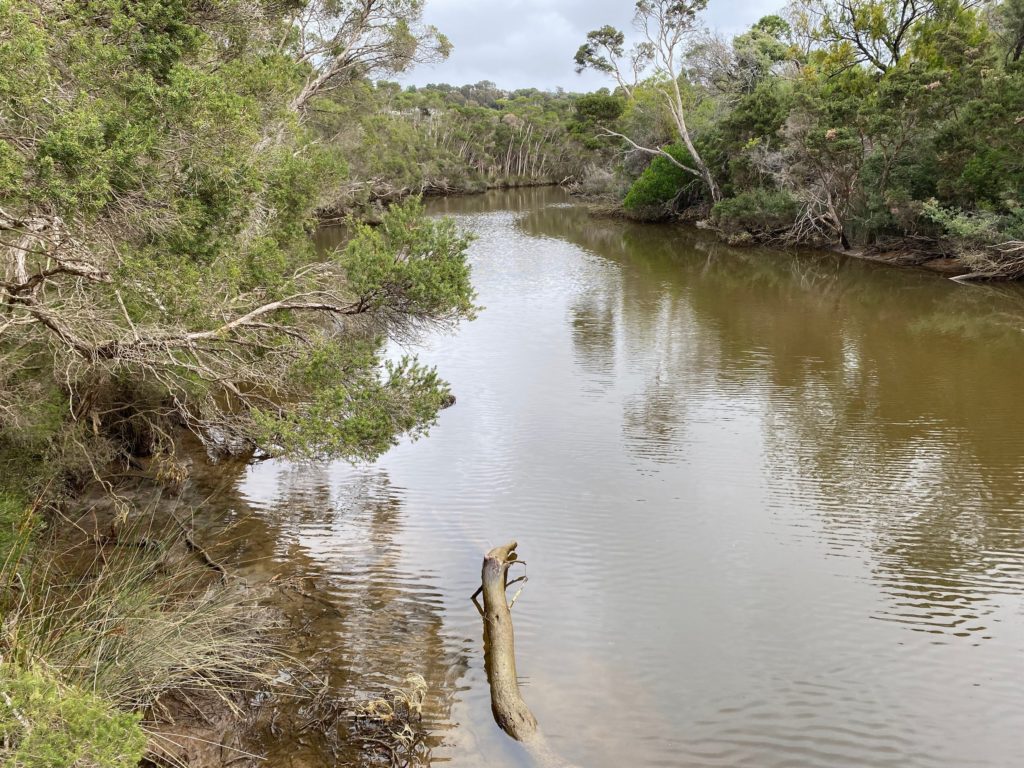
Balcombe Creek
We walked on a quiet street to get back to the Mornington – Mt Martha Foreshore Reserve.
We walked 12 km total. It took us 4 hours to complete the walk, including lunch break.
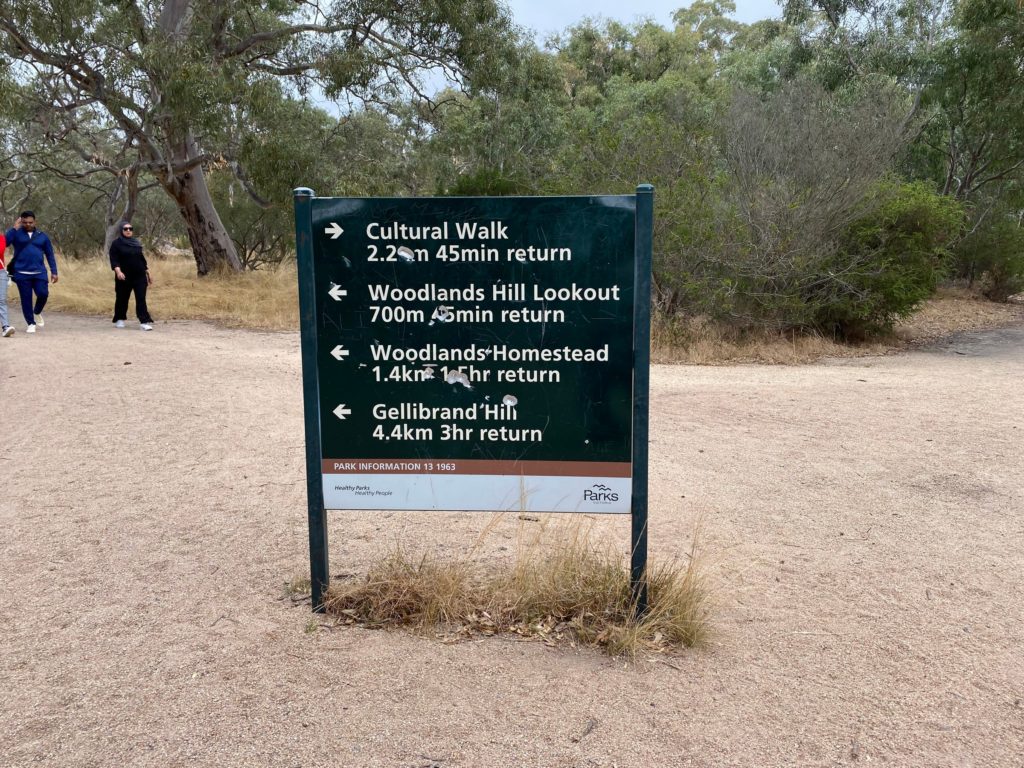
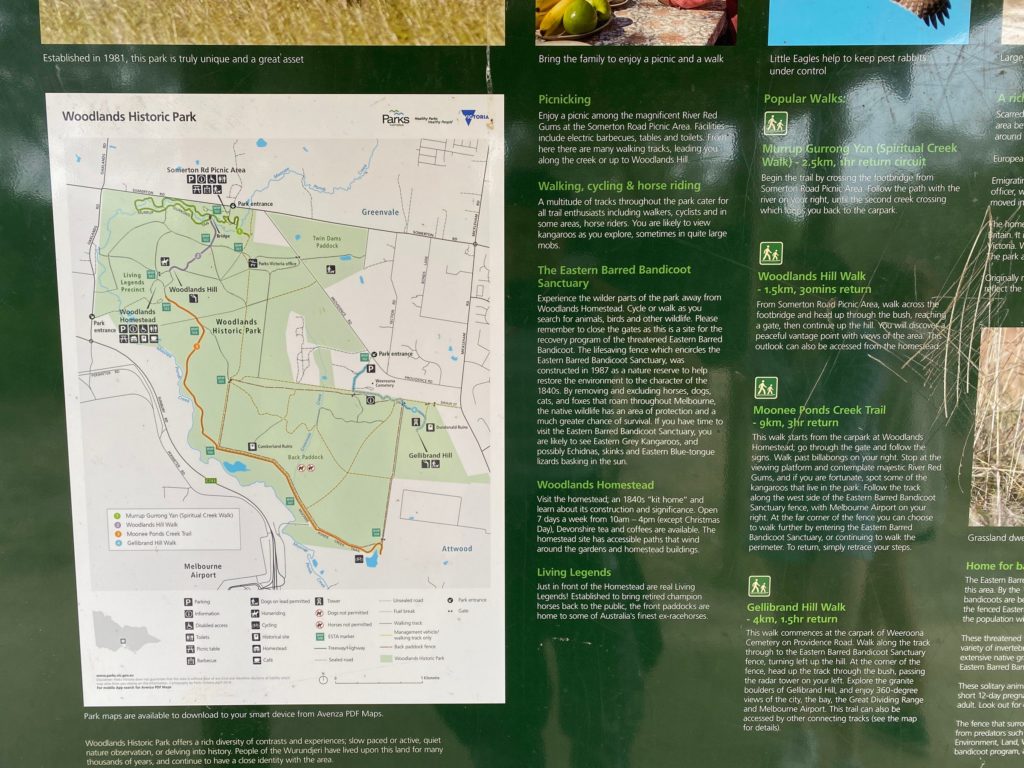
Woodlands Historic Park is located in Greenvale, not far from Melbourne Airport.
We took our dog for a walk there on Sunday.
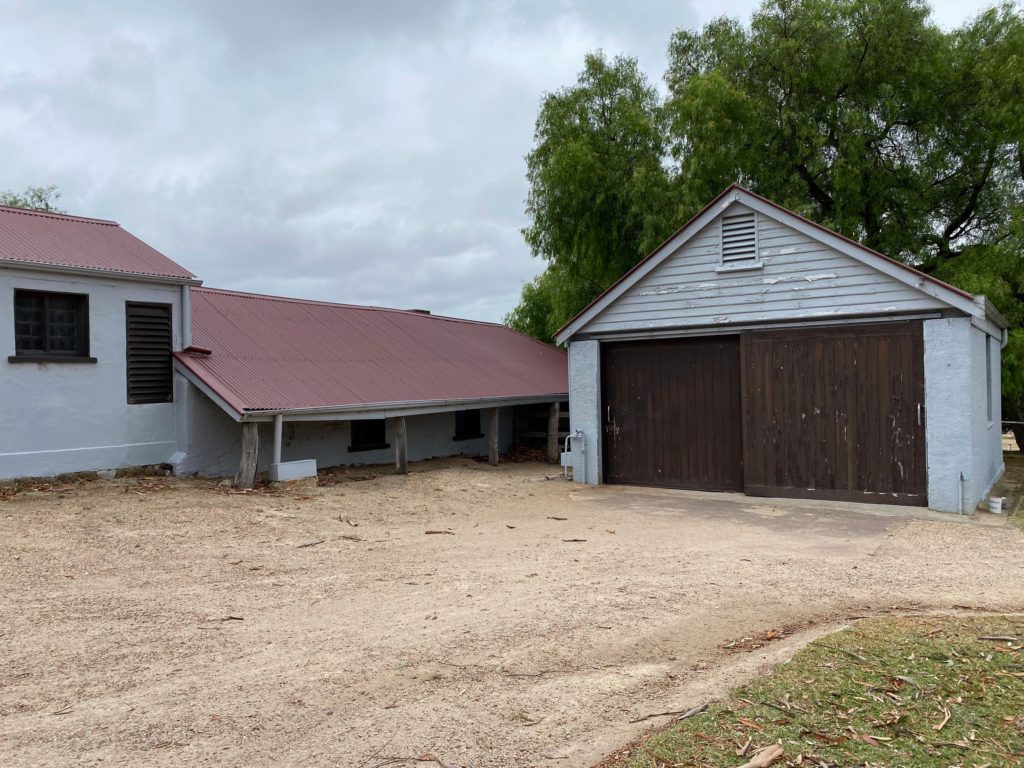
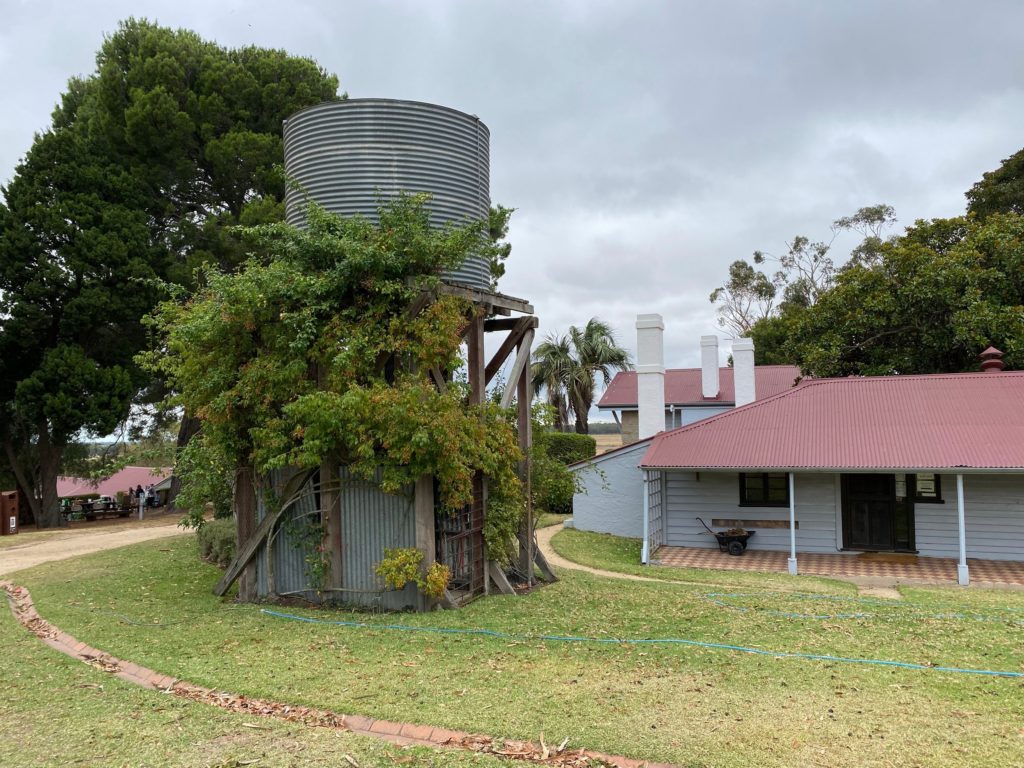
We started from Woodlands Homestead.
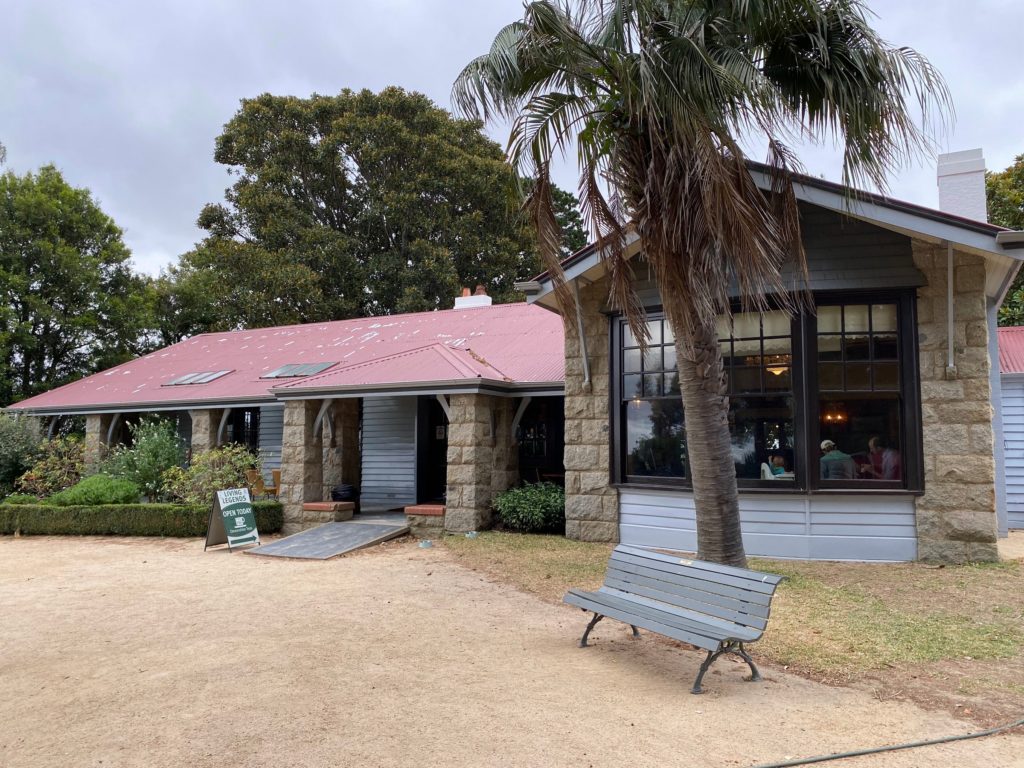
They serve Devonshire tea here.
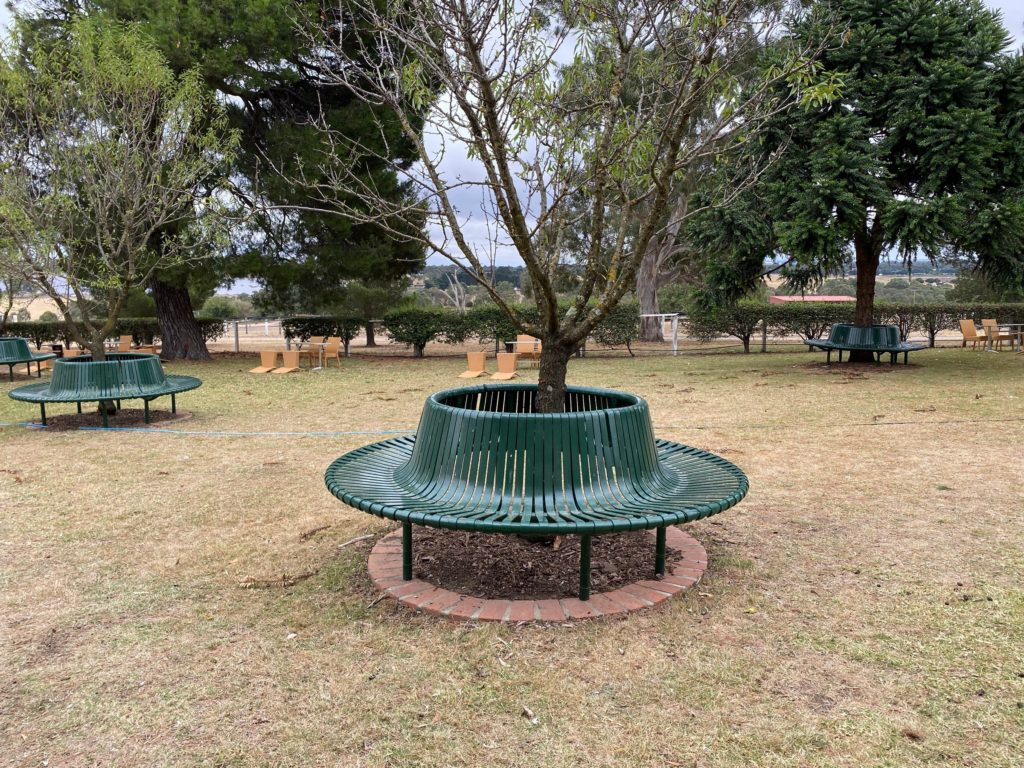
Metal benches
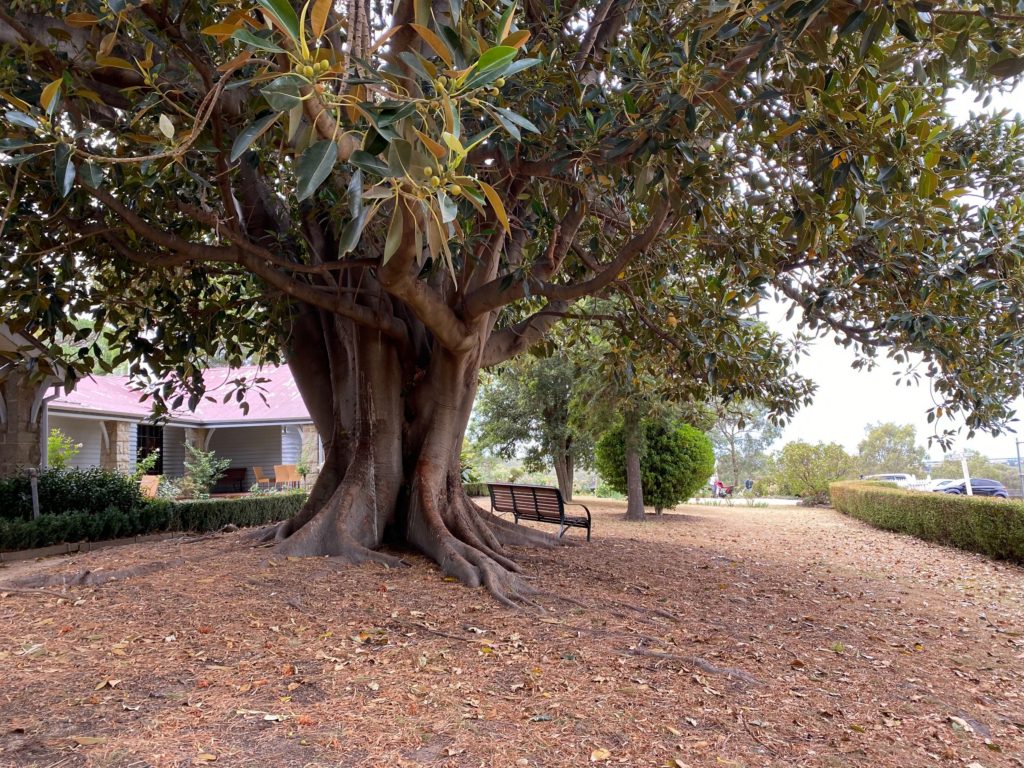
Interesting design of benches around trees.
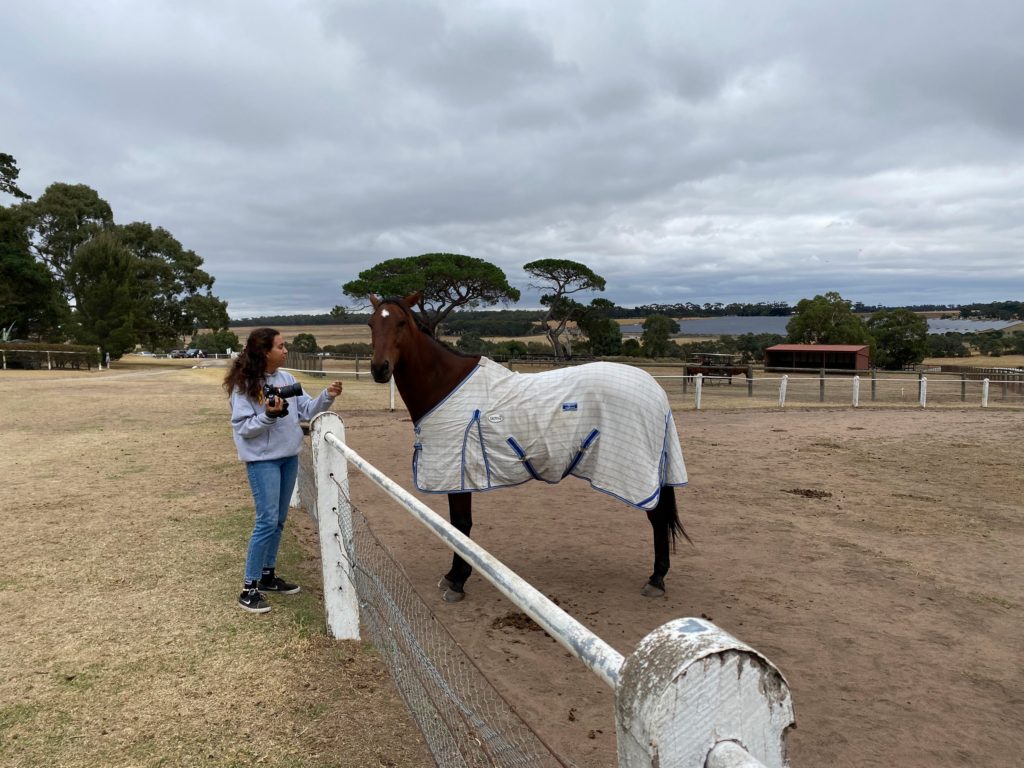
Just in front of the Homestead are real Living Legends! Established to bring retired champion horses back to the public, the front paddocks are home to some of Australia’s finest ex-racehorses.
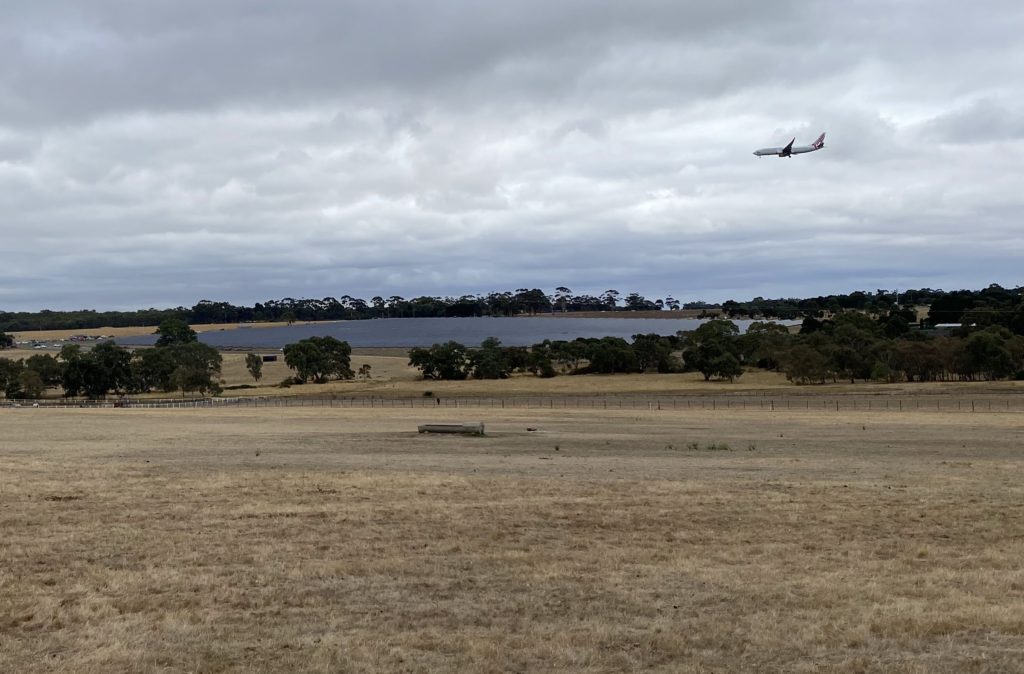
The airport is nearby. You can also see a solar farm.
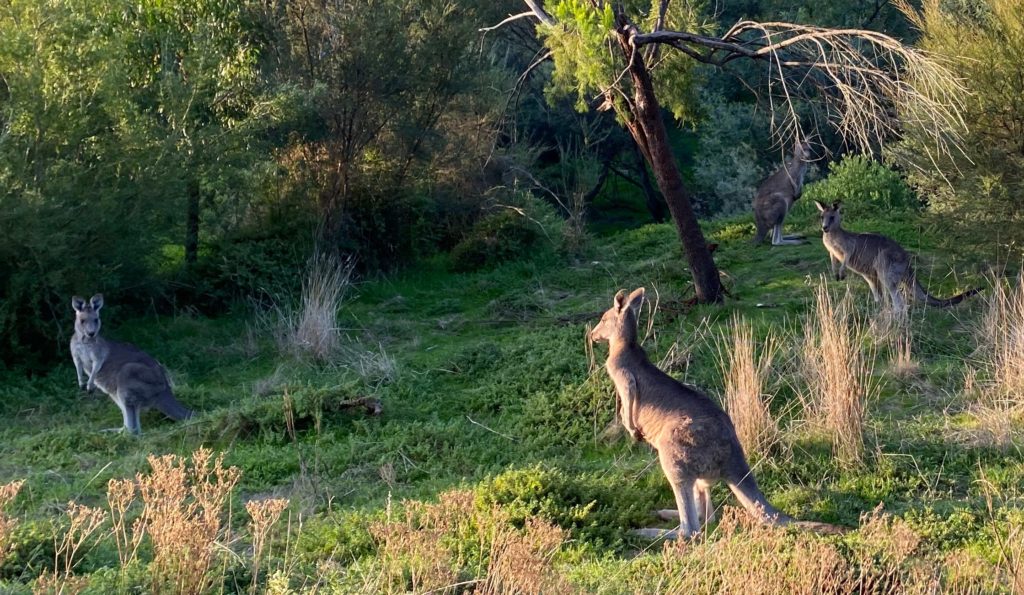
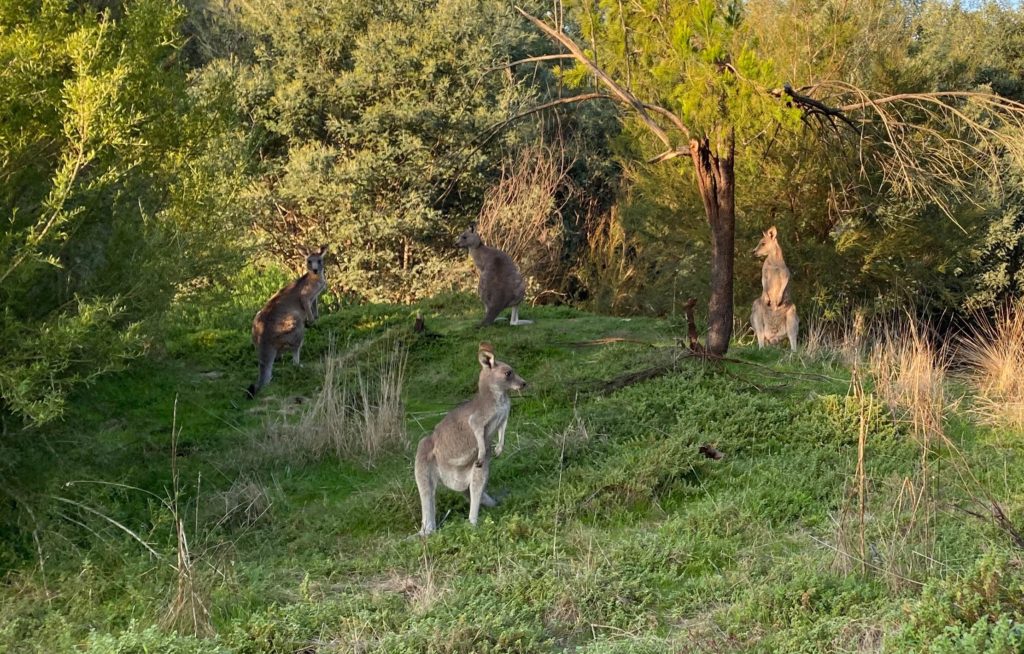
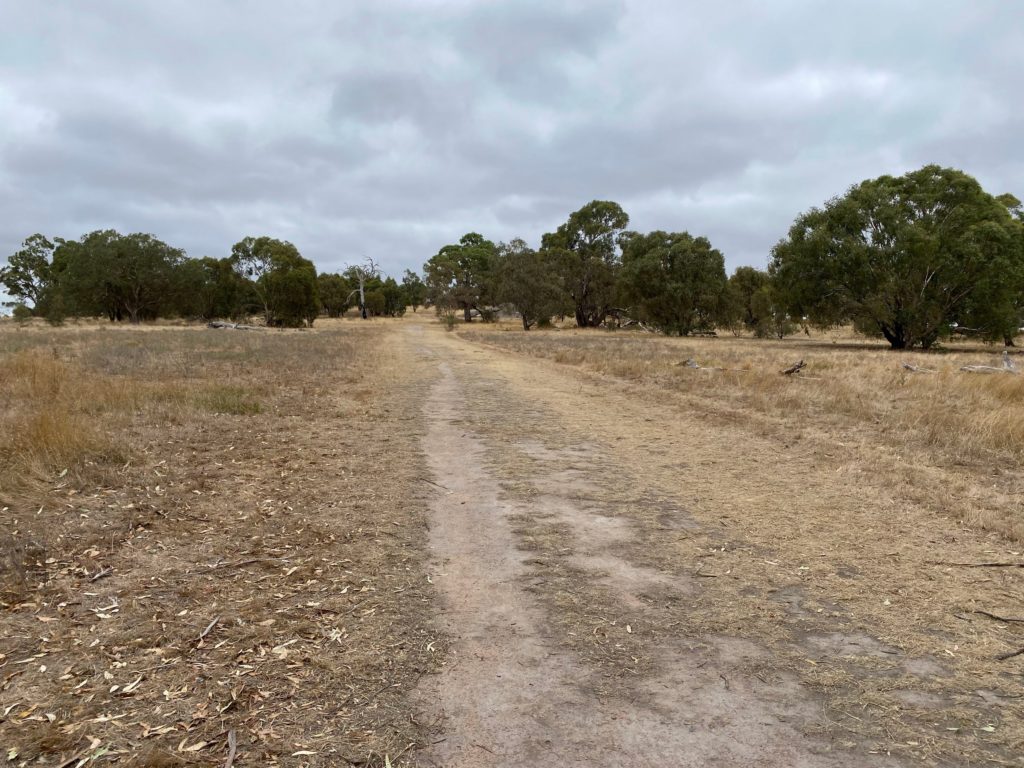
A multitude of tracks throughout the park cater for all trail enthusiasts including walkers, cyclists and in some areas, horse riders. You are likely to view kangaroos as you explore, sometimes in quite large mobs.
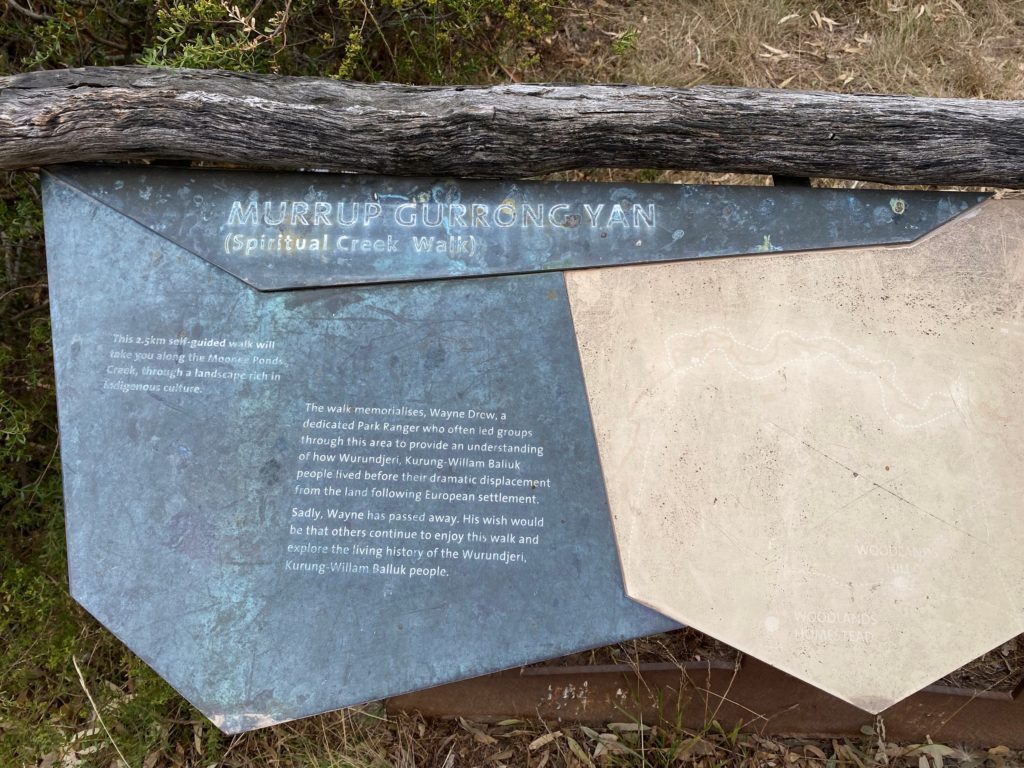
The sign reads:
MURRUP GURRONG YAN (Spiritual Creek Walk)
This 2.5km self-guided walk will take you along the Moonee Ponds Creek, through a landscape rich in Indigenous culture.
The walk memorialises Wayne Drew, a dedicated Park Ranger who often led groups through this area to provide an understanding of how Wurundjeri, Kurung-Willam Balluk people lived before their dramatic displacement from the land following European settlement.
Sadly, Wayne has passed away. His wish would be that others continue to enjoy this walk and explore the living history of the Wurundjeri, Kurung-Willam Balluk people.
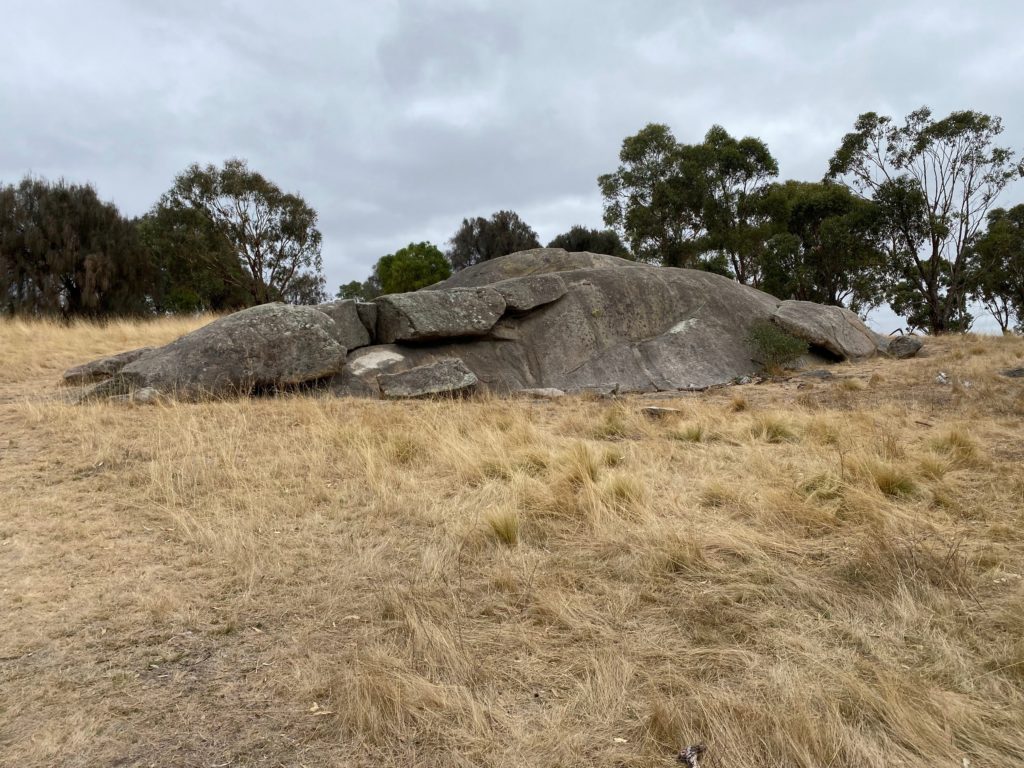
Information sign
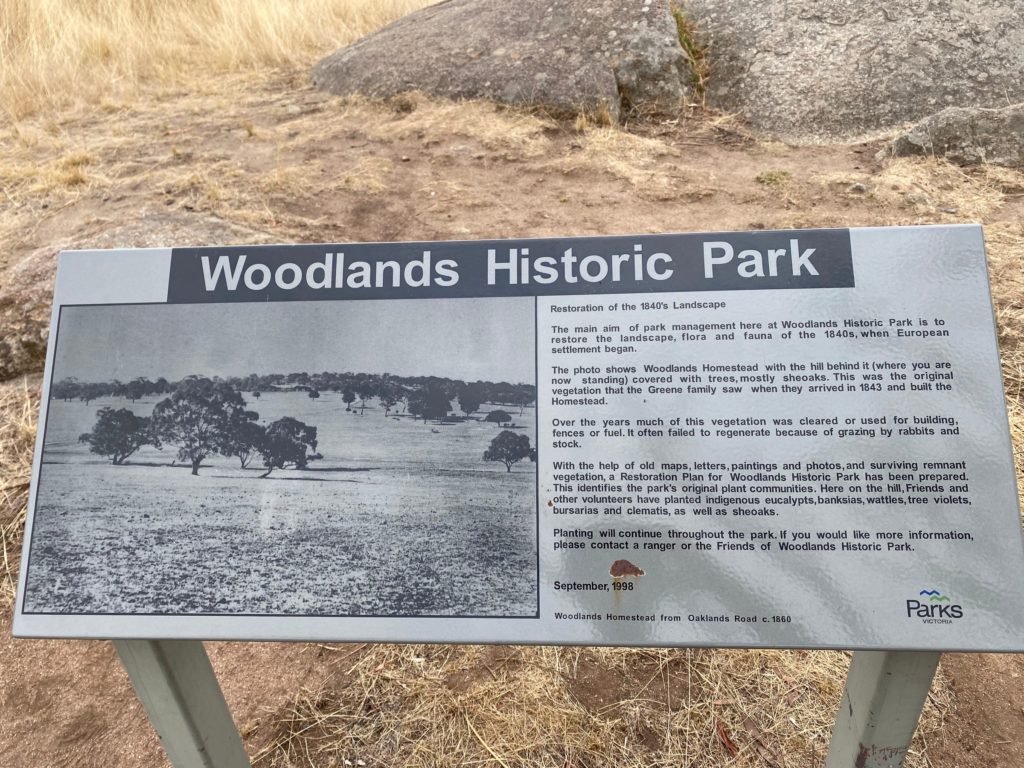
Restoration of the 1840’s Landscape
The sign reads:
The main aim of park management here at Woodlands Historic Park is to restore the landscape, flora and fauna of the 1840s, when European settlement began.
The photo shows Woodlands Homestead with the hill behind it (where you are. now standing) covered with trees, mostly sheoaks. This was the original vegetation that the Greene family saw when they arrived in 1843 and built the Homestead. Over the years much of this vegetation was cleared or used for building, fences or fuel. It often failed to regenerate because of grazing by rabbits and stock.
With the help of old maps, letters, paintings and photos, and surviving remnant vegetation, a Restoration Plan for Woodlands Historic Park has been prepared. This identifies the park’s original plant communities. Here on the hill, Friends and other volunteers have planted indigenous eucalypts, banksias, wattles, tree violets, bursarias and clematis, as well as sheoaks.
We walked 5.5 km total. It took us 1 hour and 20 minutes to complete the walk.
One weekend in South Gippsland, I was eager to find somewhere new and dog-friendly to take a stroll. We’ve taken our golden retriever to the George Bass Coastal Walk in Kilcunda, and dog-friendly beaches like Inverloch and Sandy Point.
I came across the Loader Walk in my research, but there wasn’t a great deal of information online – this just meant we just had to try it out for our selves.
If you are travelling from Melbourne towards Wilsons Promontory, the walk is located just after the town of Fish Creek and before Foster.
Once you leave the freeway after Fish Creek, the road becomes steep, narrow and unpaved. We made it up in a hatchback, but the route is not recommended for caravans or motorhomes.
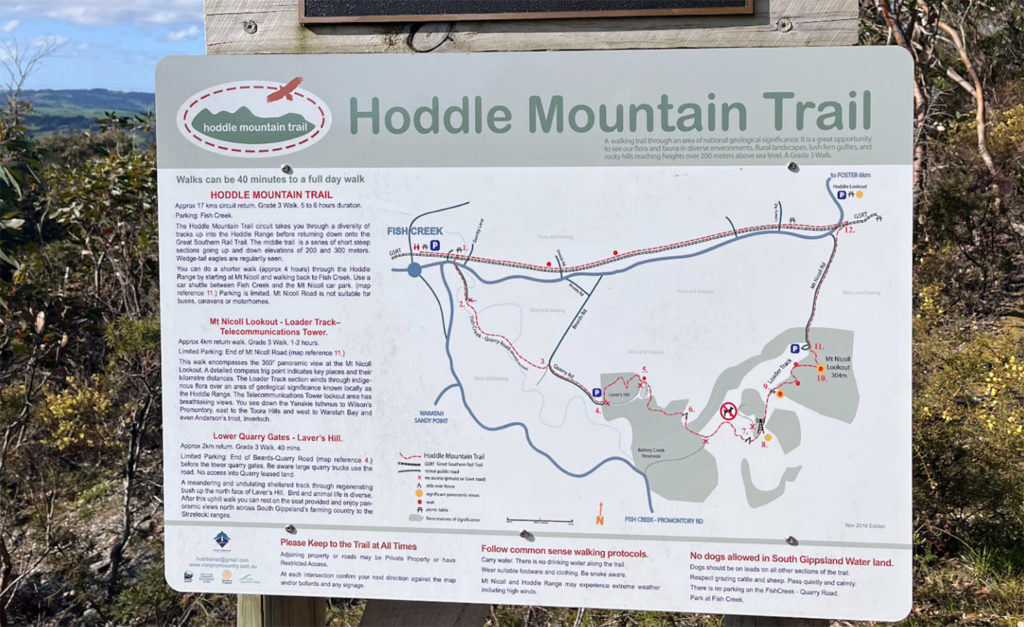
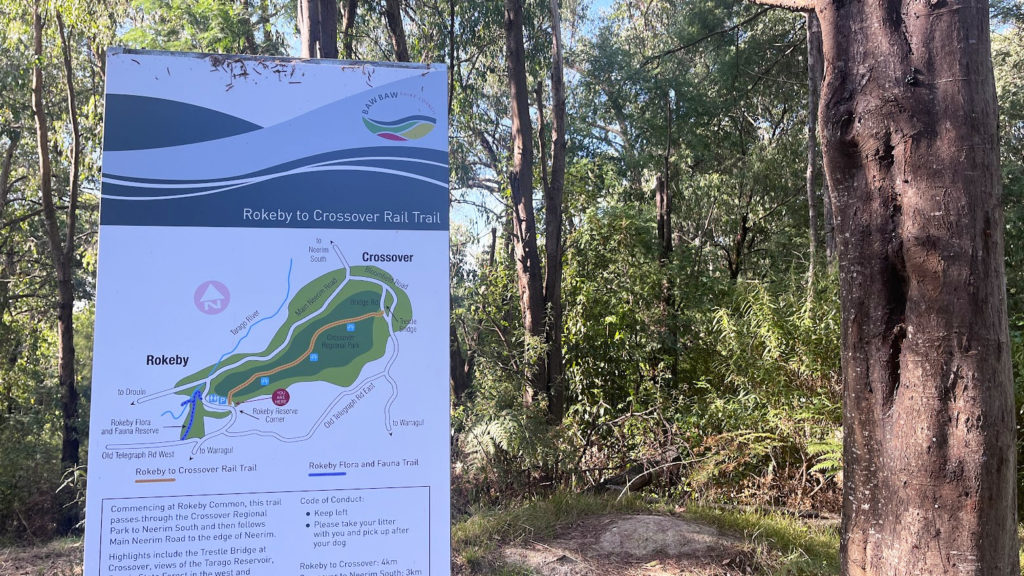
Upon arrival, there is a clear map and signage before you begin the walk. From the map, I learnt that the Loader Walk is part of a larger trail called the Hoddle Mountain Trail, which takes 5-6 hours if you complete the entire circuit. I’ve come into the habit of always taking a photo of the map before we start, just in case I need it later down the track.
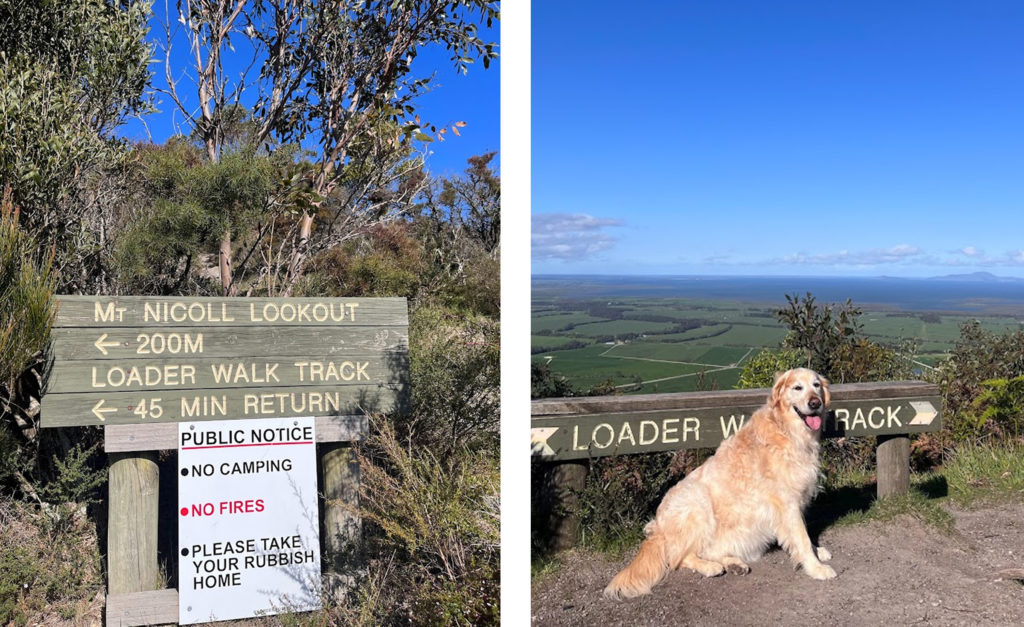
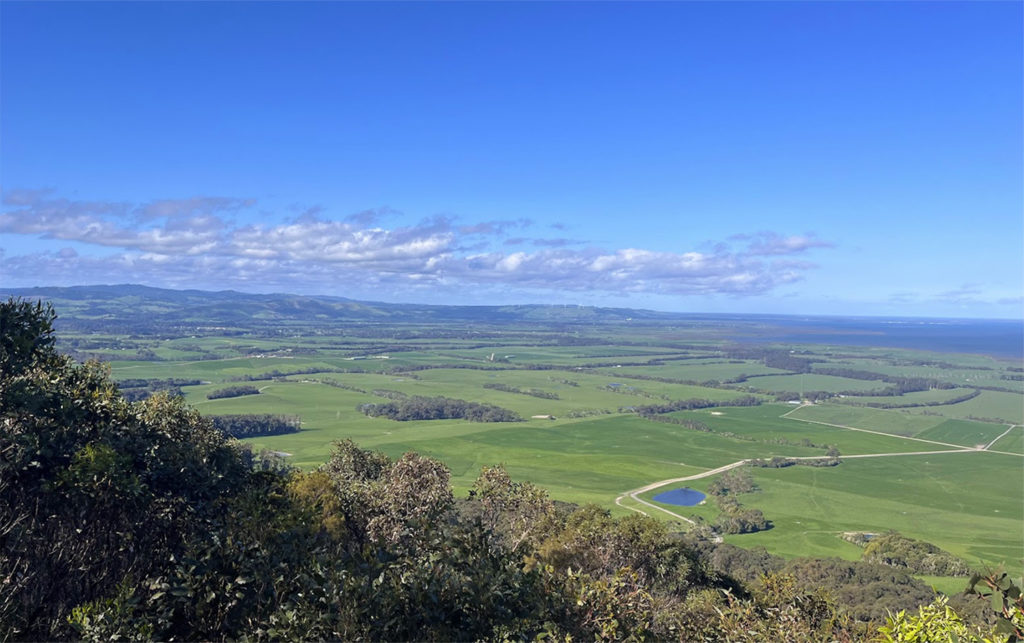
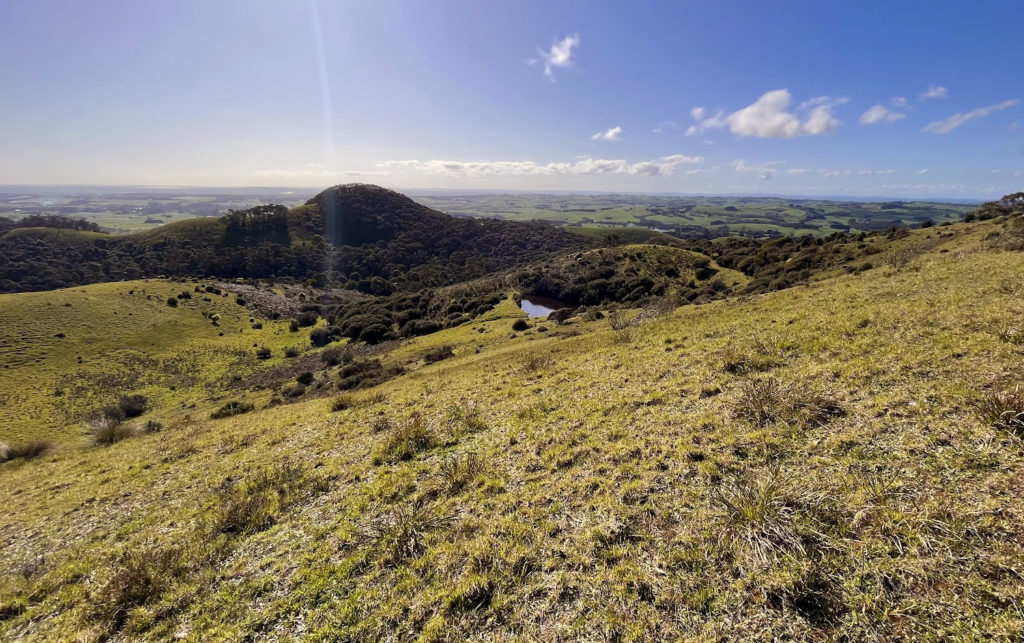
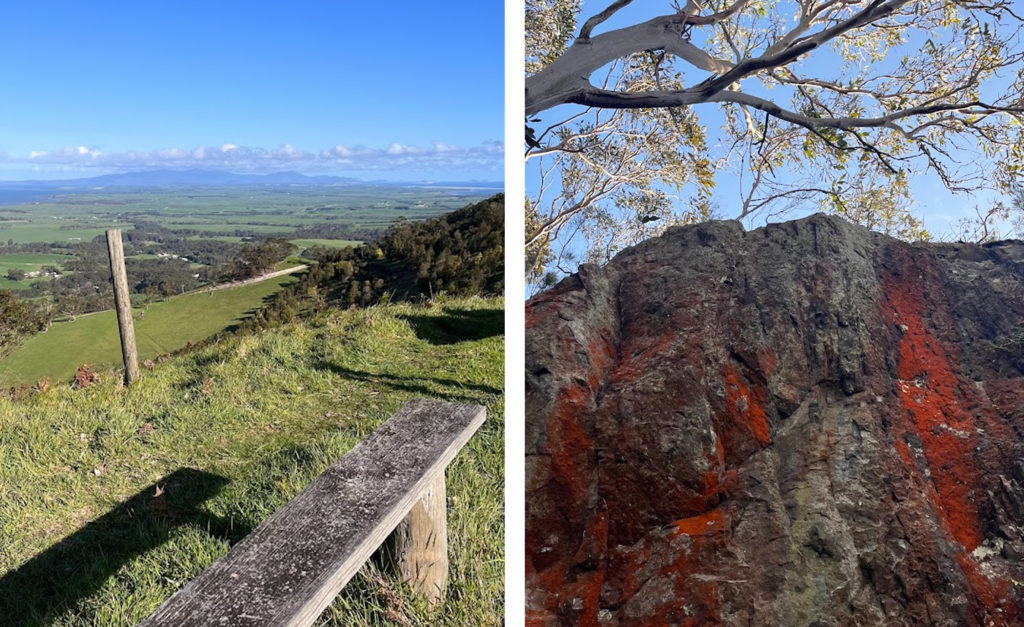
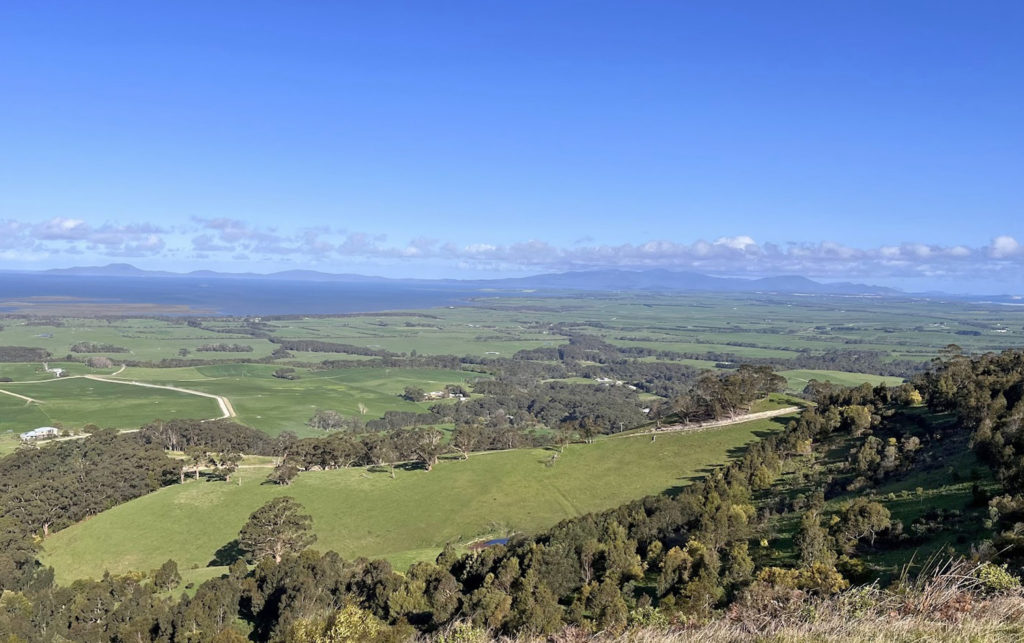
For those who don’t have time for a walk, there is a great lookout just 200 metres into the walk called Mount Nicoll Lookout. It gives you sweeping views across the green fields, all the way to the coast and Wilsons Prom.
After the lookout, the track traverses the iconic rolling green hills of South Gippsland. I’ve always admired the landscapes on the winding drives throughout the region, so it was incredible to be able to walk amongst it and stop and admire the view.
After this picturesque section, there is a steep downhill which leads into constant, short inclines and declines amidst shadier bush sections.
It added some diversity to the walk, but our dog has weak hips and knees, so I don’t think he enjoyed this section due to it being a little slippery on gravel, downhill parts.
The walk comes back out to more farmland and coastal views. These sections have no shade, so make sure to be sunsmart and bring plenty of water.
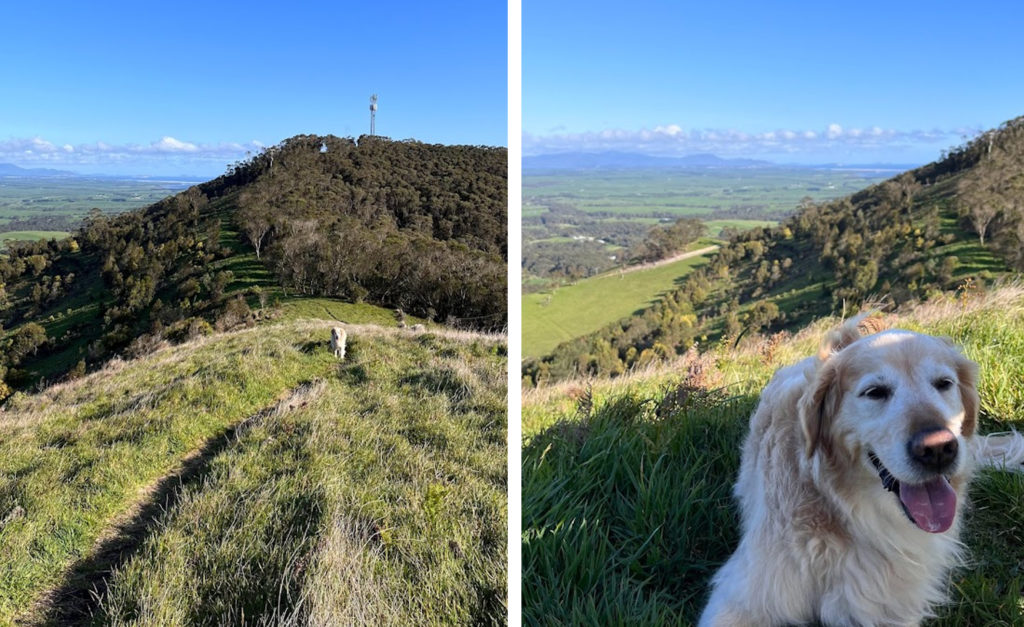
The next landmark was the Telecommunications Tower, which is further south. We could see it in the distance but our dog was getting quite tired from the inclines and the harsh sun.
We decided to give him a rest and to turn back, as we thought the view from the tower might be similar to what we could already see.
The initial map notes that a walk from the carpark to the Telecommunications Tower should take 1-2 hours return.
The walk is a great option for those with and without dogs. The inland and coastal scenery is breathtaking, there are enough inclines to make it interesting and you can turn around at any point to customise the walk to your level of difficulty. Even if you make it a short walk, you’ll see quintessential Gippsland views.
We did the walk in spring, after a wet winter, so the farmland was especially lush. I recommend doing it in spring, as there is more likely to be mild weather. But remember that the sun can get quite strong in South Gippsland, so wear a hat and sunscreen too.
Just an hour and a half out of Melbourne, you’ll find the leafy little town of Rokeby in West Gippsland.
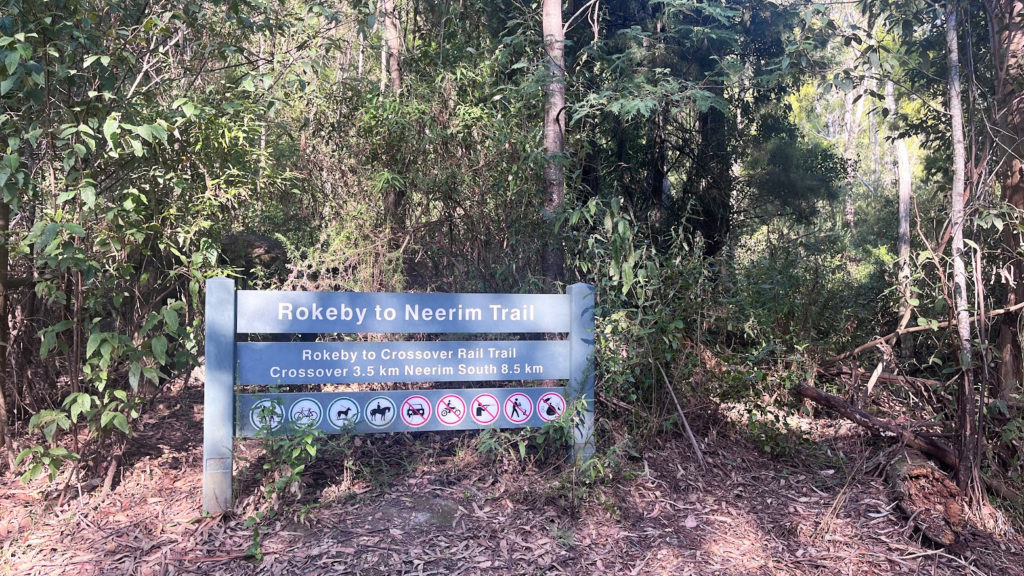
The Rokeby to Crossover Rail Trail is about 4km one way, and is the perfect walk for those who don’t like inclines.
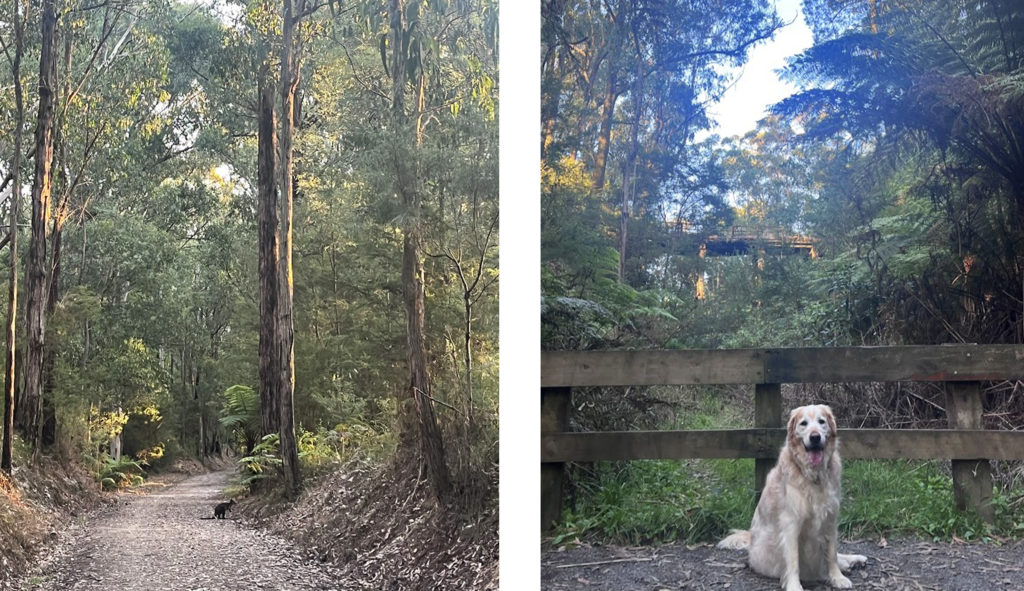
As we had an elderly person and 10 year old dog with us, it was a suitable trail for everyone. We spotted quite a few people with dogs on lead and some joggers too.
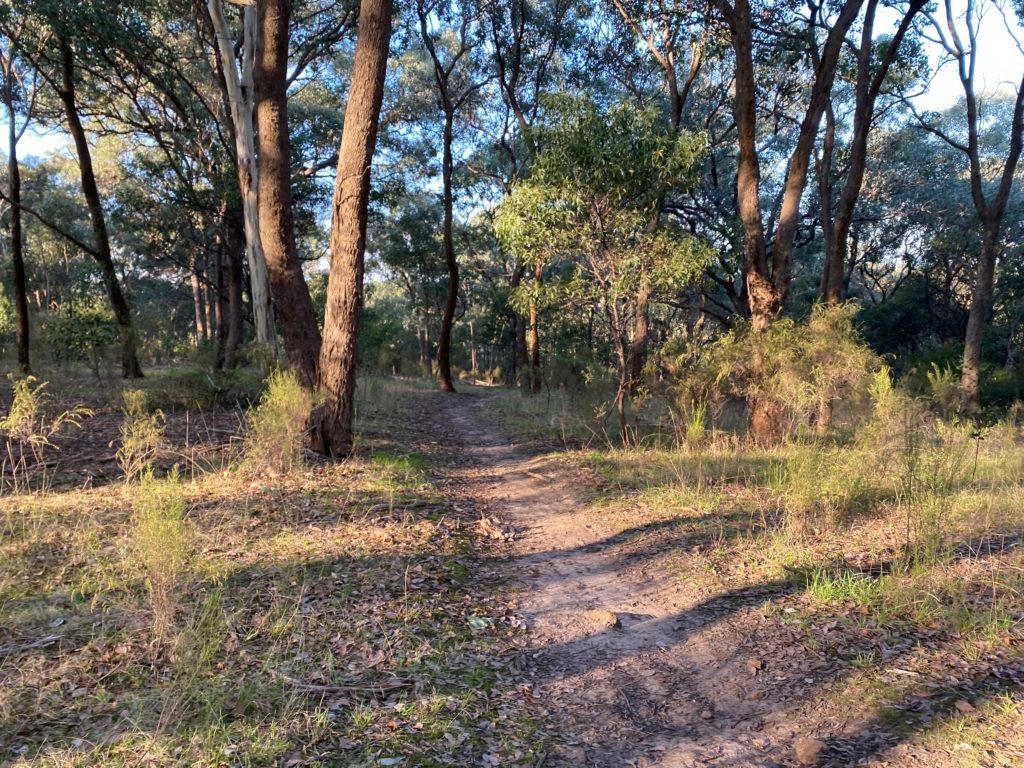
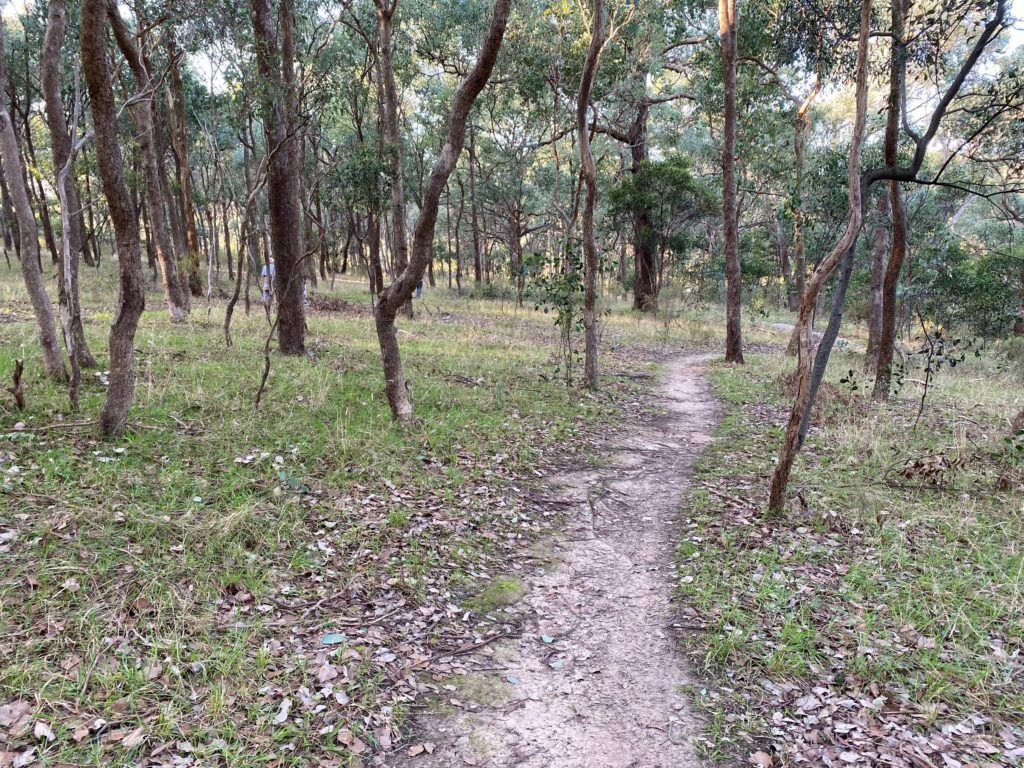
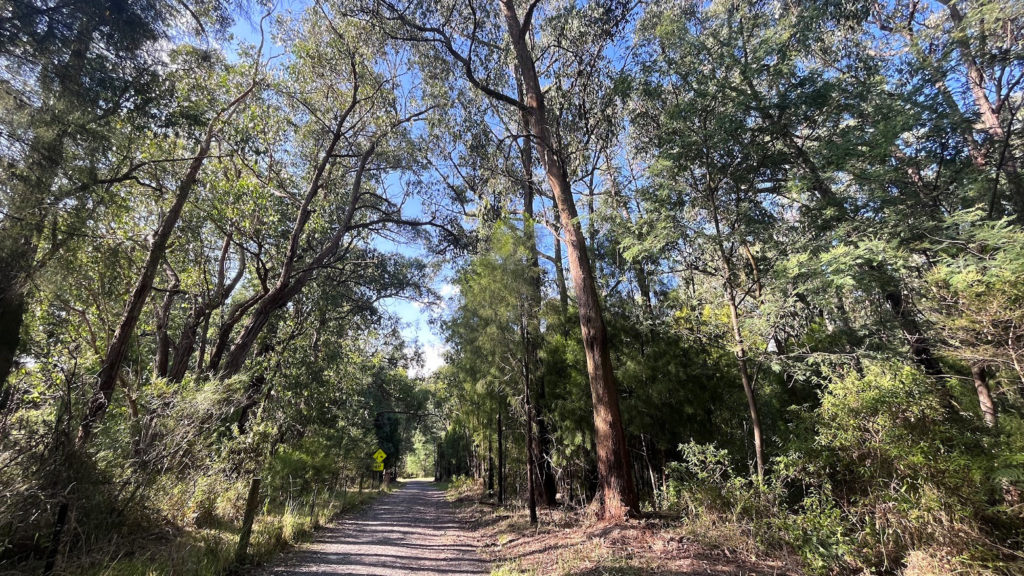
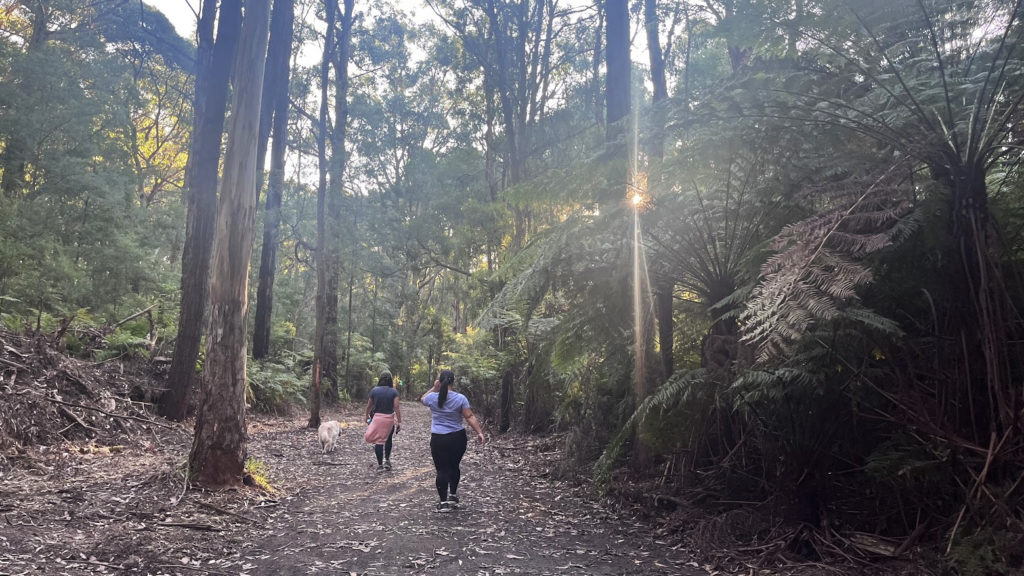
The path is wide, straightforward and mostly flat. The whole trail is flanked by the tall trees of Crossover Regional Park, making it feel cool and shady.
The walk is similar the whole way except that every now and again, you’ll glimpse someone’s farmland or private property and rolling green hills.
There are also small paths that diverge off the main one. There was little signage but I assumed they might be mountain biking paths.
There were three or so benches along the track, which helped the eldery person in our group take a reasonable number of breaks.
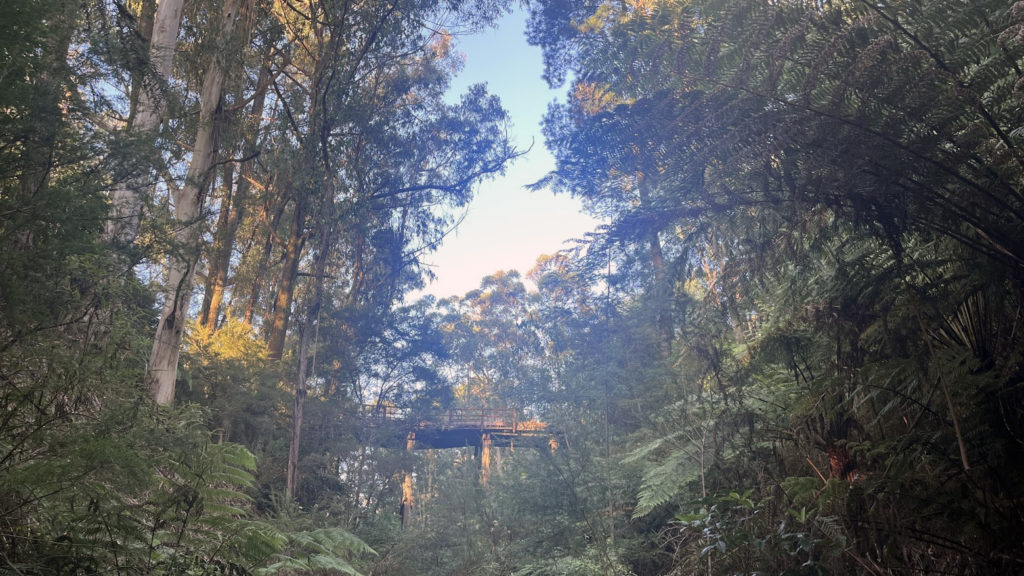
At the end of the track, you reach an old trestle bridge in Crossover, which looks quite old, but has a mysterious, abandoned look as it is framed by towering, leafy trees.
At this point of the track, there was also signage pointing to another carpark, indicating you could also start the walk from Crossover. You can also continue onto Neerim South (3km from Crossover) and then Neerim (5.6km from Neerim South), which makes up the Rokeby to Neerim trail.
As it was nearing sunset, we took a few photos of the bridge and made our way back the way we came.
For those who want to add some entertainment to the walk, you can download the Geocaching app and embark on something akin to a treasure hunt. The app noted there was a cache near an intersection with a seat we were resting at, but we were unsuccessful in finding it.
As the sunlight was disappearing, the last rays peeked between the trees on our return walk. It added a sense of tranquility to the journey. We also spotted a few wallabies, who jumped off into the forest as we got closer.
The map at the start of the walk also noted you can also veer off to explore a short Rokeby Flora and Fauna Trail, which has some interpretive signage.
If you are ever in West Gippsland, the walk is a relaxing activity to add to your itinerary, especially if you have a family and dog. I think it would also be very great for families with bikes.
Make sure to time a visit with the Rokeby Market, which runs on the second Saturday of each month from September – May. It’s quite large compared to some smaller country markets. It has capacity for 100 stalls, which are inspired by the motto, “Make it, Bake it, Grow it, Breed it”. Rokeby Reserve, where the market is held, is also the beginning of the Rokeby to Crossover walk.
The walk is also about fifteen minutes from Warragul, where you can refuel at plenty of cafes and eateries.
We stayed at Lorne over long weekend with our friends over long weekend (Monday was the Labour Day). We did Lower Kalimna Falls loop on the last day.
The walk starts from Sheoak Picnic area, just 10-minute drive from Lorne. The last couple of kilometres on gravel road were very dusty with a lot of holes.
The walk itself was very quite and peaceful.
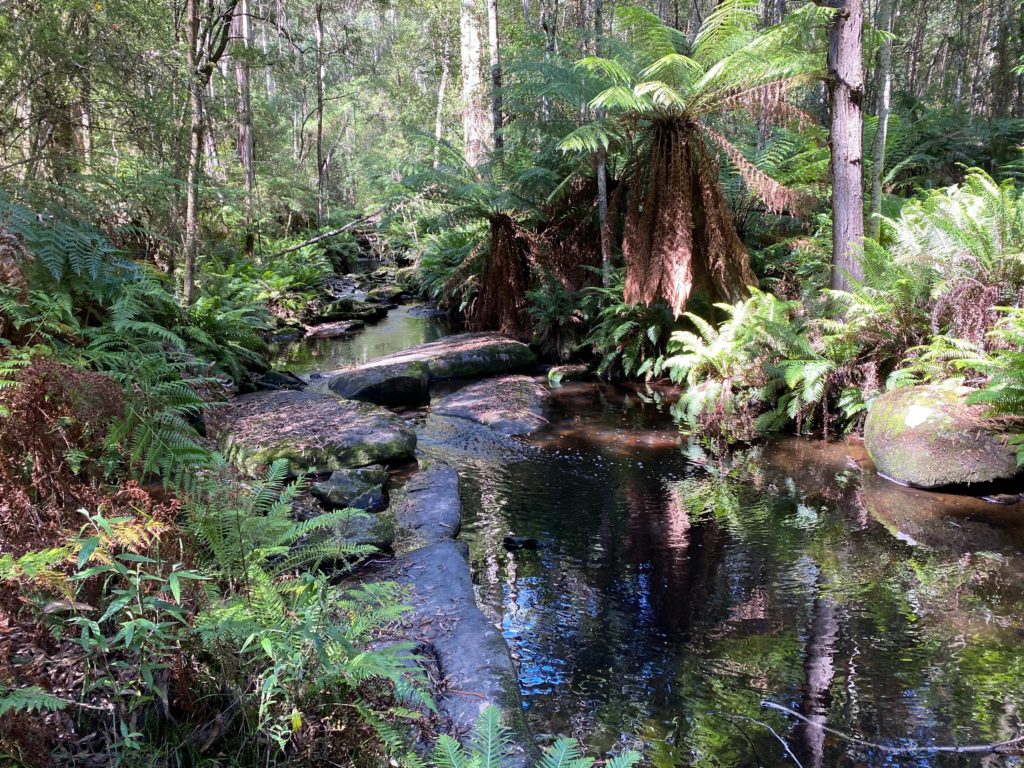
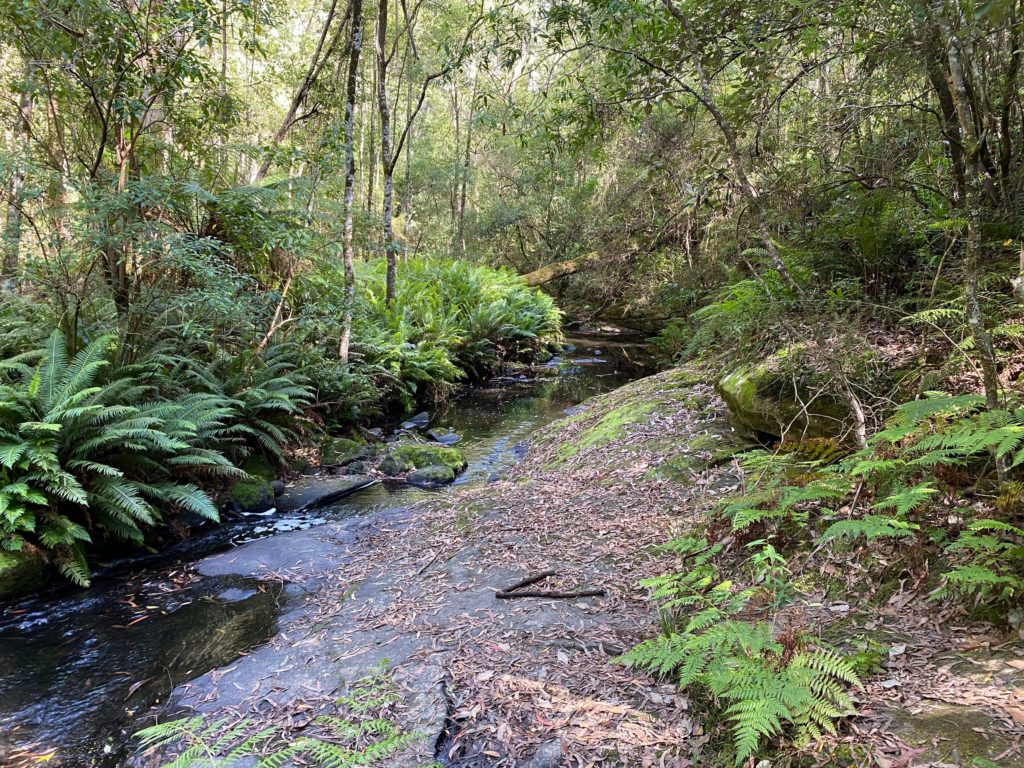
We heard the Sheoak Creek bubbling peacefully next to the trail.
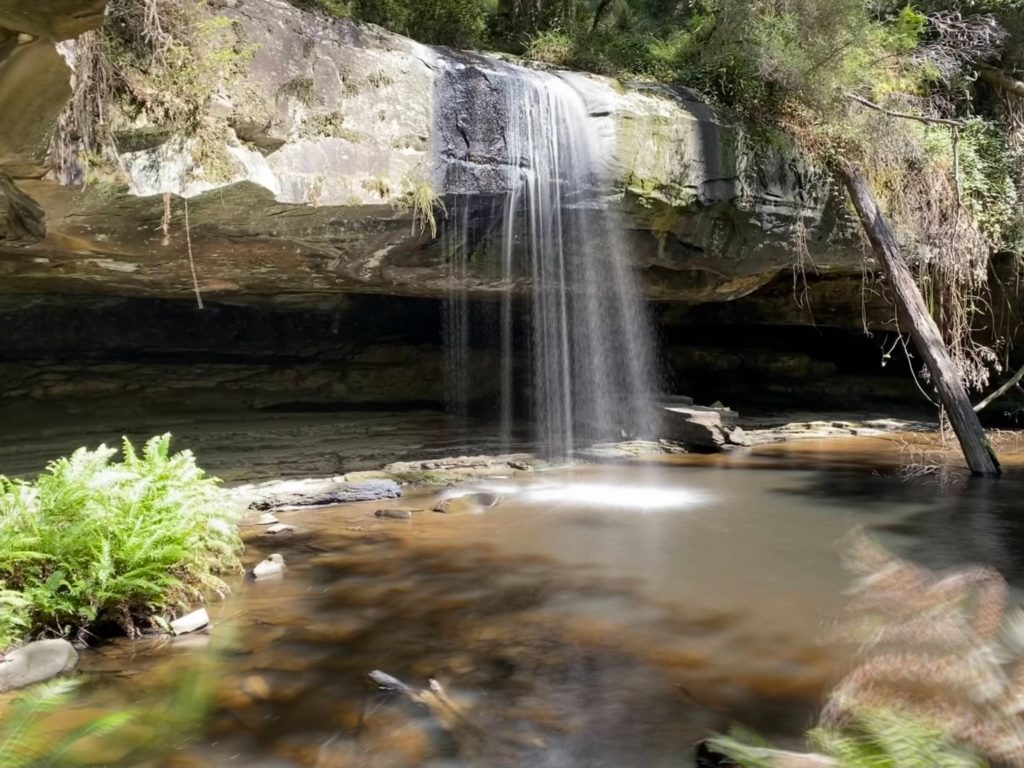
We reached the Lower Kalimna Falls after about 50 minutes of walking. The place was magical.
Lower Kalimna Falls
We walked behind the waterfall and enjoyed shade and coolness.
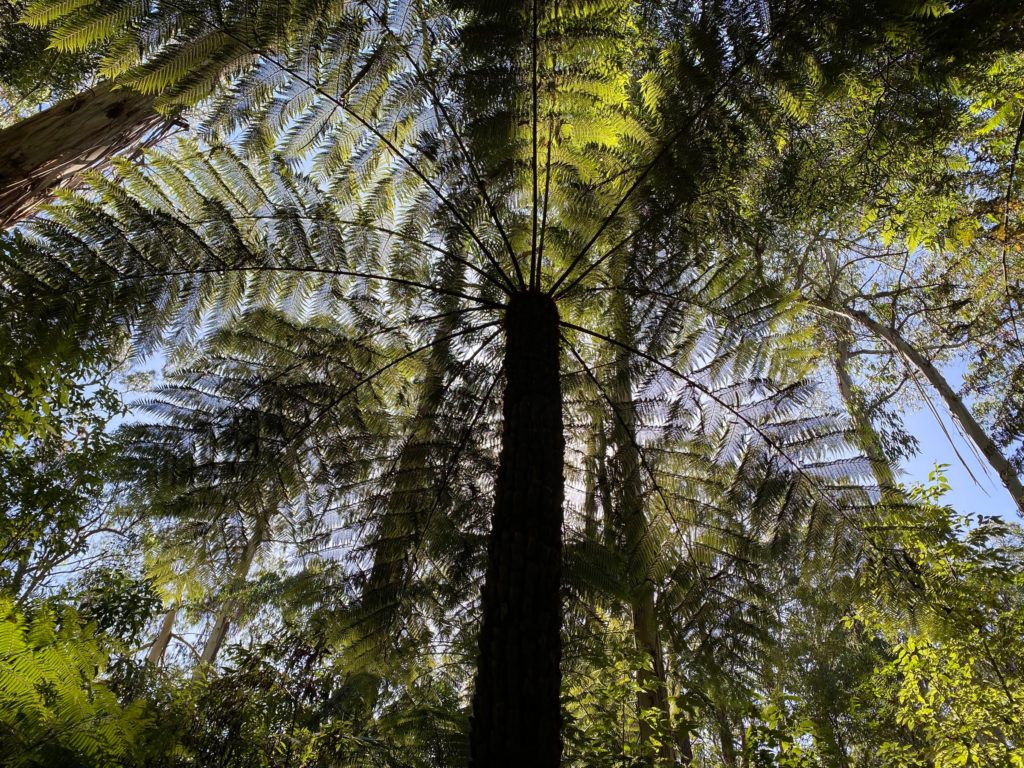
Tree Fern
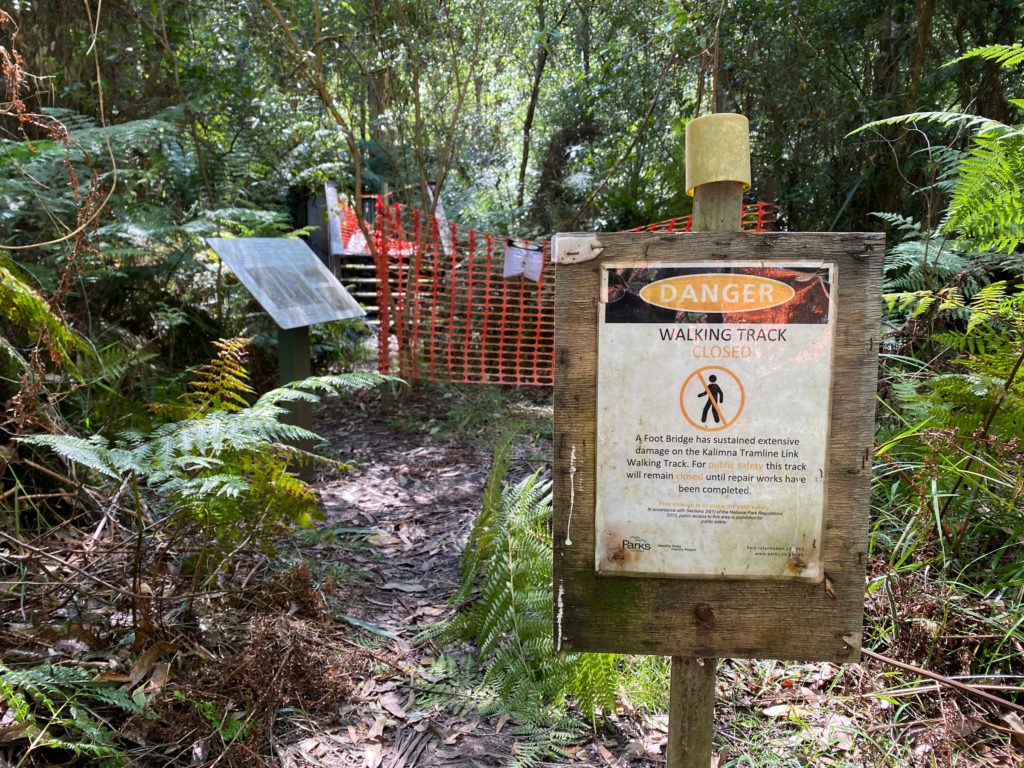
Track to Upper Kalimna Falls was closed, unfortunately.
‘Walking Track Closed’ sign
The sign reads:
A Foot Bridge has sustained extensive damage on the Kalimna Tramline Link Walking Track. For public safety this track will remain closed until repair works have been completed.
We returned back to start on the Garvey Track – it is in fact a 4WD road but we didn’t meet any cars or other people.
Overall, it’s a great circuit with a nice waterfall. It took us about 2 hours to complete the loop.
With the recent abundance of warm days, I had quite the hankering for a nice cool forested walk. Seeing as though I was heading out to the Geelong region a couple of weeks ago, I thought it’d be the perfect time to finally visit the serene Lake Elizabeth located within the Great Otway Ranges.
With an abundance of tree cover, rainfall and distinct tree trunks embedded within the lake itself, this was the perfect trek for those who wish to retreat into a verdant refuge during some of those hotter days!
Why Lake Elizabeth?
One of the major factors that drew me to lake Elizabeth was the fact that it was almost entirely formed due to landslides within and around the area. This certainly made for a unique landscape – with the lake seemingly melding with the surrounding trails, contrasted with the western portion that saw little to no mudslides.
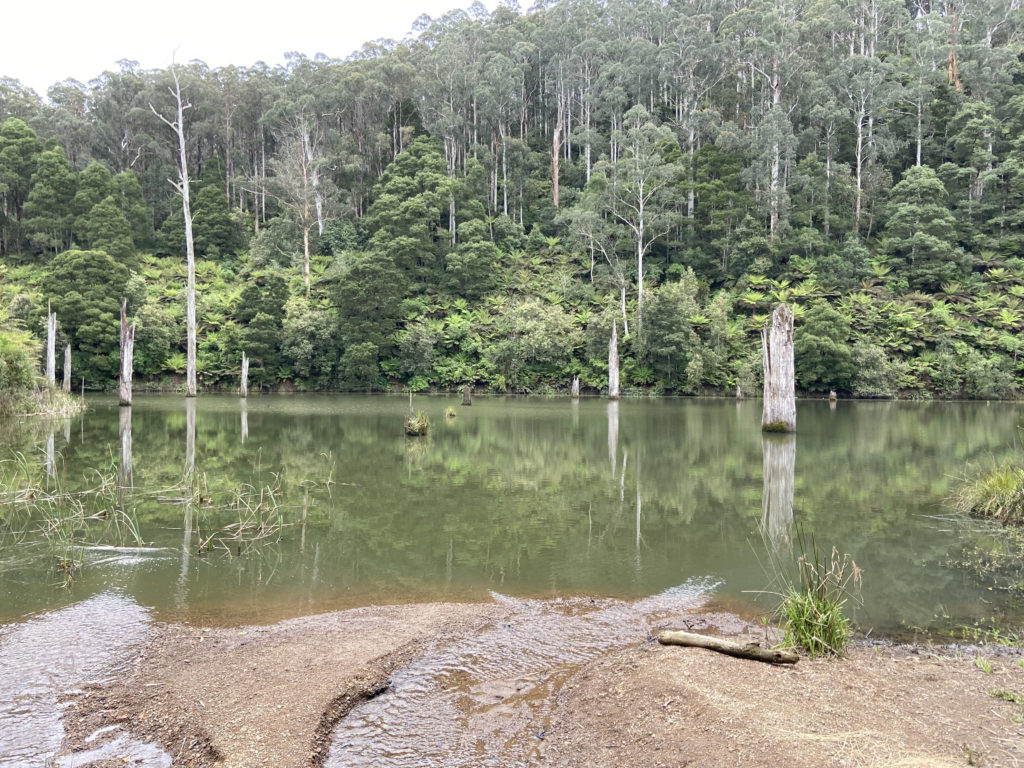
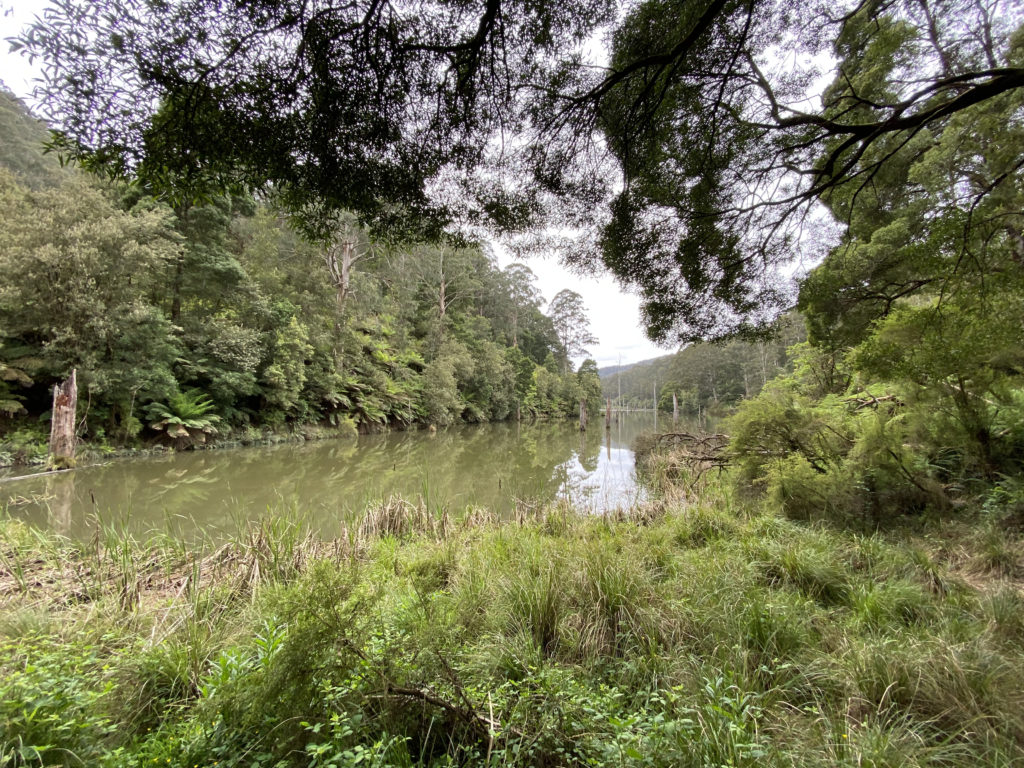
A view from the banks of lake Elizabeth – showcasing the protruding tree trunks.
The lake’s circuit trail is approximately 4.7 km in length, however, the opening track to the lake is just over a kilometre, so trekkers have some flexibility if they are pushed for time (or can’t be bothered walking all the way around!).
As you’ll soon see though, walking the whole 4.7km at some point is certainly a must as there’s a lot to enjoy from all sides of the lake.
Setting out:
I started my trek from the very convenient Lake Elizabeth campground’s parking and rest area, soon heading due east to begin along the titular walking track.
Although the weather of the day wasn’t too oppressive, I still recall vividly how tranquil and fresh the trail was even at 25 degrees or so. It’s certainly remarkable how much moisture the Otway’s retain during summer – much like portions of Gippsland!
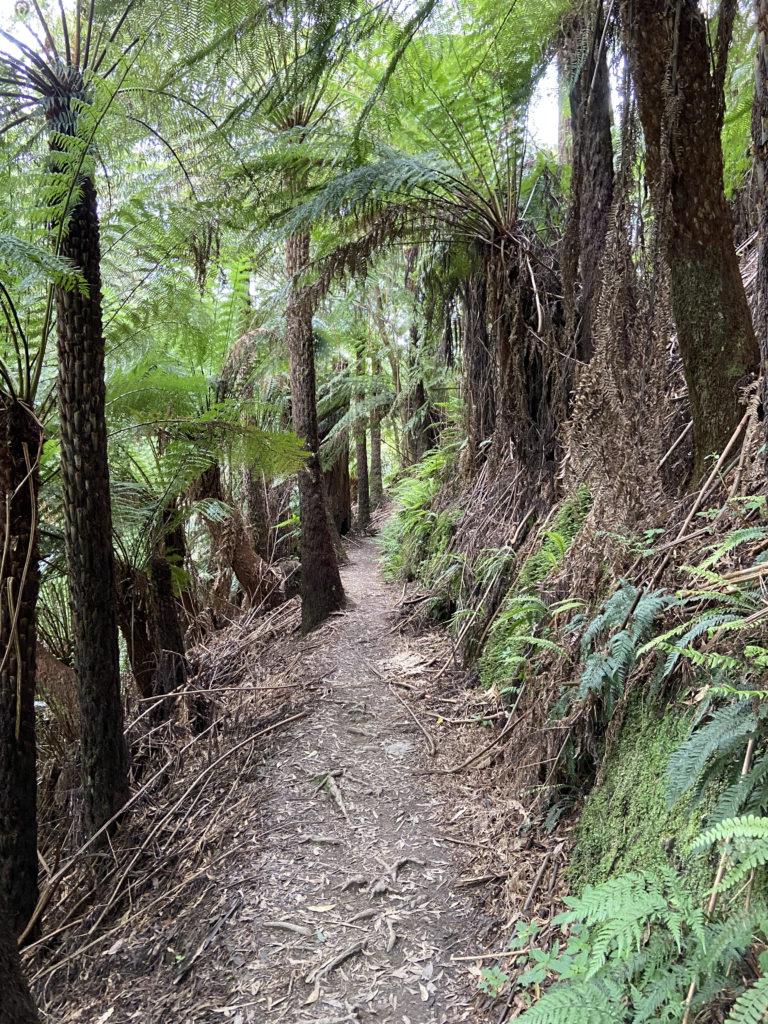
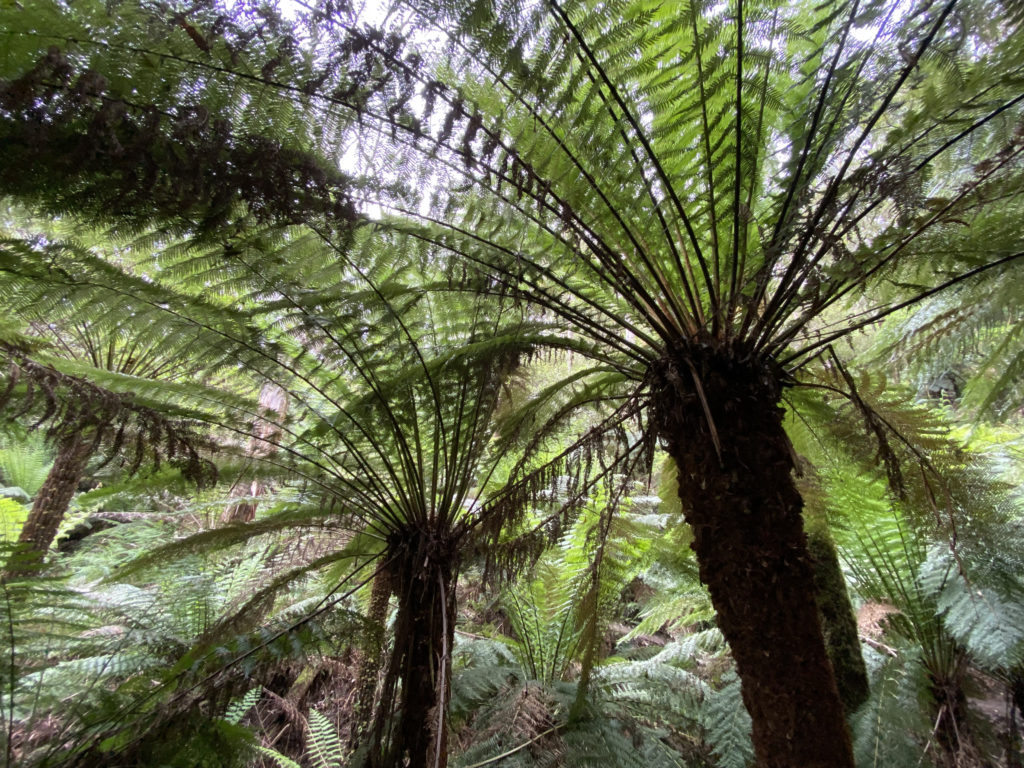
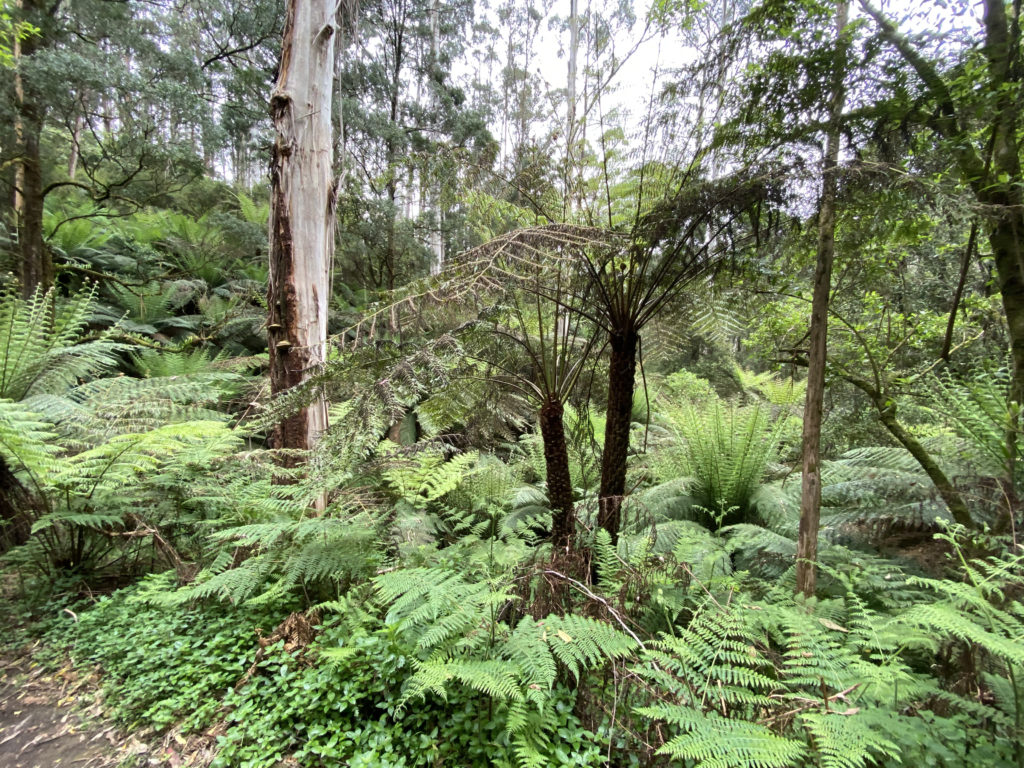
A litany of verdant ferns heralded my entrance to Lake Elizabeth’s cooling track.
It’d been a while since I’d enjoyed the refreshing serenity of Victoria’s rainforests, so I was glad to remerge myself in the Otways after so long. Although a fan of both the rugged Aussie bush and glistening coast, I’d be lying if I said rainforests weren’t my favourite.
The cool atmospheric moisture, coupled with the abundance of overhead tree cover, makes such environments perfect for those who aren’t too keen on the harsh Australian sun (sounds like me!).
Another great feature of Lake Elizabeth in particular is that the lake itself is supplied by the Barwon river, which actually runs along the approaching track. This certainly makes the walk down particularly special.
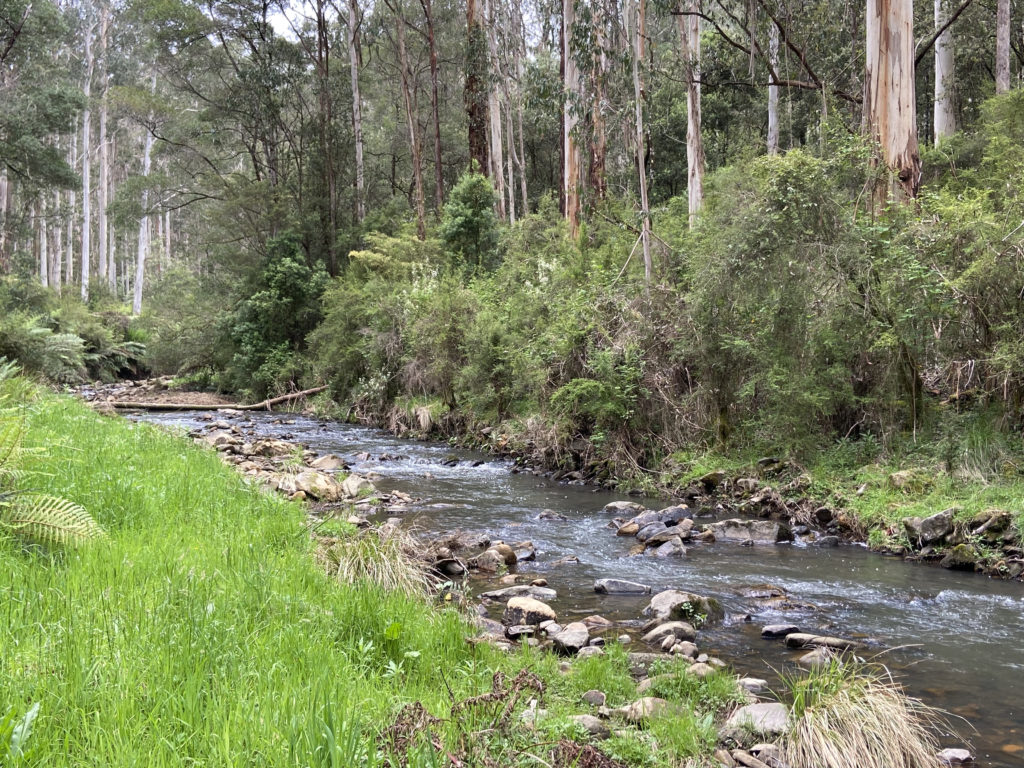
The opening portion of the river was quite wide and relatively brisk, providing a beautiful backdrop to your trek down towards the main attraction.
A perspective shot of the opening river stretch – the rich grass showing just how cool and wet the area often is.
This particular image is also perfectly demonstrative of the surprising moisture content within the Otway Ranges, even right out of summer during the early autumn!
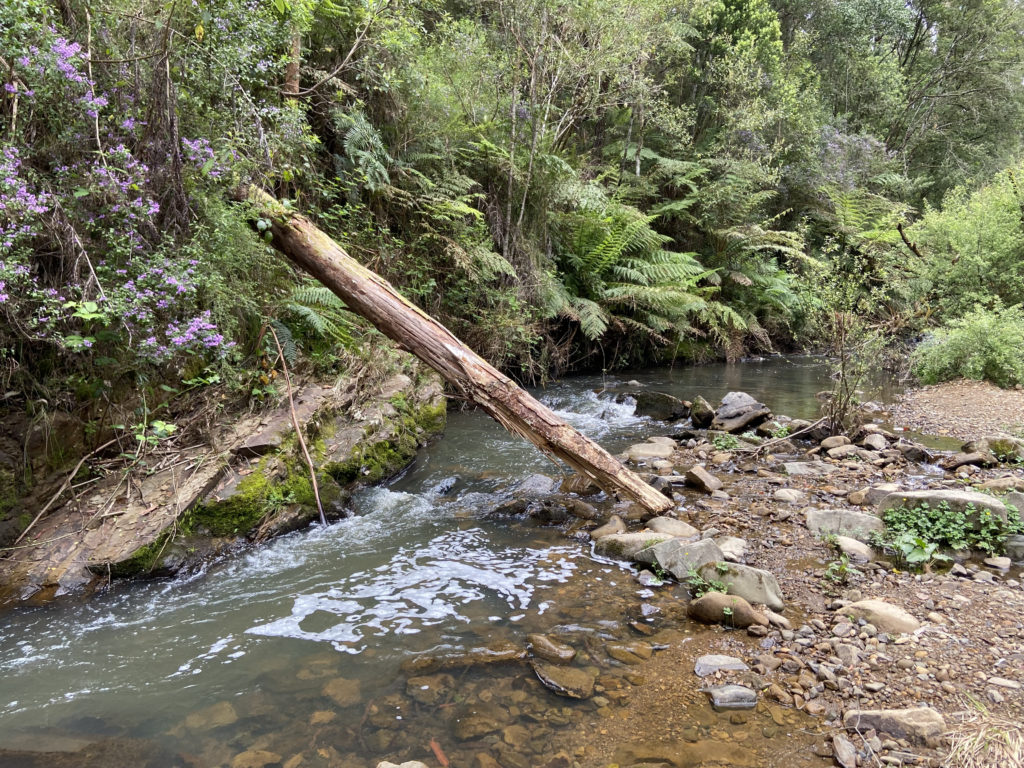
As you continue along, the river constricts and expands again and again. I was a particular fan of some of the tighter stretches, as these were often littered with more beautiful flora and greater stoned detail within the riverbed.
There were so many spots that I stopped to have a meditational rest at, I’d highly recommend stopping by for a snack or a spot of bird watching!
One of my favourite portions of the river approach – a tranquil stream providing the perfect spot for a relaxed picnic!
The litany of beautiful ferns:
Another splendid constant along this particular track is the absolute abundance of ferns, you’d be forgiven for mistaking that you were up in Queensland’s Daintree, or even New Zealand!
You could certainly spend half your trek just gazing at the intricate beauty of these bad boys, but I promise you, it gets even more enchanting the further you go.
I reckon it took me about 25 minutes or so until I reached the lake itself, and it was certainly a sight to see.
A verdant window onto Lake Elizabeth.
Although not overwhelmingly grand or expansive, the beauty I found within Lake Elizabeth was more from the angle of its reclusive collectedness. When I emerged out from the approaching track, I wasn’t met with the cacophony of rushing water, or the voices of other trekkers. Instead, there was simply the tranquil sounds of the passing wind, the elegant waltzing of the grass, and the soft whispering of nearby birds.
Sometimes life can just get too loud. But here, for as long as you wished, everything was calm and at peace with itself. I enjoyed that greatly.
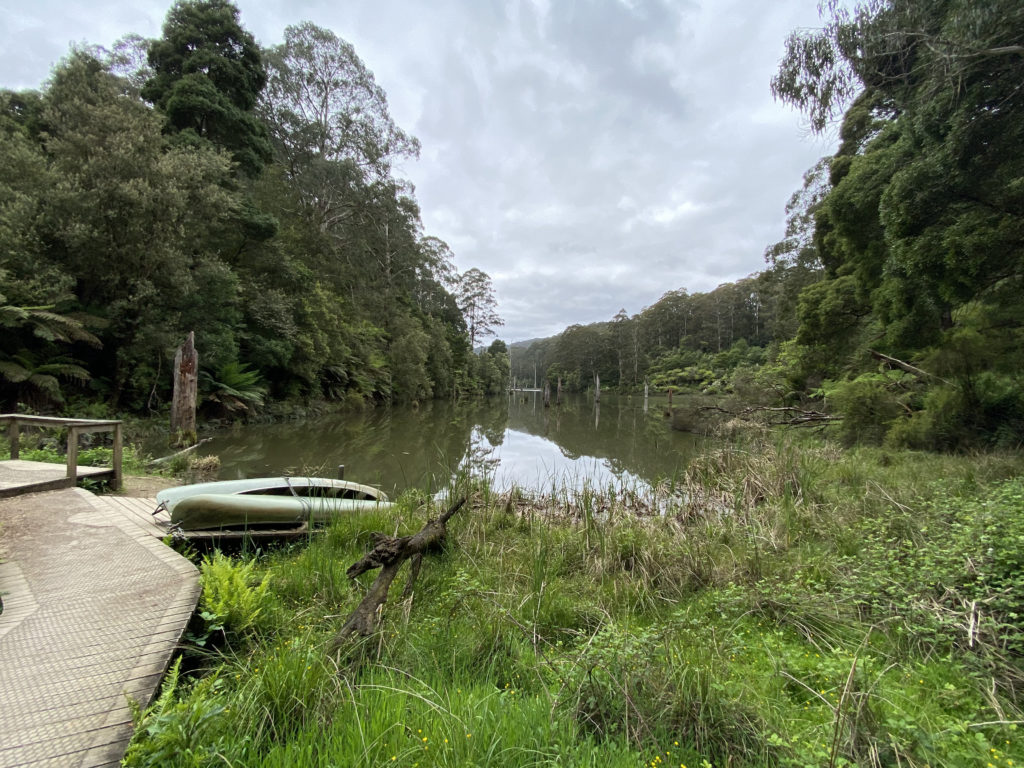
A view from the kayak dock situated along the trail.
As you can see above, I also noticed there was a ramp for those who wish to kayak/canoe on the lake. I will certainly be returning with my kayak when I can – if relaxing on the banks was as satisfying as it was, I’d wager doing so within the lake itself would be nothing less than bliss.
Also make sure to spy those tree trunks protruding from the lake, they certainly create a mood of stillness, as well as giving away the lake’s origins!
From there on out, you can either turn back, or continue around the lake. I did the latter and was very pleased to wander for about another 40 minutes or so amongst the ferns and the hidden birds.
Final Thoughts:
After that, I went home, refreshed, relaxed and ready to return to my louder life!
All in all, Lake Elizabeth is a hidden gem of the Otways that I couldn’t recommend more.
It’s serenity, coolness and unique qualities make it a must see for casual walkers and more experienced trekkers alike.
For further information on the walk and the surrounding region, Park’s Victoria’s page on it is a great start:
If adventuring out into our beautiful countryside is something that appeals to you, by all means feel free to check out https://trailnavigator.com.au/blog/ for more insightful recollections of trips along Victoria’s abundance of trails and hikes!
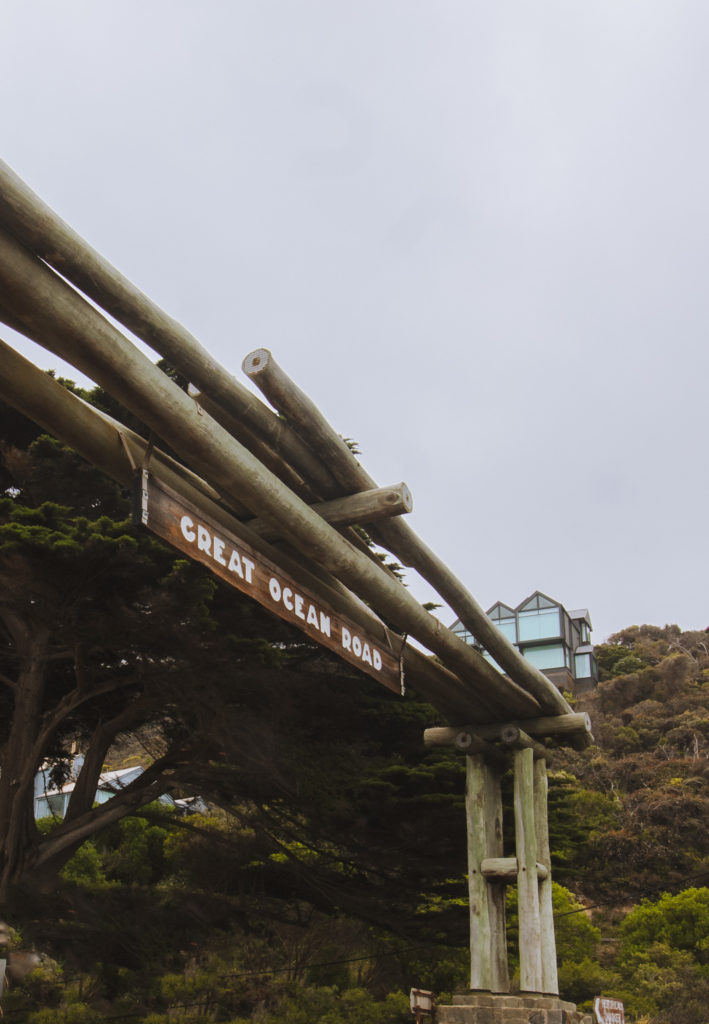
After spending a few days exploring the majestic coastline that gives the Great Ocean Road its name, we were ready for a slight change of scenery.
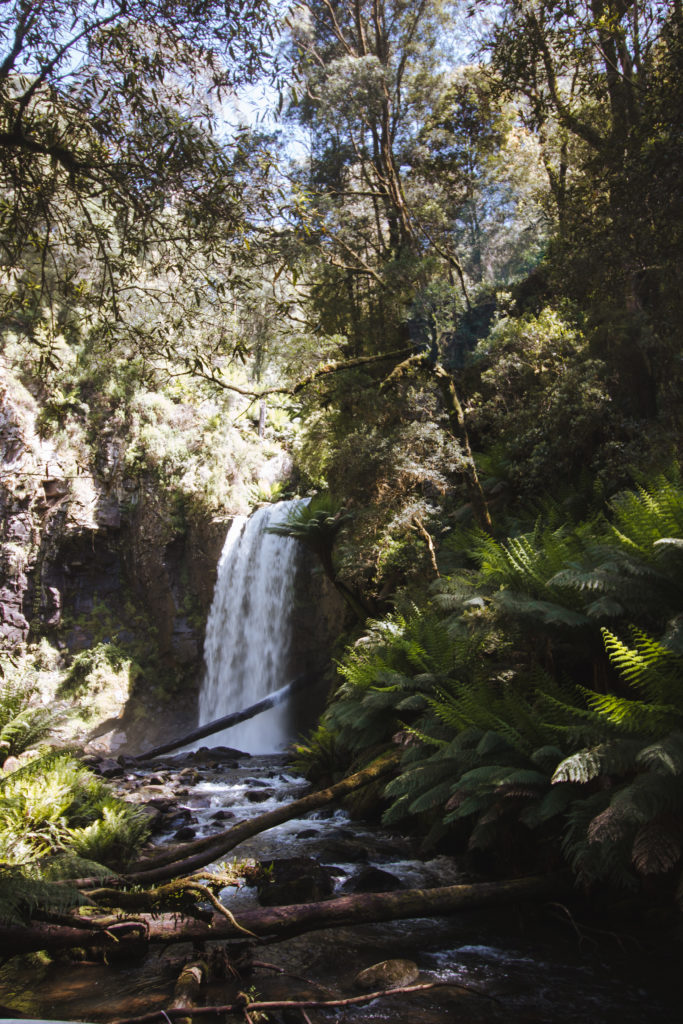
We left Apollo Bay and slowly made our way along winding back roads, cutting past the usual “must-stop” locations. There, nestled amongst the lush greenery of the Otways, we stumbled across the beautiful Hopetoun Falls.
How to Get to Hopetoun Falls
Hopetoun Falls is only a 45-minute drive from Apollo Bay, which made it a perfect stop-off during our exploration of the Great Ocean Road. If you’re coming from Melbourne, expect the drive to take you about 2.5 hours outside of peak times.
We took the most direct route, which took us through the stunning Aire Valley and the Olangaloh Plantation – home to some other amazing gems that we’ll get to soon enough!
Parking at the Falls
Since we visited on a weekday, we were easily able to secure a park close to the trailhead. There is room for about five vehicles in the immediate parking area, with more spaces a slight walk back down the entry road.
If you’re visiting on a weekend, you may have a little more difficulty, but it still shouldn’t be too painful. It was a pretty quiet spot!
The car park is unsealed without allocated spacing. Both it and the entry road were completely 2WD accessible in dry weather, but are known to become more unstable in the rain. Take care of vehicles coming the other way as the road is narrow.
Hopetoun Falls Walking Trail
You’ll find the start of the trail off to the left of the car park. From here, you can decide whether you want to stop at the first viewing platform or continue on down to the base of the falls.
The first viewing platform is more accessible than the full trail, being only 20 meters from the car park and down a relatively gentle slope.
Unfortunately, the view from here was quite concealed during our visit. You won’t get the same awe-inspiring experience as looking up at the falls, since you’re approaching it from the side, but this is still a nice stop if you’re short on time.
Since we had a little more time up our sleeves, we chose to continue on with the full hike.
The descent to the base of the falls is steep but simple. Only a one-kilometre round trip, the track is predominantly made up of stairs. Over 200, in fact!
A passing rain shower had left parts of the trail muddy and a little bit slippery. We managed it without too much fuss, but proceed with caution if you’re not a confident hiker or have mobility issues. There’s plenty of room on the stairs for other hikers to pass you if needed, so don’t rush yourself.
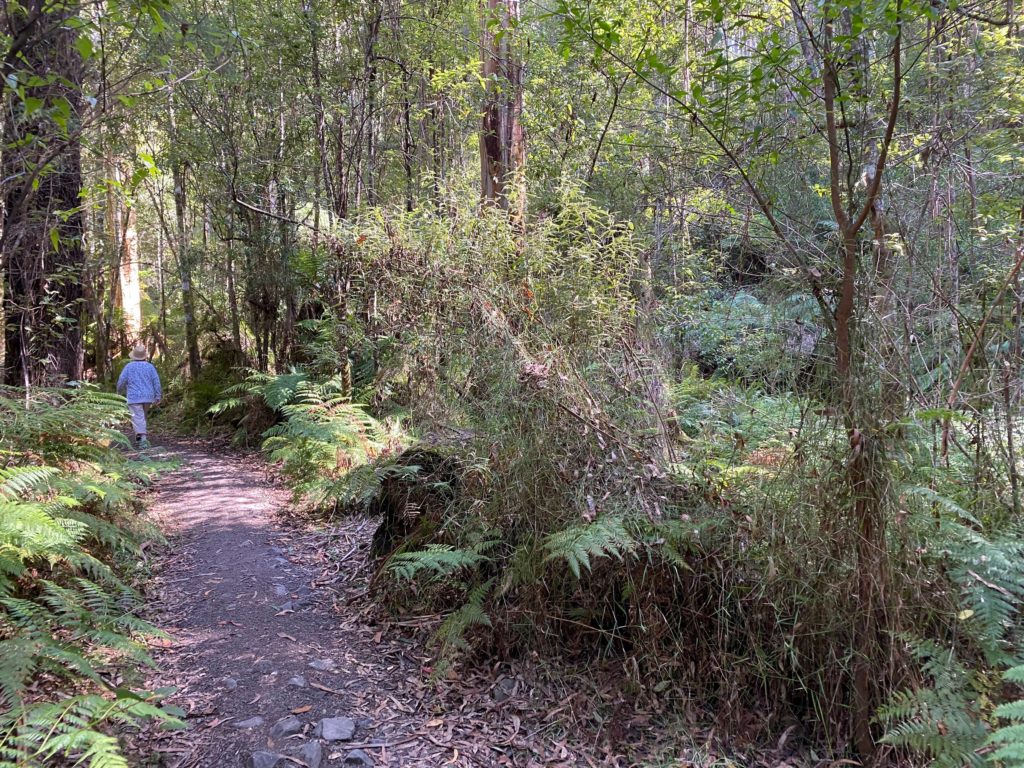
During our descent, we were amazed by the silence and flourishing flora and fauna. We spotted plenty of mature ferns, ancient trees, and even an echidna just off of the path.
It was the sudden sound of cascading water that let us know we were approaching the end of the trail. We turned the corner and found ourselves just meters from the base of Hopetoun Falls. The cool mist from the falls was very welcome after our mid-November trek.
The viewing platform here juts out over the Aire River, and we spent some time peering into the creek looking for wildlife. The creek is a popular spot for platypus spotting, but we weren’t fortunate enough to see any this time around.
There is also a bench here to rest your legs: something I’d strongly recommend before making your way back up the stairs! We had a small picnic and were lucky enough to have the entire platform to ourselves.
Extending Your Walk: The Otway Redwoods
Remember that other ‘amazing gem’ mentioned earlier? On our way out, we found a second hidden oasis that made the drive out even more worthwhile.
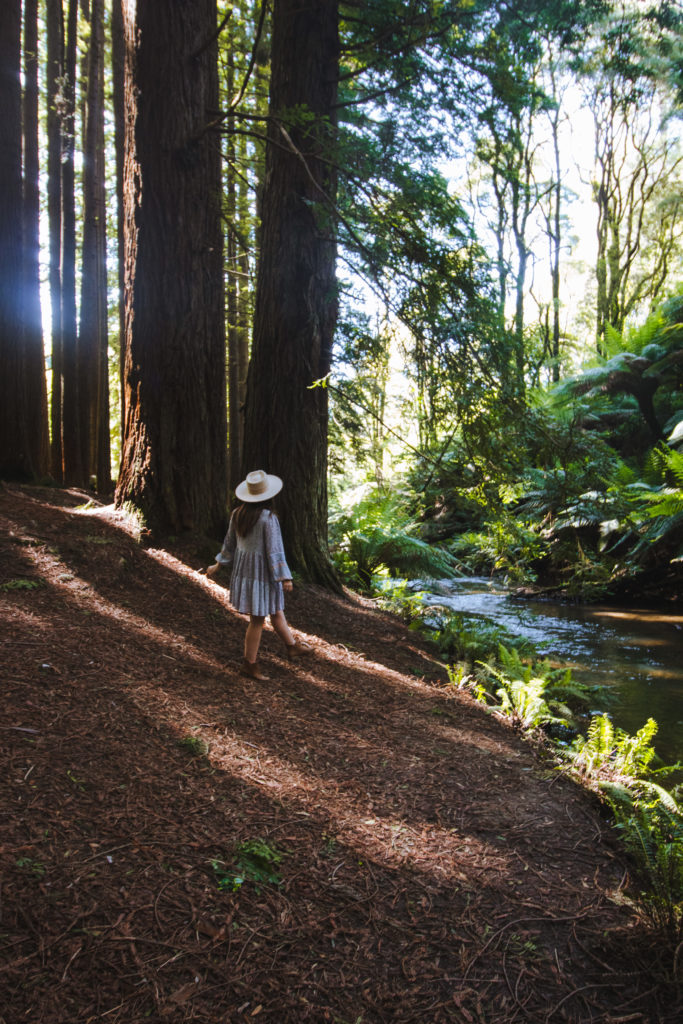
Just three minutes from the Hopetoun Falls, marked by nothing but a small car park and a wooden bridge crossing, is the towering Otway Redwood plantation.
We slowly ventured along the 500m return trail, looking up at the out-of-reach treetops in absolute awe. Nearby signage let us know that one day, these might be the tallest Redwood trees in the world! Conditions in the Otways are very favourable for the tree.
Take some time here to explore the creek bed, too. Flowing down from Hopetoun Falls, the water is crisp and clear. We enjoyed clambering across the fallen redwoods that had become makeshift bridges over the top of the water.
The bathrooms here are the closest available to Hopetoun Falls. This is just another reason that these two gems are a must to see together!
Final Thoughts: Is this Victoria’s Most Beautiful Waterfall?
In our opinion, yes!
Hopetoun Falls is easily one of Victoria’s most beautiful waterfalls. The tucked-away location makes for a beautifully secluded, unspoiled walk through nature. Plus, the connection to the Aire River also makes it a spectacular sight no matter the season.
When paired with the nearby Redwood Plantation, these falls are unbeatable. The Hopetoun Falls circuit is a well-paced trail that is an absolute must for any Melbourne local or outdoor lover exploring the Great Ocean Road.